
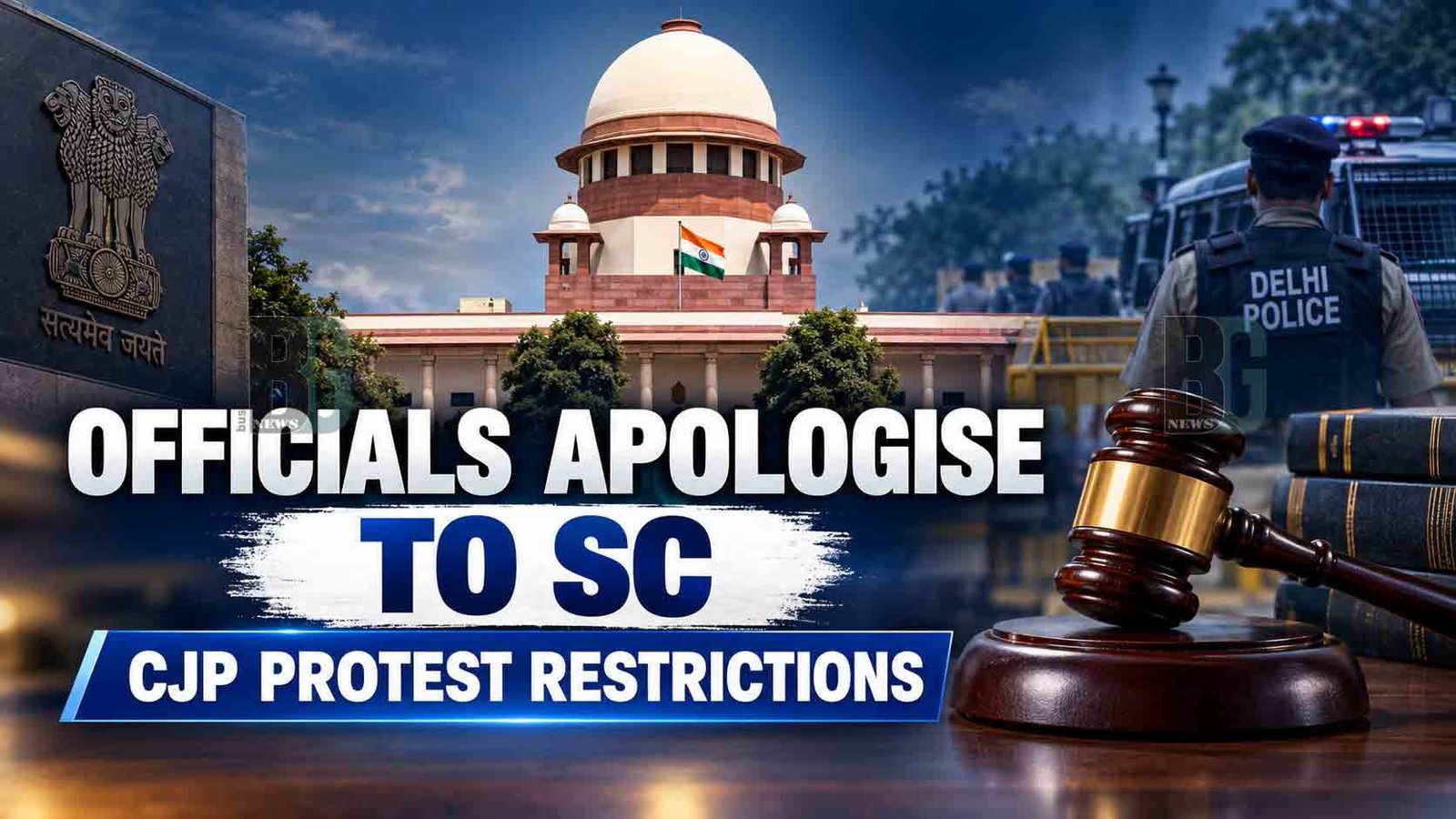
New Delhi: Union Home Secretary Govind Mohan and Delhi Police Commissioner Anurag Kumar have submitted unconditional apologies to the Supreme Court over restrictions imposed ahead of the Cockroach Janta Party (CJP) protest held on October 10 in New Delhi.
The apologies came after allegations that authorities had not fully complied with the Supreme Court’s directions concerning public transport and restrictions during the planned demonstration. The matter has raised questions about public safety, freedom of peaceful assembly and access to public transport.
Supreme Court Directions Before the Protest
- The restrictions were imposed ahead of a CJP protest at Jantar Mantar concerning Chief Election Commissioner Gyanesh Kumar and the Special Intensive Revision (SIR) of electoral rolls.
- On October 9, the Supreme Court directed the authorities to ensure that metro and other rail services were not completely prohibited. It allowed regulated operations where necessary for security reasons and emphasised the need for public traffic advisories to reduce inconvenience.
- A subsequent contempt petition alleged that restrictions on metro stations and train services continued on October 10 despite the court’s directions. The court sought explanations from the officials concerned.
Home Secretary Apologises Over Internet Suspension
- Union Home Secretary Govind Mohan submitted an affidavit offering an unconditional apology over the temporary suspension of cellular internet services in parts of New Delhi.
- According to the affidavit, mobile internet services were suspended for 24 hours, from 10 p.m. on October 9 to 10 p.m. on October 10, within a four-kilometre radius of Raisina Hill.
- Mohan said the measure was intended to prevent potential disturbances, maintain public order and address security concerns surrounding the protest. He maintained that there had been no wilful or deliberate disobedience of the Supreme Court’s directions.
- He also clarified that the suspension applied to cellular internet services rather than fixed broadband or Wi-Fi and requested relief from the contempt proceedings.
Delhi Police Defends Security Measures
- Delhi Police Commissioner Anurag Kumar also submitted an unconditional apology to the Supreme Court while defending the police department’s decisions.
- In its affidavit, Delhi Police said the decision to deny permission for the October 10 demonstration was based on intelligence inputs and concerns about public order.
- The police referred to an earlier CJP protest on July 20, which it said involved an attempted march towards Parliament despite restrictions and resulted in clashes and injuries to police personnel.
- Delhi Police argued that preventive measures were necessary to protect public safety and prevent possible disturbances. These statements represent the police’s explanation and should not be treated as judicial findings.
Delhi Metro Also Apologises
- The Delhi Metro Rail Corporation (DMRC) separately submitted an unconditional apology in response to the Supreme Court’s contempt notice.
- In its affidavit, DMRC said entry and exit restrictions at certain metro stations were imposed on police instructions. It maintained that there had been no complete shutdown of metro services and that trains continued to operate.
- The corporation reported that 271 trains completed 4,157 trips on October 10, while 45 of its 303 stations were affected by entry and exit restrictions. It said important interchange stations remained operational.
What Happens Next?
- The Supreme Court will consider the explanations submitted by the officials and the circumstances surrounding the restrictions.
- The central questions include whether the authorities complied with the court’s directions, whether the restrictions were proportionate to the security concerns and whether the measures caused avoidable inconvenience to commuters and peaceful demonstrators.
- Submitting an apology does not automatically establish contempt or conclude the proceedings. The court will determine the legal implications after examining the relevant affidavits and earlier orders.
Conclusion
- The controversy over the CJP protest has brought attention to the balance between public security, freedom of peaceful assembly and citizens access to essential public services.
- The Home Secretary, Delhi Police Commissioner and DMRC have submitted apologies while explaining their respective decisions. The Supreme Court’s consideration of these explanations will determine the further course of the proceedings.
Business Galaxy will continue to follow the case and report further developments as they are confirmed.