
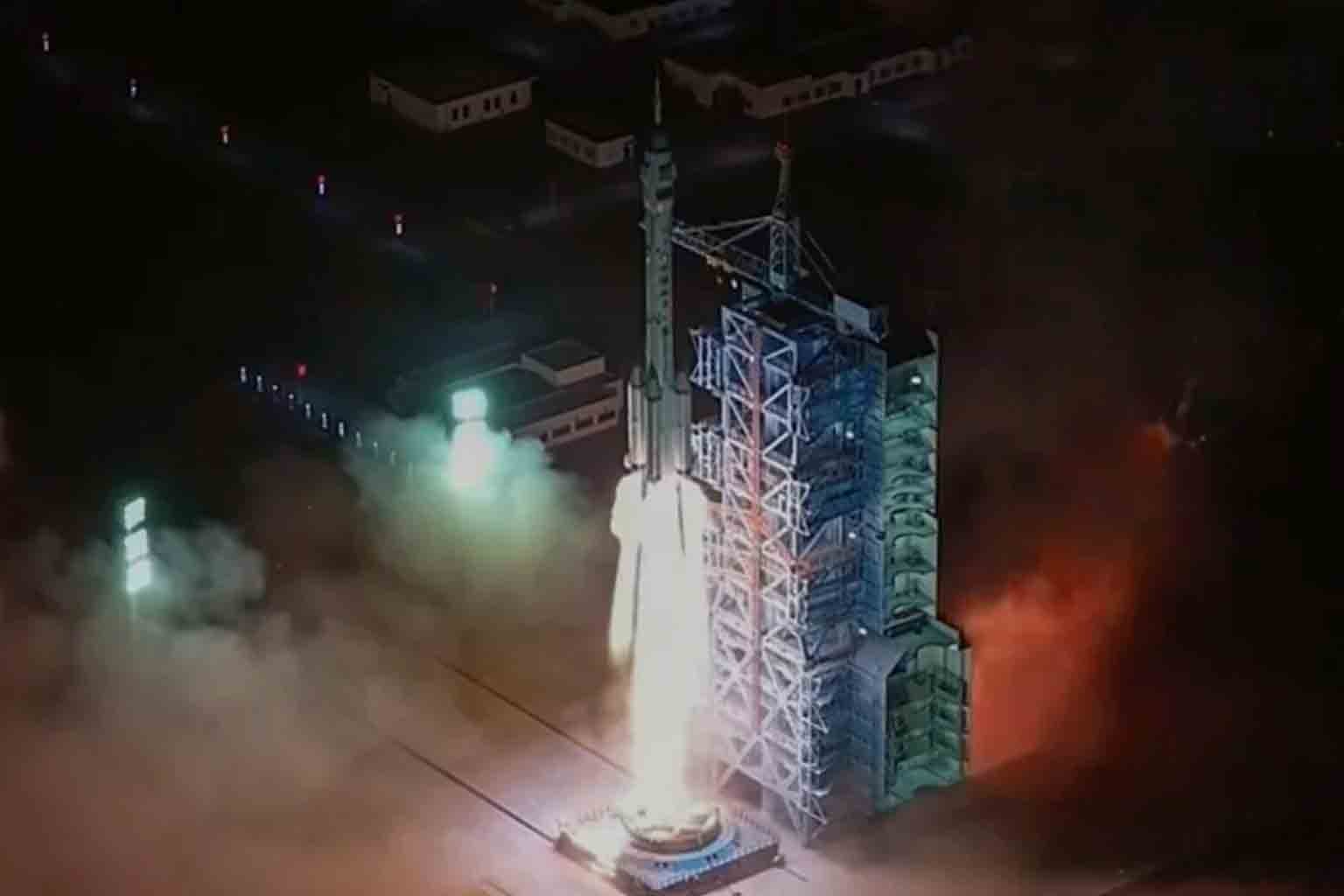
China has successfully launched its Shenzhou-23 crewed mission to the Tiangong Space Station, marking another major milestone in the country’s growing space programme.
The mission is drawing international attention because it includes Lai Ka-ying, who has become the first astronaut from Hong Kong to travel into space as part of China’s national space programme.
The Shenzhou 23 spacecraft lifted off from the Jiuquan Satellite Launch Center in northwest China aboard a Long March rocket. The mission carries a three member crew who will conduct scientific experiments, maintenance work and technology tests aboard the Tiangong Space Station.
Chinese officials said one of the astronauts will remain in orbit for an entire year, making it the longest single space mission ever undertaken by China. The extended stay is expected to help researchers study the long term effects of space travel on the human body and prepare for future deep space missions.
China Manned Space Agency stated that the mission is part of Beijing’s long term strategy to expand its space capabilities and strengthen its presence in low Earth orbit.
The inclusion of Lai Ka-ying is being seen as a symbolic moment for Hong Kong and China’s space ambitions. Chinese state media described the mission as an important step in encouraging wider participation from different regions of China in national scientific projects.
The Tiangong Space Station has become a key part of China’s independent space programme after the country was excluded from the International Space Station partnership led by the United States and its allies. Over the past few years, China has steadily expanded Tiangong with new modules, research facilities and regular crewed missions.
The Shenzhou 23 crew is expected to carry out experiments related to biology, medicine, physics and advanced space technology during their mission. Chinese scientists hope the findings will support future lunar exploration and possible missions to Mars.
The launch highlights China’s increasing role in global space exploration as the country continues investing heavily in advanced technology, lunar missions and international space cooperation.