
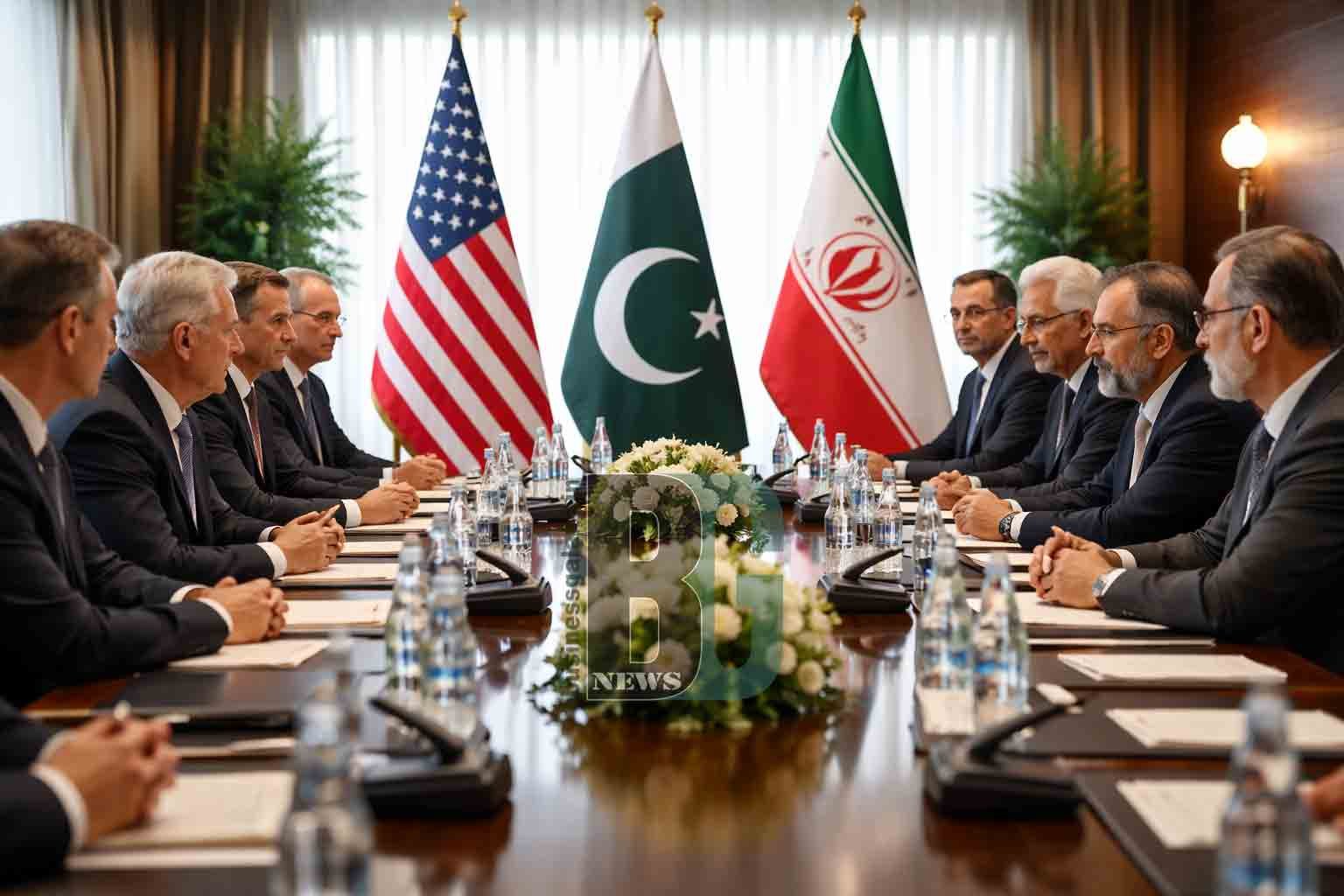
High level negotiations between the United States and Iran are underway in Islamabad, marking a critical moment in efforts to de-escalate tensions after weeks of conflict. The talks, facilitated by Pakistan with support from other international partners, aim to turn a fragile ceasefire into a more lasting agreement.
Ceasefire Remains Central Issue
One of the primary topics under discussion is the scope of a potential ceasefire. While both sides have signaled interest in reducing hostilities, disagreements persist over whether the truce should extend beyond direct US-Iran engagement to include conflict zones such as Lebanon. This issue has emerged as a key obstacle in reaching a comprehensive agreement.
Strait of Hormuz and Global Energy Security
Another major focus is the security of the Strait of Hormuz, a vital route for global oil shipments. The United States has emphasized the need to ensure uninterrupted navigation through the waterway, while Iran views its control over the strait as a strategic advantage. Any agreement is expected to include provisions addressing maritime security and trade flow.
Nuclear Program Disputes
Iran’s nuclear program remains one of the most sensitive points in the negotiations. The United States is pushing for limits on uranium enrichment and greater transparency, while Iran maintains that its nuclear activities are a matter of national sovereignty. Bridging this gap is considered essential for long-term stability.
Sanctions and Economic Relief
Economic sanctions are also at the center of discussions. Iran is seeking relief from longstanding restrictions and access to frozen assets, arguing that economic recovery is necessary for any sustainable agreement. The United States, however, is expected to tie sanctions relief to measurable commitments from Iran.
Missile Program and Regional Influence
The talks are also addressing concerns about Iran’s missile capabilities and its role in regional conflicts. The United States has called for limitations in these areas, while Iran has rejected such demands, describing them as interference in its internal affairs.
Security Guarantees and Compensation
Iran is reportedly seeking assurances against future military action, along with discussions around compensation for damages caused during the conflict. These demands add another layer of complexity to the already challenging negotiations.
Fragile Progress Amid Deep Distrust
Despite ongoing dialogue, both sides remain cautious. Years of strained relations and recent hostilities have created deep mistrust, making compromise difficult. Officials have warned that failure to reach an agreement could risk renewed escalation.
International Mediation Efforts
Pakistan’s role as host and mediator has been widely noted, with other countries supporting diplomatic efforts behind the scenes. The outcome of these talks is expected to have significant implications not only for the region but also for global security and energy markets.
Conclusion
The Islamabad talks represent a crucial opportunity to reduce tensions between the United States and Iran. However, with major disagreements still unresolved, the path to a lasting agreement remains uncertain. For now, the world watches closely as diplomacy attempts to succeed where conflict has brought instability.