
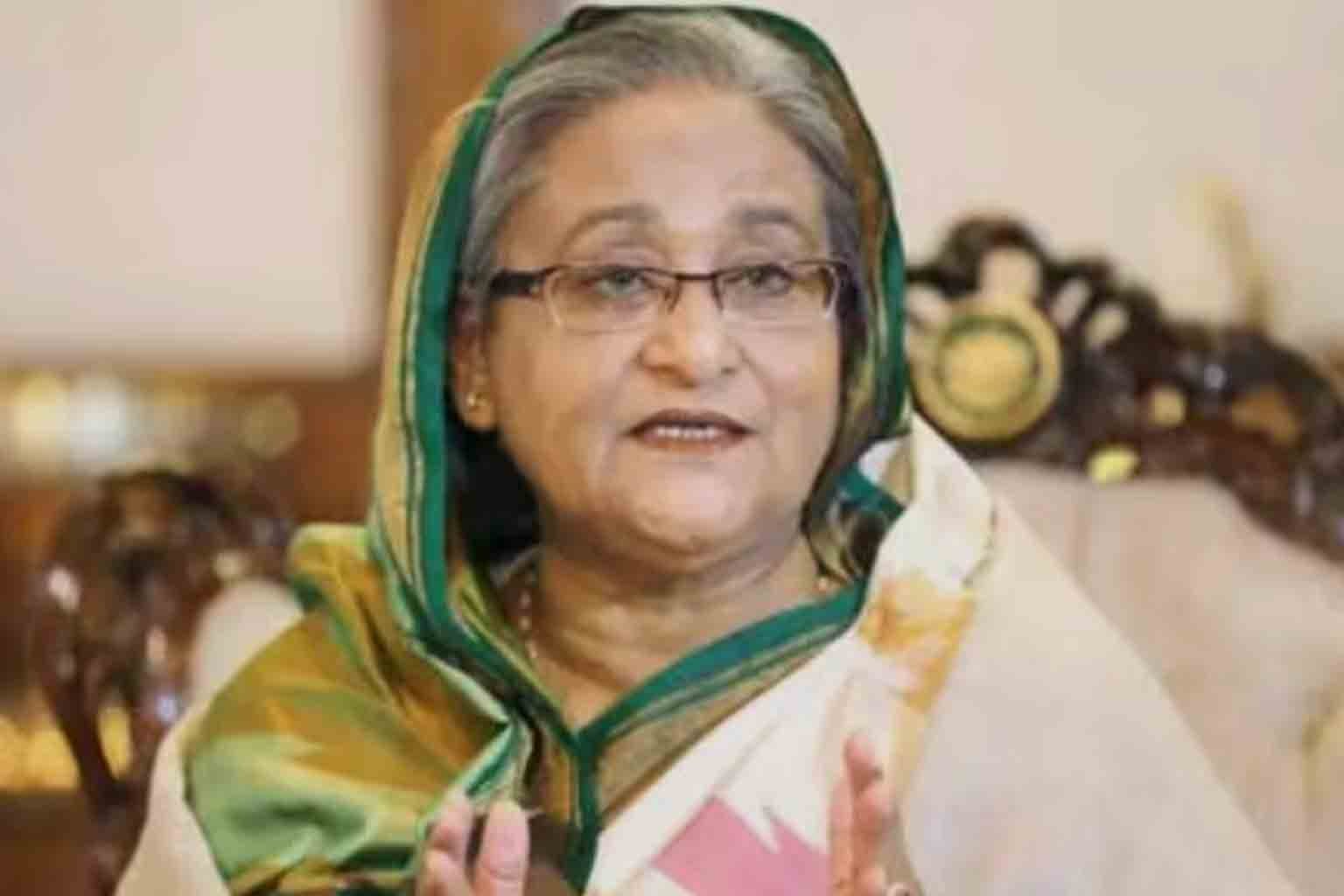
Sheikh Hasina, the former Prime Minister of Bangladesh, delivered a forceful public address from exile in India on Friday, launching an unprecedented verbal offensive against the interim government in Dhaka and its leader, Nobel laureate Muhammad Yunus. It was her first live public statement since leaving Bangladesh in 2024.
Speaking via an audio message at an event titled “Save Democracy in Bangladesh” in New Delhi, Hasina labelled Yunus and his administration as a “murderous fascist” regime, accusing them of plunging Bangladesh into a state of terror, lawlessness and political exile. She said the country, once peaceful and prosperous, now stands “at the edge of an abyss.”
Hasina, who resigned and went into self‑imposed exile in August 2024, framed her address as a call to restore democratic norms and constitutional governance in Bangladesh. She claimed that violence, human rights violations and insecurity have spread across the country since her ouster allegations that sharply criticise the current interim leadership.
At the gathering of expatriate Bangladeshis and supporters of her Awami League party, Hasina repeatedly described Yunus as a “power‑hungry traitor,” “usurer,” “money launderer,” and said his government has “bled the nation dry.” She accused the interim regime of surrendering national sovereignty to foreign interests and undermining the spirit of Bangladesh’s Liberation War.
In her address, Hasina also outlined a five point plan she said was essential to “heal” Bangladesh, including the removal of the interim administration, an end to street violence, guarantees for minority protection, a cessation of politically motivated legal action, and a call for an impartial United Nations investigation into recent turmoil.
The speech comes ahead of national elections in Bangladesh and highlights deepening political tensions. Hasina urged unity among “democratic, progressive and non‑communal forces” to reclaim democratic governance and ensure free and fair elections.
While the address did not include Hasina’s physical presence she remains in India it underscored her intent to remain a central figure in Bangladesh’s political discourse and to mobilise international and domestic support against the current leadership.
Her remarks are expected to further strain diplomatic tensions between Dhaka and New Delhi, especially with Bangladesh’s interim government previously expressing concerns about her stay in India and requesting her extradition, a matter that remains unresolved.