
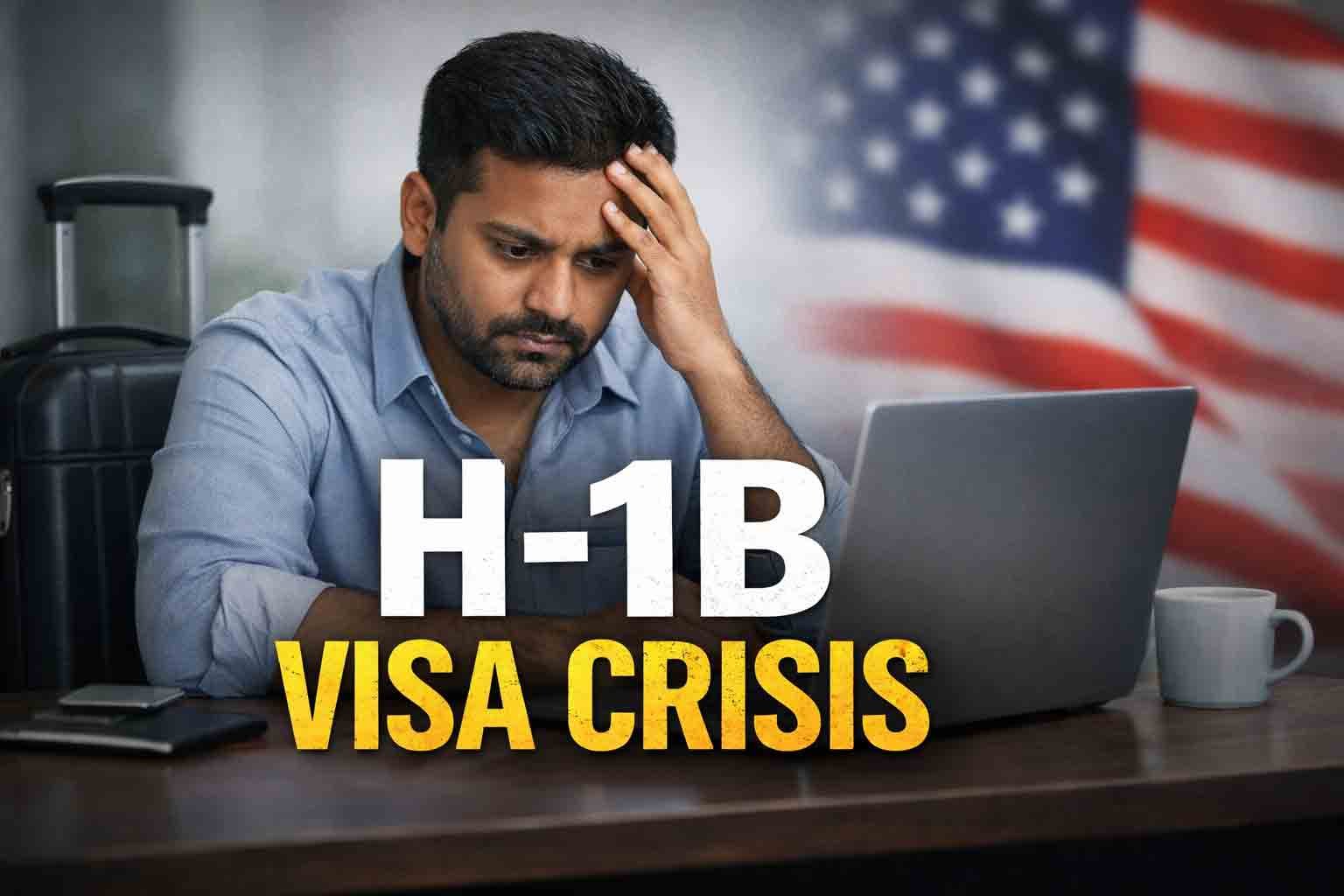
Indian origin tech entrepreneur and CEO Vijay Thirumalai has drawn attention to the growing H-1B visa crisis, saying thousands of Indian professionals are currently stranded in India due to delays caused by new U.S. consular regulations.
What He Said
Thirumalai described the situation as “brutal and heartbreaking” explaining that many H-1B workers traveled to India for routine visa stamping, expecting to return to the U.S. within two weeks. Instead, they have been stuck for months, with visa interview appointments either cancelled or pushed far into the future.
According to him, companies including his own are receiving daily distress calls from affected employees. These delays have disrupted careers, housing arrangements, children’s education and family stability in the United States.
Why Workers Are Stranded
The problem intensified after the U.S. introduced new visa vetting procedures, including expanded background and social media checks. These changes have significantly slowed down visa processing and reduced available interview slots at U.S. consulates in India.
As a result:
- Visa appointments are delayed by several months
- Third country visa processing options are limited
- Remote work is not always permitted by employers
- Many workers face job insecurity despite having valid approvals
His Advice to H-1B Holders
Thirumalai urged Indian professionals to focus on long term solutions, particularly pursuing U.S. permanent residency (Green Card) as early as possible.
He argued that relying on temporary visas has become increasingly risky due to:
- Policy uncertainty
- Political shifts
- Automation and AI affecting tech jobs
He said permanent residency provides Stability, Mobility and Security, especially for families who have already invested years building lives in the U.S.
Backlash and Criticism
Thirumalai’s remarks triggered strong online reactions. Critics pointed out that:
- Green Card wait times for Indians can stretch 15 – 20 years or more in many employment categories
- His suggestion of a 4 – 5 year timeline was seen as unrealistic
- The advice did not address the immediate hardship faced by stranded workers
Some users accused him of being out of touch with ground realities, while others said his comments reflected the desperation of a broken immigration system.
Bigger Picture
The episode has once again highlighted the fragility of the H-1B system, especially for Indian professionals who form the largest group of visa holders. The delays have raised broader questions about:
- Dependence on temporary work visas
- Fairness of employment based immigration backlogs
- The future of skilled migration to the U.S.
Conclusion
Vijay Thirumalai’s comments have reignited debate on U.S. immigration policy, exposing the human cost of bureaucratic delays and policy uncertainty. While opinions differ on his advice, there is widespread agreement that the current system leaves thousands of skilled workers and their families in prolonged uncertainty.