
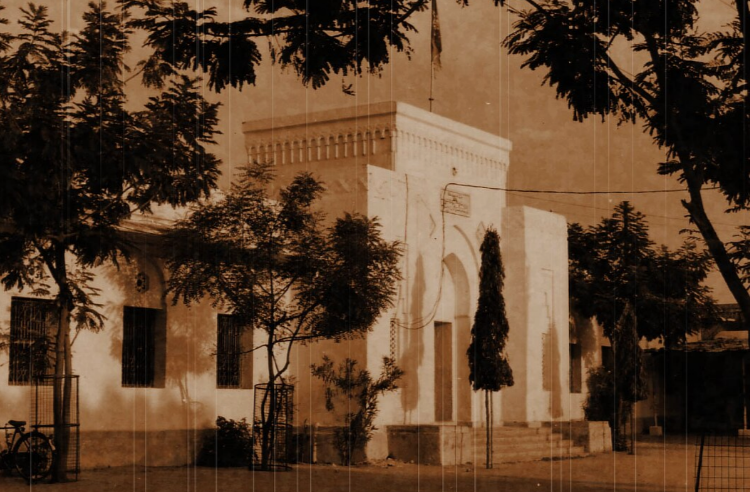
In today’s world of fleeting fame and material success, the life of Shaikh ul Islam, Hazrat Moulana Hafiz Muhammad Anwarullah Farooqui (Fazilat Jung), stands as a timeless reminder of what true vision, sacrifice and spiritual dedication can achieve. His greatest legacy, Jamia Nizamia, is not just an institution it is a living, breathing symbol of Hope, Knowledge and Faith that continues to shape Islamic scholarship in India and beyond.
A Humble Beginning with Great Ambition
Jamia Nizamia was founded in 1872 CE (1292 Hijri) by Shaikh ul Islam himself. Historical accounts note that the groundwork was laid on 19th Dhul Hijjah 1292 Hijri, in consultation with scholars of the era. From this modest beginning emerged one of the most respected centers of Islamic learning in South Asia not through wealth or royal influence alone, but through unwavering trust in Allah, passion for knowledge, and relentless service to the Muslim community.
The Struggle & Sacrifice
Shaikh ul Islam did not build this seminary from riches or personal comfort. His life was centered on Knowledge, Humility and Service to the Ummah. Whenever the seminary faced financial strain, he turned to prayer with complete reliance on Allah. Instead of pursuing material security or status, he devoted every breath to Teaching, writing and Institution building.
His contributions were not limited to Jamia Nizamia. He played a key role in establishing Dairatul Maarif, an institution dedicated to restoring and publishing rare Arabic manuscripts. He also contributed to what would evolve into the State Central Library in Hyderabad, preserving priceless knowledge for future generations. His service extended beyond his time, enriching the intellectual heritage of the community for more than a century.
Building a Strong and Lasting Educational Infrastructure
Under his guidance, Jamia Nizamia evolved into a comprehensive Islamic university style seminary offering theology, Hadith, Quran, Fiqh, Logic, Arabic literature, Philosophy and various branches of humanities. It was not merely a madrasa it was a structured academic institution, producing scholars of high Caliber, Integrity and Discipline.
The infrastructure he built was not only physical. It was an infrastructure of values Academic excellence, Spiritual grounding, Ethical leadership and Public service. He empowered the poor to become scholars, the ordinary to become leaders and generations to become custodians of Islamic knowledge.
A Wide and Deep Legacy
From this single institution, Thousands of Islamic scholars, Jurists, Teachers and Spiritual guides have emerged over the decades. Their teachings, Fatwas, Books, Sermons and Community leadership continue to shape Muslim society across India and the world. Every class taught, every student trained, every fatwa issued is part of a legacy that began with one man’s sincerity.
Shaikh ul Islam’s commitment to preserving manuscripts means that knowledge once hidden in private collections is now taught, studied, and shared. He did not just educate individuals. He Protected an entire intellectual tradition and ensured that Islamic sciences would remain accessible for centuries to come.
A Message to Our Generation
In the age of quick fame and social media trends, Shaikh ul Islam’s life reminds us that:
- Real success is not fame it is service.
- Real legacy is not wealth it is knowledge.
- Real leadership is not authority it is humility.
He did not build Jamia Nizamia for himself. He built it for the Ummah, for future Scholars, for Generations yet unborn.
Carrying the Flame Forward
Today, when we walk through the halls of Jamia Nizamia or see its graduates serving communities worldwide, we are witnessing more than brick and mortar. We are witnessing the result of A lifetime of faith, Vision and Sacrifice.
The responsibility now belongs to us. Will we support and strengthen this legacy or will we be a generation that only admires it from a distance?
Great legacies do not survive by memory alone They survive by participation.
Let us not be the generation that only remembers what was built.
Let us be the generation that Continues what was started.