
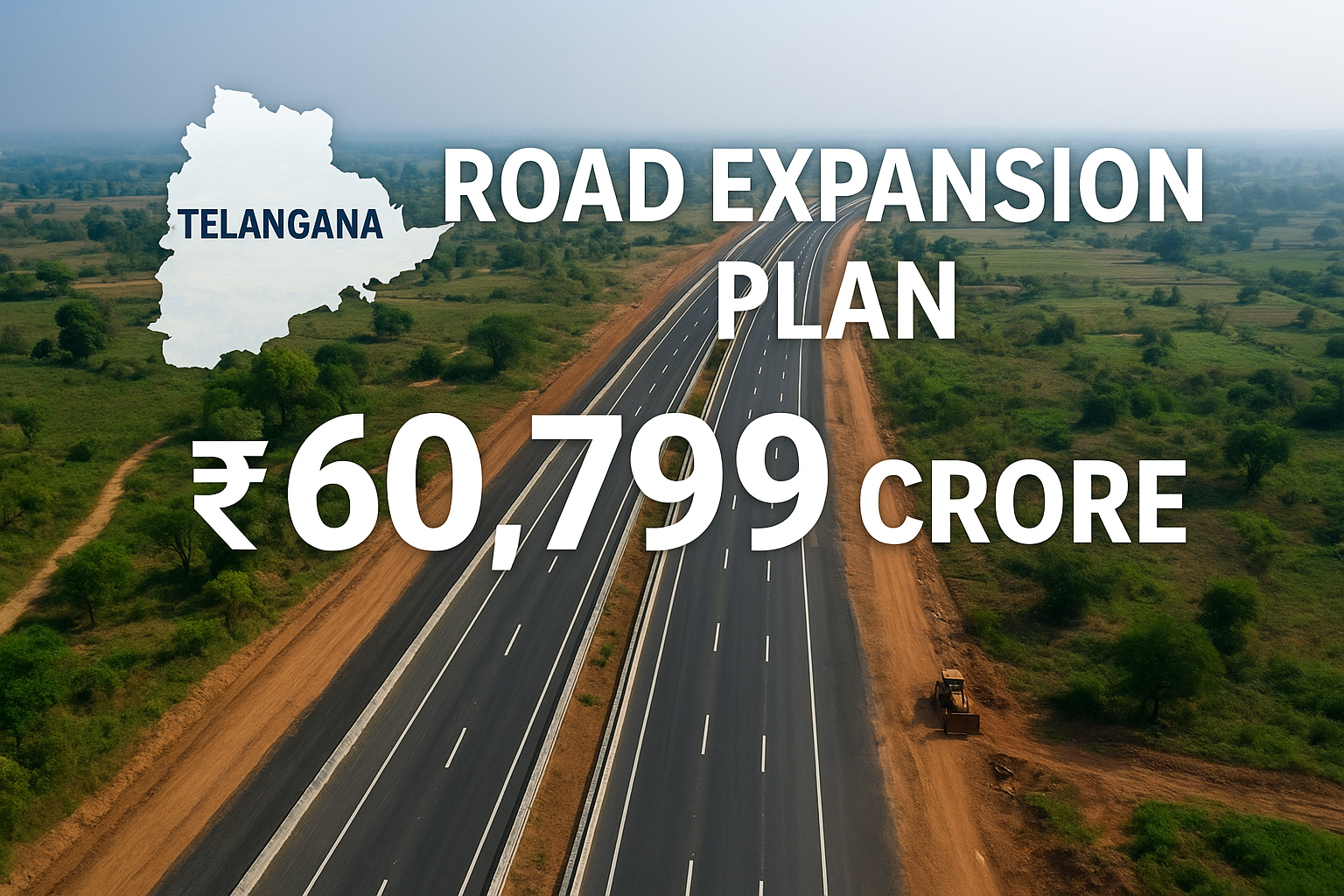
The Telangana government has unveiled a sweeping road development program worth approximately ₹60,799 crore, aimed at revamping the state’s transport infrastructure, boosting investment and employment, and improving rural connectivity.
Major Projects and Cost Break down
According to Roads & Buildings Minister Komatireddy Venkat Reddy, the following headline projects form part of the plan:
- Hyderabad – Vijayawada National Highway Upgrade: Expansion from four lanes to eight lanes, from Abdullapur Industrial Park to Vijayawada, with an estimated cost of ₹10,400 crore. Six lanes will serve as the main carriageway and two as service roads for local access and safety.
- Regional Ring Road (RRR): A six lane expressway connecting all districts across Telangana, with an estimated cost of ₹36,000 crore, jointly funded by the State and Central governments.
- Mannanur – Srisailam Elevated Corridor: A 52 km elevated highway project estimated at ₹8,000 crore, currently in the final approval stage.
- Greenfield Highway to Rajahmundry via Amaravati: A new highway linking Bharat Future City (near Hyderabad) to the port at Rajahmundry, budgeted at ₹20,000 crore, designed to improve interstate trade access.
- Rural Road Upgradation: Additional programmes under the Hybrid Annuity Model (HAM) worth ₹11,000 – 11,399 crore, aimed at improving single-lane rural roads and building new roads in habitations without proper access.
Government’s Rationale & Focus
Minister Komatireddy described the initiative as the largest infrastructure investment in Telangana’s history, designed to position the state as a global investment destination. Improved road networks, he said, will attract multinational companies, promote industrial growth and create large scale employment, especially in rural areas.
He also emphasized that road safety and modern engineering standards will be key priorities. Design approvals will be based on detailed traffic-congestion studies. Chief Minister A. Revanth Reddy and Deputy Chief Minister Bhatti Vikramarka are expected to review the progress of the projects every 15 days.
Implementation Outlook & Challenges
While the announcement is ambitious, implementation will depend on:
- Timely land acquisition and clearances for greenfield and ring-road projects.
- Effective fund mobilisation and coordination between State and Central governments.
- Maintaining construction quality and ensuring long-term maintenance, especially in HAM projects.
- Overcoming delays caused by environmental or regulatory hurdles.
Broader Implications
- Industrial Growth: Improved connectivity will reduce logistics costs, strengthen links to ports and attract new investments.
- Rural Development: Upgraded village and mandal roads will ensure better access to markets, schools, and healthcare facilities.
- Employment Generation: The government expects lakhs of youth to benefit from both direct construction jobs and post project economic activity.
- Political Significance: The massive infrastructure push is likely to strengthen the government’s developmental credentials ahead of future elections.
Conclusion
With a total outlay of ₹60,799 crore, the Telangana government’s road expansion plan marks one of the largest infrastructure initiatives in the state’s history. If implemented effectively, it could redefine Telangana’s connectivity and accelerate economic growth. The key challenge now lies in execution, cost control, and ensuring benefits reach all regions, particularly rural communities.