
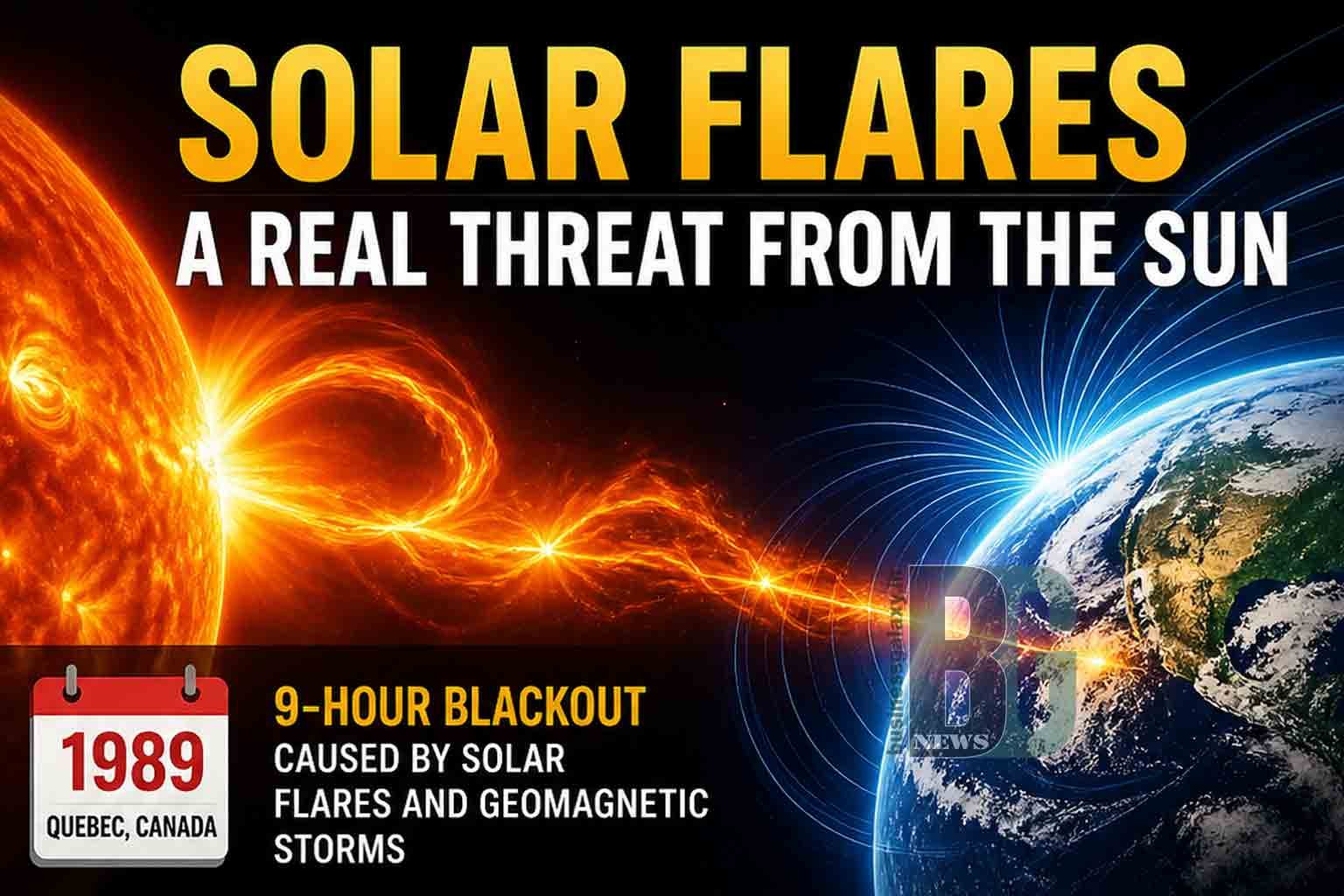
A powerful space weather event in 1989 left millions without electricity in Quebec for nearly nine hours, highlighting a little known but serious threat from the Sun. The blackout was triggered by intense solar activity, specifically a massive Solar flare and the geomagnetic storm that followed.
What Are Solar Flares?
Solar flares are sudden bursts of radiation released from the Sun’s surface. These events often send charged particles toward Earth, disturbing its magnetic field and creating what scientists call geomagnetic storms.
What Happened in 1989?
In March 1989, a strong geomagnetic storm disrupted the power grid in Quebec within seconds. The system collapsed, causing a widespread blackout that affected millions of people. The incident became a landmark example of how space weather can directly impact life on Earth.
How Solar Flares Affect Everyday Life
Solar flares and related space weather can disrupt key systems worldwide:
- Satellites: Affect GPS, Television and Communication networks
- Aviation: Interrupt radio communication, especially on long distance and polar routes
- Telecommunications: Cause signal disruptions and outages
- Power Grids: In extreme cases, trigger large scale blackouts
Impact in India
India can also be affected by solar storms, though usually less severely than regions closer to the poles.
- Temporary communication disruptions may occur
- Satellite services like GPS and broadcasting can face disturbances
- Aviation communication may be impacted
- Power grid effects are generally limited, but strong storms can still cause fluctuations
Because India is located closer to the equator, it is relatively less vulnerable to extreme geomagnetic effects compared to high latitude regions like Canada or Northern Europe.
Are There Warnings?
Yes. Space agencies such as NASA and global monitoring centers track solar activity continuously. They can issue warnings hours to a few days in advance, helping governments and industries prepare.
How Many Countries Can Be Affected?
Solar flares are global events, not limited to a single country.
- Effects are strongest on the side of Earth facing the Sun
- Multiple countries or even entire continents can experience disruptions at the same time
- In extreme cases, global systems like satellites and communications could be impacted
Why It Matters Today
With the world increasingly dependent on satellites, digital communication, and electricity, the risks from solar storms are greater than ever. A major event today could disrupt not just one region, but interconnected systems worldwide.
Conclusion
The 1989 Quebec blackout remains a powerful reminder that events on the Sun can have real consequences on Earth. While such incidents are rare, they underline the importance of monitoring space weather and strengthening infrastructure to reduce risks.
As technology continues to grow, understanding solar flares is no longer just scientific curiosity it is essential for protecting modern life.