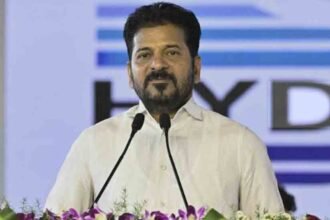

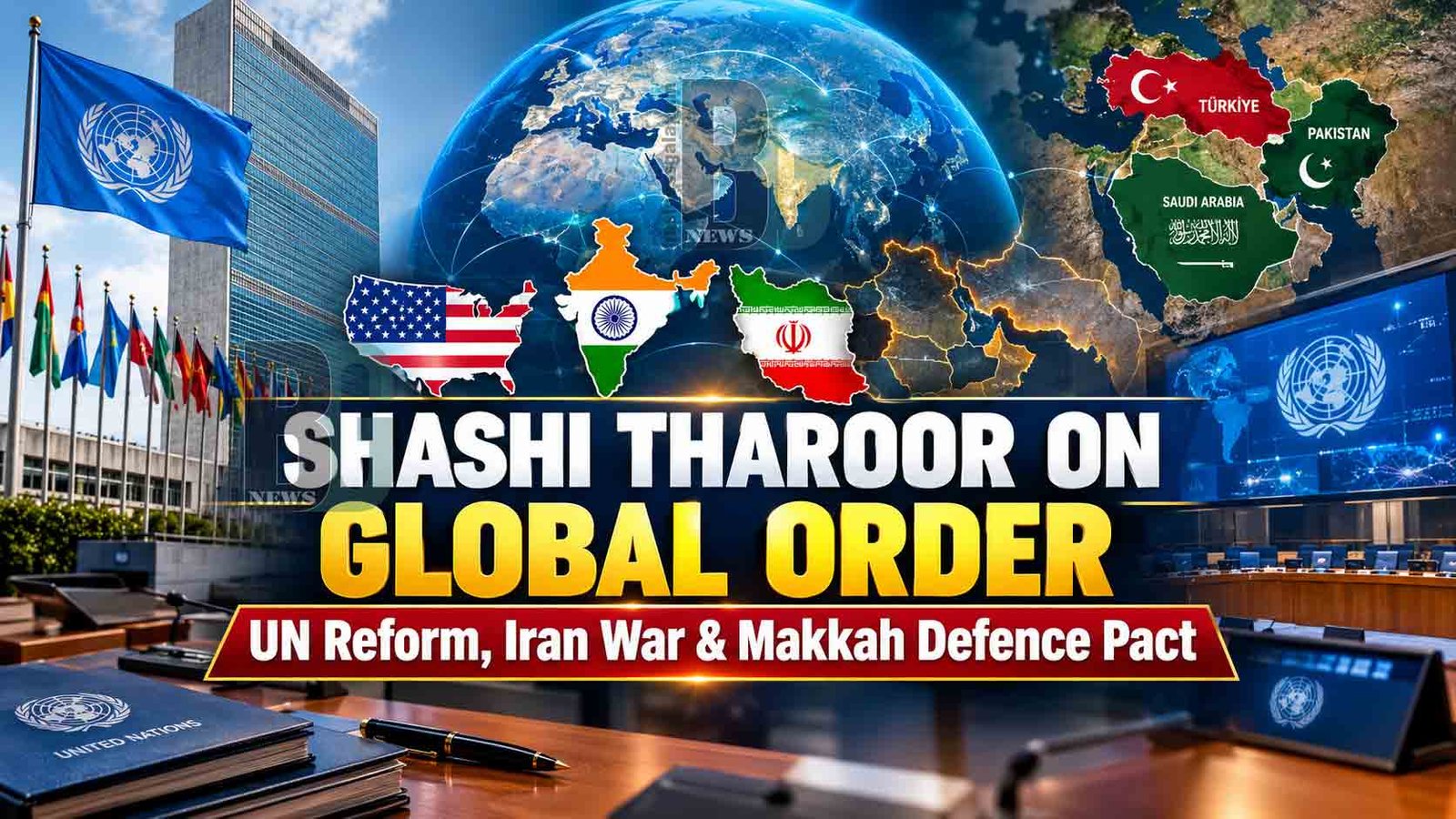
Congress MP and former United Nations official Dr. Shashi Tharoor has discussed the changing global order, reform of the United Nations, the ongoing Iran conflict, Washington’s role in international diplomacy and India’s approach to emerging security arrangements in West Asia.
The discussion covered broader questions about the future of multilateral institutions and global governance as major powers increasingly pursue competing strategic and economic interests.
UN Reform and Changing Global Order
- Tharoor has argued that the international system is undergoing significant changes, with existing global institutions facing pressure to adapt to new geopolitical realities.
- He has also highlighted the importance of strengthening multilateral institutions and giving countries such as India a greater role in global decision making.
- India’s growing diplomatic and economic influence, according to Tharoor, gives New Delhi an important role in discussions about the future of the international order.
Iran War and US Role
- The discussion also examined the Iran conflict and Washington’s role in global diplomacy.
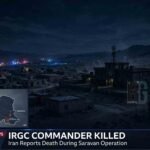
- The escalation involving Iran, the United States and Israel has created wider concerns across West Asia, including questions about regional security, energy supplies and the future of diplomatic engagement.
- Tharoor’s comments placed the conflict within the larger question of how major powers are shaping international diplomacy and how countries such as India can protect their interests while maintaining relationships with different sides.
India’s Strategic Autonomy
- A key element of Tharoor’s foreign policy perspective is strategic autonomy.
- He has previously argued that India should maintain the freedom to engage with different countries based on its national interests rather than becoming permanently aligned with any one major power.
- This approach is particularly relevant as India manages relationships with the United States, Russia, China, Gulf countries and other important partners.
Makkah Defence Agreement
- The discussion also touched on India’s view of the Makkah Joint Defence Agreement involving Saudi Arabia, Pakistan and Turkiye.
- The agreement provides for a collective security commitment in which an armed attack against one of the participating countries is to be treated as an attack against all three.
- Tharoor has argued that the agreement should be examined carefully and should not automatically be viewed as equivalent to a fully integrated military alliance.
- He has also highlighted India’s significant economic and strategic relationship with Saudi Arabia and other Gulf countries.
Balancing Regional Interests
- For India, the developments in West Asia have implications beyond security.
- The Gulf region is important to India because of trade, energy supplies, investment and the large Indian community living and working there.
- Tharoor has therefore stressed the importance of maintaining diplomatic engagement with regional countries while protecting India’s security and economic interests.
A Wider Foreign Policy Debate
- Tharoor’s comments form part of a broader debate over how India should respond to an increasingly complex international environment.
- The Iran conflict, US foreign policy, UN reform and new regional defence arrangements are all contributing to discussions about the future of global diplomacy.