

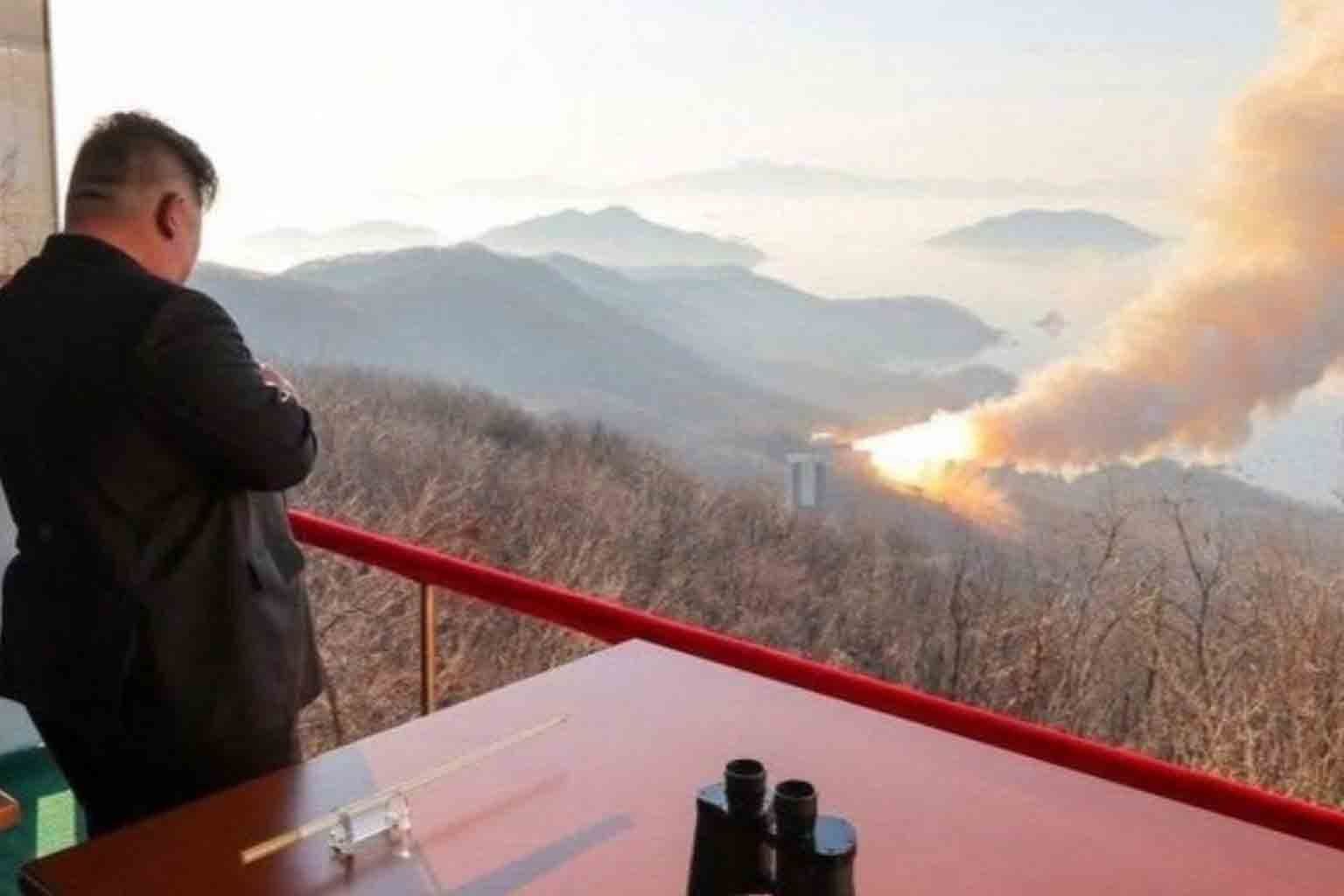
North Korea has announced that it conducted a ground test of a new solid fuel rocket engine, a development that could strengthen its long‑range missile capabilities. The test was supervised by Supreme Leader Kim Jong Un and described by state media as a major step in modernizing the country’s strategic arsenal.
According to North Korean officials, the engine is designed to provide higher thrust and greater readiness than previous models. Solid‑fuel engines offer advantages over liquid fuel systems because they can be launched more quickly and require less preparation, making them less vulnerable to detection before launch.
In the official announcement, Pyongyang said the test was successful and that the technology would be integrated into future missile designs. Foreign analysts note that solid fuel propulsion could eventually be used in missiles with the range to reach distant targets, including the U.S. mainland, though a full operational system has not yet been demonstrated.
The engine test took place at a facility in North Korea’s interior and no missile was launched during the exercise. State news agency coverage showed the engine operating on its test stand, producing a sustained plume of flame and smoke. Observers say that the effort reflects Pyongyang’s ongoing focus on improving its weapons programs amid heightened tensions in the region.
International reactions were swift. U.S. and South Korean officials reiterated concerns about North Korea’s missile development and emphasized the importance of diplomacy and pressure to curb further advances. South Korea’s defense ministry said it would continue close monitoring and strengthen joint defense measures with allies.
Experts say that while North Korea has previously tested intercontinental ballistic missiles capable of reaching the United States, the addition of improved solid fuel technology could make future systems more reliable and harder to detect. However, they caution that translating an engine test into an operational long range weapon involves additional engineering challenges and requires further testing.
The launch of a complete missile system was not confirmed, and independent verification of the engine’s performance remains limited. International monitors and intelligence agencies will likely continue to assess the implications of Pyongyang’s latest weapons development.
North Korea has conducted a series of missile tests over recent years, drawing repeated United Nations sanctions and international condemnation. Pyongyang maintains that its weapons programs are necessary for national defense and sovereignty in the face of what it describes as hostile foreign policies.