

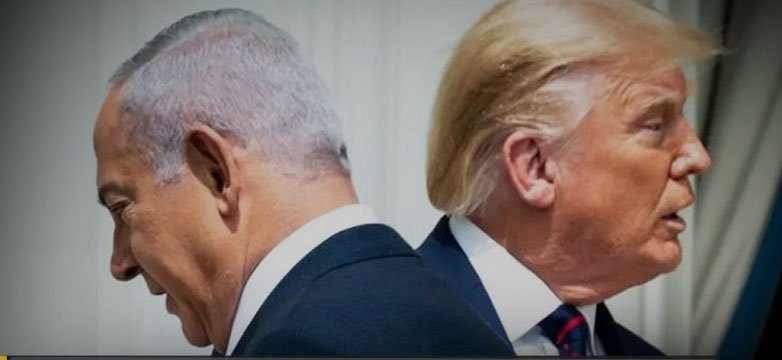
Washington, D.C.: In a strong and unexpected statement, U.S. President Donald Trump warned that Israel could lose all American support if it proceeds with plans to annex the West Bank, signaling a rare break in Washington’s traditionally unwavering stance toward its Middle Eastern ally.
Speaking at a White House press briefing on Monday, President Trump said,
“If Israel moves ahead with annexing the West Bank, it will lose every bit of support from the United States Political, Military and Financial. America stands for peace and stability, not permanent occupation.”
The statement marks one of Trump’s most direct criticisms of Israeli policy since his return to office. It comes amid growing international concern over escalating violence in Gaza and the West Bank, and renewed debates about the two state solution.
Policy Shift and Global Impact
The President’s remarks signal a potential reassessment of U.S. foreign policy toward Israel a country long regarded as one of Washington’s closest allies. While Trump has maintained a firm pro-Israel reputation in the past, his latest stance reflects frustration over Israel’s continued military operations and settlement expansion, which have drawn widespread condemnation.
According to senior administration officials, Trump’s warning was intended as a “Strategic message” to encourage Israel to pursue dialogue rather than unilateral territorial moves.
“President Trump wants peace through negotiation, not annexation,” said a White House national security advisor. “He believes that further expansion will isolate Israel internationally and destabilize the entire region.”
Reactions from Israel and the International Community
Israeli officials responded cautiously, with the Prime Minister’s Office releasing a brief statement saying the country “values its alliance with the United States” and will “continue to engage in diplomatic dialogue.”
However, right wing Israeli leaders criticized Trump’s remarks, accusing Washington of “Interfering in Israel’s sovereignty.” Meanwhile, Palestinian leaders welcomed the statement, calling it “a long overdue recognition that annexation is illegal under international law.”
The European Union and the United Nations also praised the U.S. President’s warning, describing it as a “Positive step toward restoring accountability in the peace process.”
Analysts See a Turning Point
Middle East experts view Trump’s declaration as a potential Turning point in U.S. – Israel relations, one that could pressure Israeli leadership to rethink its territorial ambitions.
“Trump is recalibrating American power in the region,” said Dr. Laila Nasr, a political analyst at the Brookings Institution. “This is not about abandoning Israel, but about demanding restraint and responsibility.”
The Road Ahead
With tensions already high across the region and public opinion in the U.S. divided, the coming weeks may determine whether Trump’s warning translates into diplomatic action or remains a rhetorical rebuke.
For now, the President’s statement has injected Fresh uncertainty into one of the world’s most enduring geopolitical alliances and into the future of the Middle East peace process itself.