
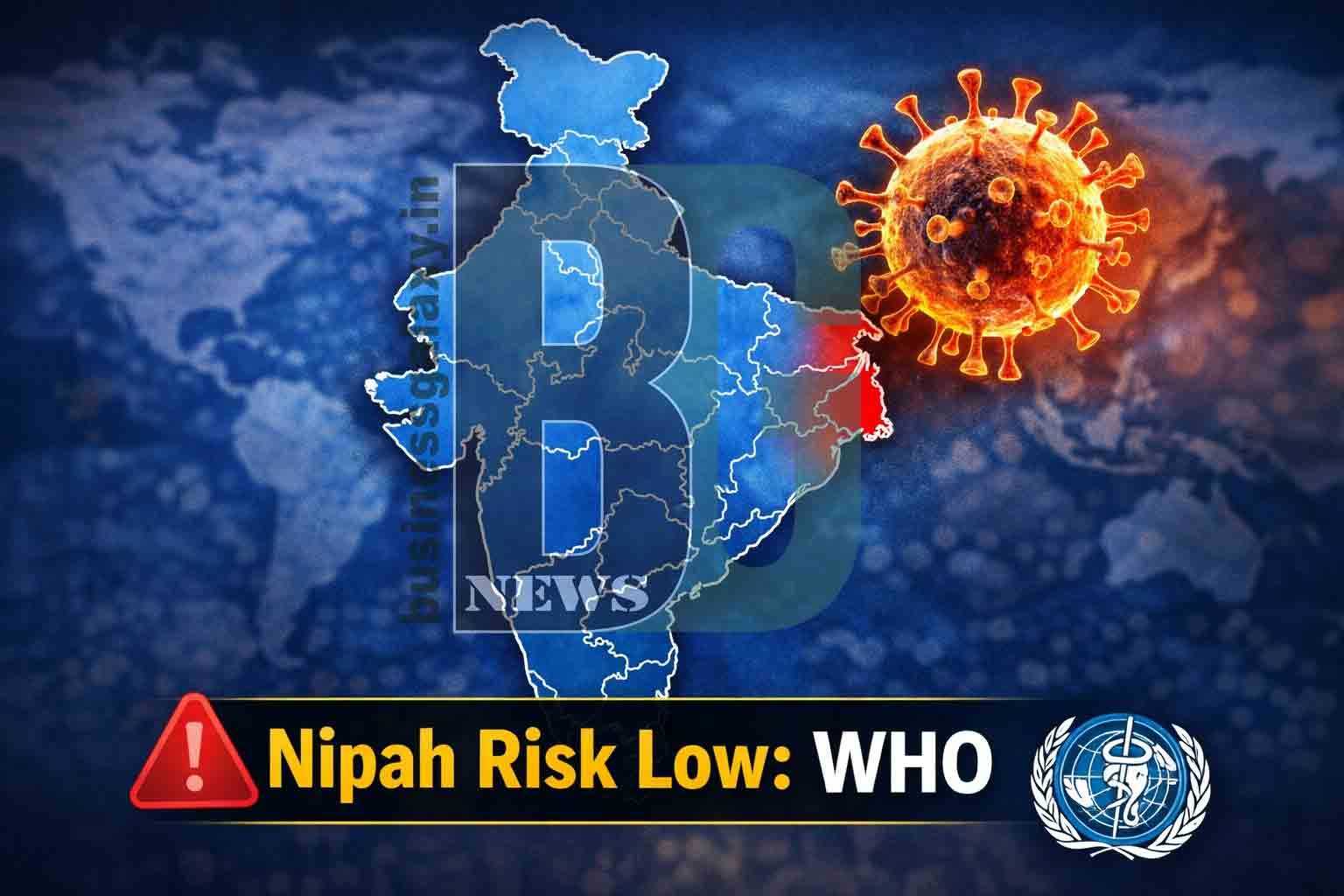
The World Health Organization (WHO) has assessed that the risk of the deadly Nipah virus spreading beyond India’s borders remains low, even after two confirmed infections were reported within the country. The global health agency also said that travel and trade restrictions are not currently necessary.
The statement came as health authorities around parts of Asia, including Hong Kong, Malaysia, Singapore, Thailand and Vietnam, stepped up airport health screenings for travelers arriving from India amid the recent outbreak. But the WHO said there is no evidence of increased human to human transmission so far and reaffirmed its confidence in India’s ability to contain the cases.
WHO’s Assessment and Recommendations
According to the WHO, while the Nipah virus is known for a high fatality rate estimated between 40 % and 75 % it does not spread easily between people. Most human infections result from contact with infected animals like fruit bats or through consumption of contaminated food, rather than sustained person‑to‑person transmission.
Key points from the WHO’s assessment include:
- The agency considers the risk of further spread from the two confirmed cases in India to be Low at national, Regional and Global levels.
- No travel or trade restrictions are recommended at this time.
- There is currently no evidence of increased human to human transmission.
- The WHO continues to coordinate closely with Indian health authorities to monitor the situation.
Outbreak Details and Response
The recent cases were confirmed in the North 24 Parganas district of West Bengal, where two health workers tested positive for the virus. Health authorities and WHO officials have traced and monitored hundreds of contacts linked to these patients, with no additional infections detected so far.
India has experienced sporadic Nipah outbreaks in the past, particularly in Kerala, where multiple documented outbreaks occurred over the last decade. The virus is classified by the WHO as a priority pathogen, partly because there is no approved vaccine or specific treatment, and partly due to concerns about its potential to mutate.
Global and Regional Vigilance
Although the current situation is being classified as low risk for international spread, some neighboring countries have taken precautionary measures such as enhanced health screening at airports. These steps aim to detect symptomatic travelers and quickly isolate possible cases to prevent cross‑border transmission.
The WHO continues to stress that early detection, isolation, and supportive care are critical in managing Nipah virus infections, and that ongoing surveillance and cooperation among nations remain important to public health security.