
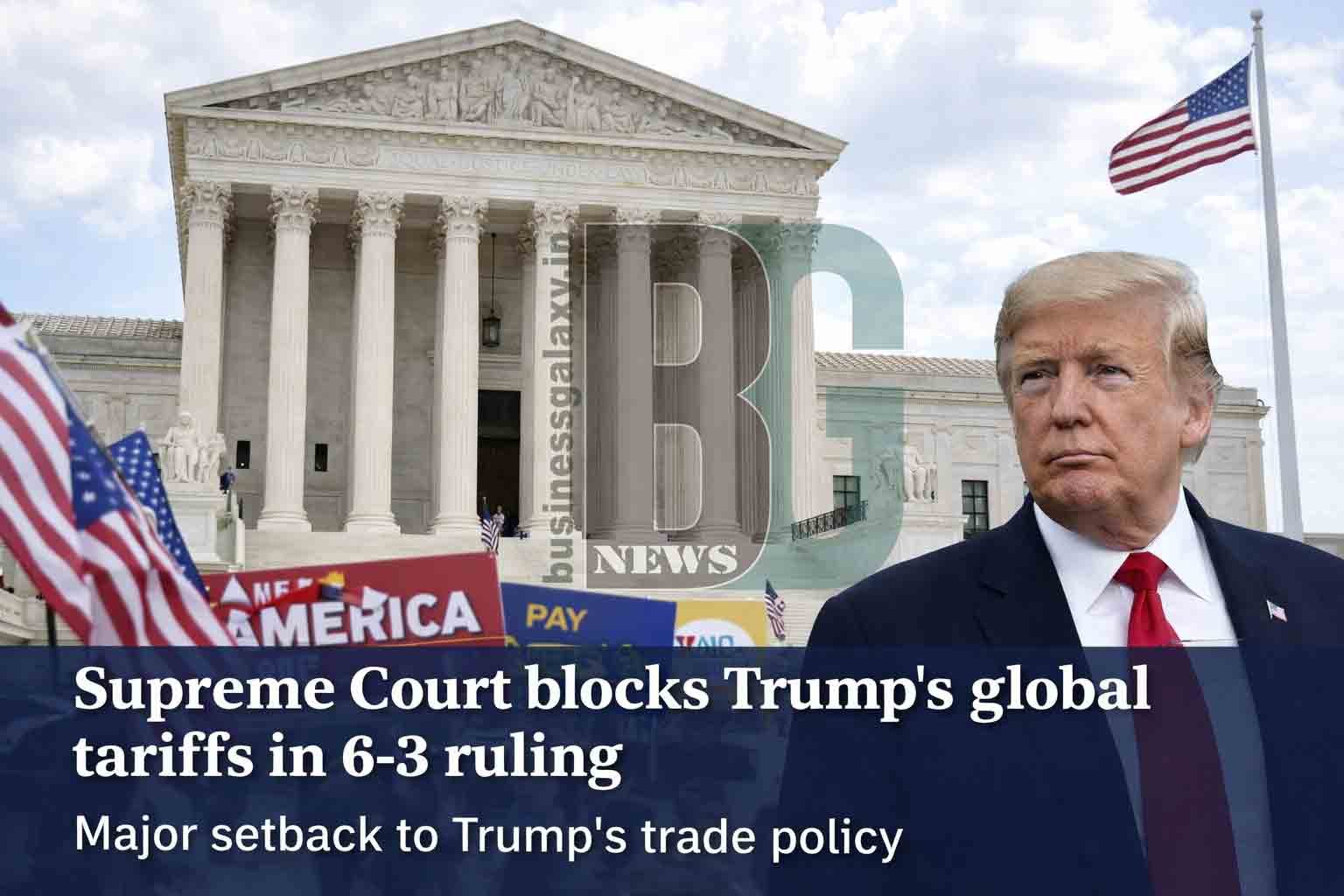
Washington: The Supreme Court of the United States on Friday (February 20) struck down former President Donald Trump’s sweeping global tariffs, delivering a major blow to a key pillar of his economic policy.
In a 6-3 ruling, the court invalidated tariffs imposed under an emergency powers law, including the wide ranging “Reciprocal” duties applied to nearly all trading partners. The majority held that the president exceeded the authority granted under the statute, concluding that the use of emergency powers to impose such broad trade measures was not justified.
This marks the first major element of Trump’s policy agenda to be directly tested before the nation’s highest court. Trump, who appointed three justices during his first term, had described the case as one of the most important in US history and warned that a decision against him would cause serious economic harm.
Justices Samuel Alito, Clarence Thomas and Brett Kavanaugh dissented, arguing that the president’s actions fell within the scope of powers delegated by Congress and that courts should not second guess trade decisions made in the name of national security.
Opposition to the tariffs cut across political lines. Legal challenges were supported not only by Democratic aligned groups but also by libertarian and pro-business organizations that typically side with Republican policies. Critics argued the tariffs raised consumer prices, disrupted supply chains and hurt American businesses that depend on imported goods.
Public opinion has also been lukewarm toward the tariff policy. Surveys have shown limited support for higher import duties, particularly as voters remain concerned about rising costs of living and affordability.
The ruling is expected to have wide implications for future trade policy, limiting how far presidents can go in using emergency powers to reshape global commerce without explicit approval from Congress.