

What Is the UMEED Portal?
UMEED stands for Unified Waqf Management, Empowerment, Efficiency & Development. It was launched under the Waqf (Amendment) Act, 2025, aiming to digitally register and manage all Waqf properties in India. The initiative is part of the government’s effort to bring transparency and accountability to the management of Waqf lands, Mosques, Schools, Graveyards and Charitable assets.
Key Features of the Portal
1. Digital Mapping & Geo tagging
Every Waqf property is digitally mapped using GIS and given a unique 17 digit identification number to ensure proper tracking and management.
2. Three Tier Verification System
Maker: The Mutawalli (property manager) or authorized person inputs details.
Checker: District level officer verifies information.
Approver: State Waqf Board CEO or senior officer approves the data.
3. Grievance Redressal Section
Allows citizens or beneficiaries to raise complaints about mismanagement or disputes, ensuring transparency.
4. Social Welfare Module
The portal includes a system to support widows, divorced women and orphans using verified Waqf funds, integrated with Aadhaar and direct benefit transfers.
5. Mandatory Property Registration
All Waqf boards are required to upload and verify property details within six months of the Act’s enforcement.
The Dark Reality Behind UMEED
Although the initiative was promoted as a modernization step, several serious issues have surfaced:
- Legal and Constitutional Concerns
The Waqf (Amendment) Act, 2025, is being challenged in the Supreme Court. Critics argue that it undermines the autonomy of Waqf Boards and violates minority rights by placing religious endowments under heavy government control. - Slow Implementation
Despite the deadline, very few properties have been successfully registered. Many Mutawallis lack digital literacy and several state boards are under staffed and under equipped. - Ambiguous Clauses
The exclusion of properties registered in women’s names and removal of the “Waqf by user” concept has caused confusion and resentment, particularly in cases where land was informally donated or used for community welfare for decades. - Fear of Misuse and Government Overreach
Many fear the centralized system may allow authorities to seize or re classify disputed or poorly documented Waqf lands. Critics claim it could lead to the gradual loss of community owned properties.
Why Many Muslims Are Boycotting the Act
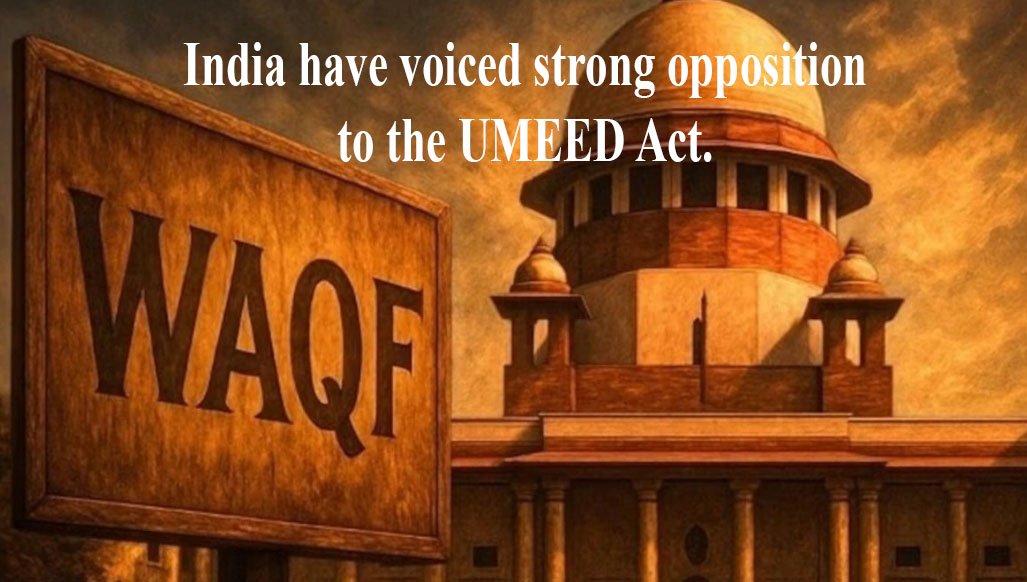
Muslim Organizations, Scholars and Legal experts across India have voiced strong opposition to the UMEED Act. Their reasons include:
- Loss of Religious Autonomy:
Waqf properties are religious endowments governed by Islamic principles. Many believe government control over their registration and approval process violates this autonomy. - Fear of Land Confiscation:
Several community leaders allege that the digital registration process might be used to re-evaluate or reclassify Waqf land, leading to disputes or loss of property under bureaucratic control. - Lack of Consultation:
Before passing the amendment, major Muslim bodies including state Waqf Boards, legal councils, and scholars were reportedly not adequately consulted. This has created distrust toward the government’s intentions. - Distrust in Data Use:
Many fear that centralizing data on religious properties might expose sensitive community assets to misuse, manipulation or targeting. - Community Call for Boycott:
As a result, several Muslim organizations and clerics have advised people not to register their properties on the UMEED portal until the Supreme Court gives a final verdict on the law’s legality.
What’s at Stake
For the Muslim community, Waqf assets are deeply tied to faith and social welfare they fund Education, Healthcare, Mosques and Burial grounds. A flawed or mistrusted system could endanger not just property, but the very institutions that serve millions of people.
For the government, however, UMEED represents a bold step toward digitizing one of India’s most complex property management systems. If implemented transparently and fairly, it could prevent corruption, illegal encroachments and misuse of religious assets.
The real challenge lies in building trust ensuring that modernization does not come at the cost of community autonomy or constitutional protection.
Conclusion
UMEED has the potential to revolutionize Waqf management by bringing transparency and accountability. However, unless the government reassures the community, addresses the legal loopholes and ensures inclusive participation, the project risks being remembered not as reform but as overreach.
Muslims across India are not against modernization, they seek Fairness, Representation and Respect for their religious laws. For the UMEED portal to live up to its name “hope” it must rebuild that trust first.