
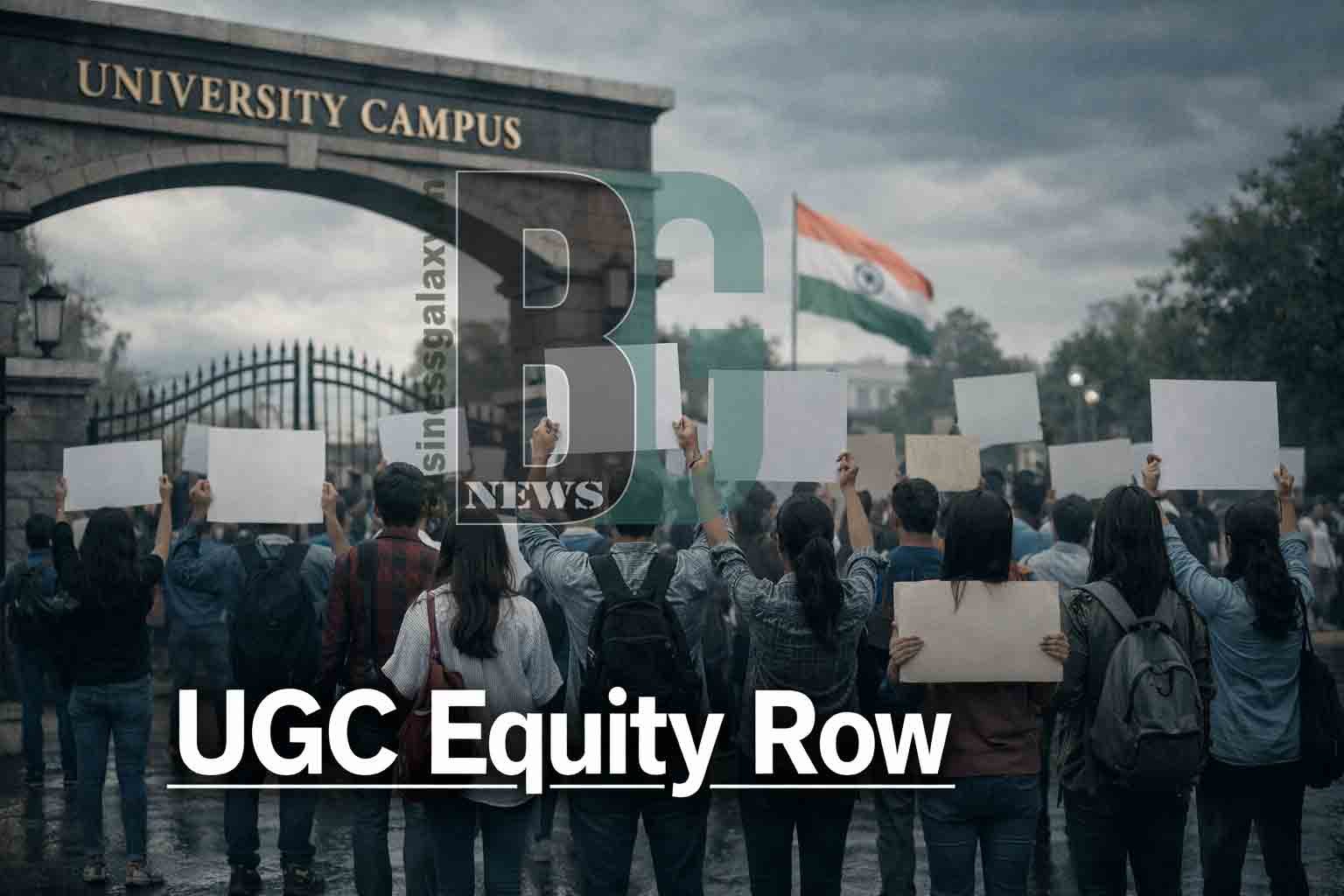
Protests against the University Grants Commission’s (UGC) newly framed equity rules have triggered a wider political debate, with critics arguing that the agitation reflects a deeper shift in India’s majoritarian politics. Observers say the backlash marks a new phase in the long running narrative of Hindu victimhood promoted by organisations affiliated with the Sangh parivar over the past decade.
For more than 11 years, the ruling political ecosystem has projected the Hindu community which forms nearly 80 per cent of India’s population as historically disadvantaged in independent India. Despite occupying a demographic and political majority, Hindus have increasingly been portrayed as vulnerable to cultural erosion, economic displacement and political marginalisation.
From warnings about being outnumbered in the future to claims that national resources are being diverted to minority communities, this narrative has sought to generate a sense of collective insecurity. Analysts say such messaging has been used to consolidate political support by reframing majority dominance as minority status.
The rise of Prime Minister Narendra Modi and the Bharatiya Janata Party (BJP) has coincided with the mainstreaming of this discourse. Opposition parties have been accused of practising “minority appeasement”, while welfare measures for Dalits, Muslims and Adivasis have frequently been dismissed as “vote bank politics”. Terms such as tushtikaran and “casteist politics” have become common labels applied to regional parties rooted in Mandal and Dravidian traditions of social justice.
At the same time, the BJP and its ideological affiliates have normalised the use of Hindu religious identity as a political tool. Campaigns invoking “Hindu unity” have been framed as a legitimate response to perceived historical wrongs, even as caste based or minority focused politics are portrayed as divisive.
Political commentators note that this approach has reversed traditional understandings of privilege and disadvantage. Affirmative action policies and welfare schemes designed to address entrenched inequalities have been rebranded as obstacles to national progress, rather than instruments of social correction. In public discourse, structural inequalities faced by marginalised groups are often downplayed, while cultural symbolism has been elevated as the primary marker of injustice.
The controversy surrounding the UGC’s equity rules is seen as part of this broader ideological project. Critics argue that measures intended to promote inclusion in higher education are now being recast as threats to merit and fairness, reinforcing the idea that the majority is being unfairly burdened by policies aimed at upliftment.
Supporters of the protests, however, contend that the rules risk diluting academic standards and creating new forms of discrimination. They insist that equity policies must be reviewed to ensure transparency and balance.
As the debate intensifies, scholars warn that sustained emphasis on majority victimhood could reshape India’s social contract. By framing inclusion as injustice and diversity as threat, they argue, political discourse risks deepening polarisation rather than addressing the material inequalities that continue to define access to education, employment and opportunity.
With higher education emerging as a new battleground, the clash over the UGC’s equity framework signals not only an administrative dispute but also a struggle over how justice, merit and identity are defined in contemporary India.