
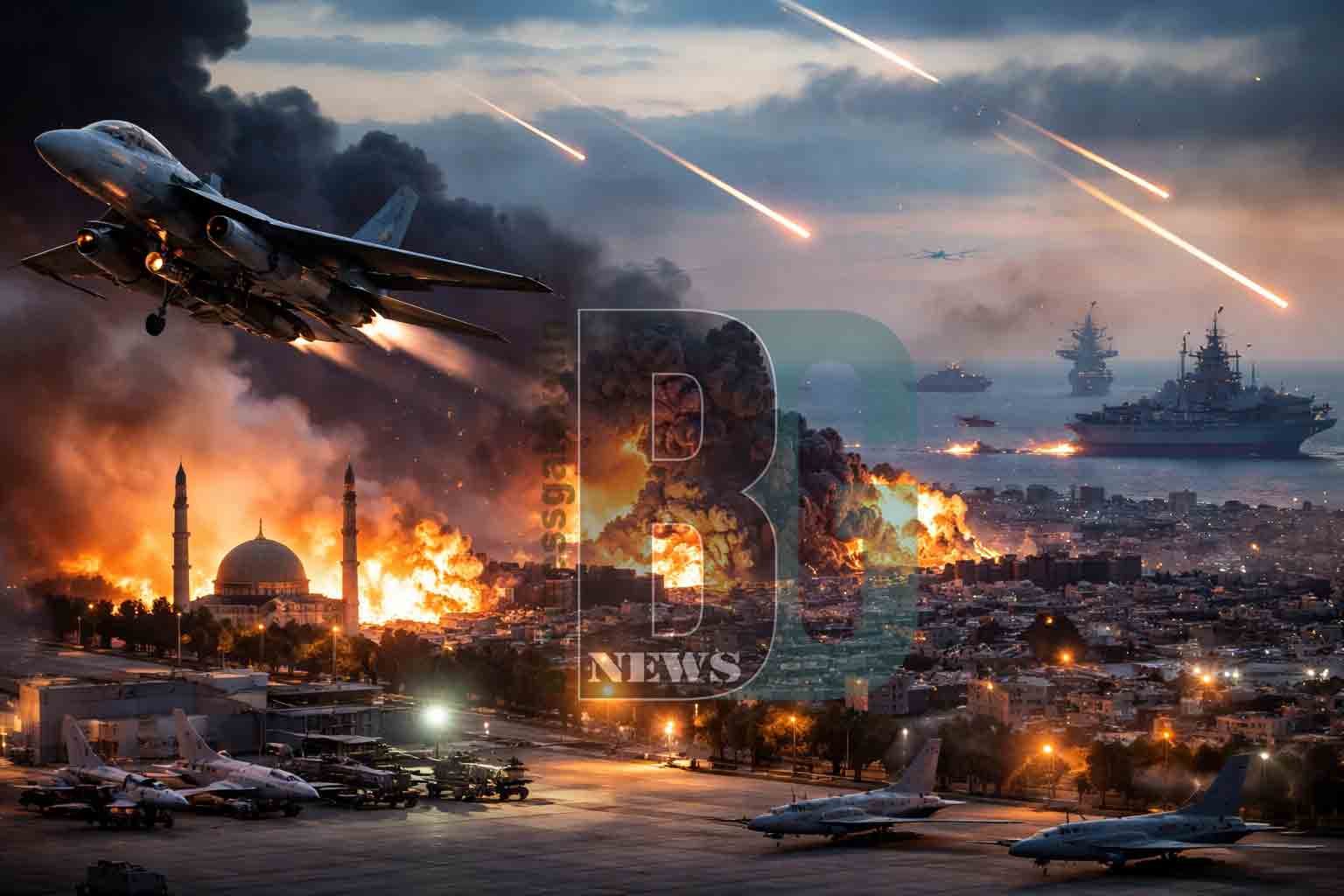
A major military escalation has erupted between the United States and Iran, following coordinated airstrikes by the U.S. and Israel on Iranian military and nuclear related facilities. The conflict has spread beyond Iran’s borders, drawing in multiple regional states and triggering global diplomatic reactions.
How Many Countries Were Involved or Hit?
Iran’s retaliation targeted U.S. and Israeli military assets located across several Middle Eastern countries. Missile and drone operations affected airspace and bases in:
- Iraq
- Kuwait
- Bahrain
- Qatar
- United Arab Emirates
- Saudi Arabia
- Jordan
- Israel
This means at least 8 countries were directly impacted either by strikes, interceptions, or military alerts linked to the conflict.
Several of these nations reported missile interceptions, falling debris and airspace shutdowns, though most denied direct hits on population centers.
Damage and Casualties
In Iran
- Iranian authorities claim over 200 people killed and hundreds wounded.
- Damage reported to military bases, missile depots, radar systems and infrastructure near urban areas.
- Civilian sites, including residential zones, were reportedly affected.
In Gulf Countries
- Limited structural damage from missile debris.
- Temporary closure of airports and airspace.
- No confirmed mass civilian casualties.
In the U.S. and Israel
- The U.S. says no major casualties among its forces so far.
- Israel reports missile interceptions and minor infrastructure damage.
U.S. Position and Military Strength
The U.S. government says the strikes were preventive and defensive, aimed at disabling Iran’s nuclear and missile capabilities.
Key points of U.S. strength:
- Advanced air power and long range strike capability
- Carrier strike groups in the region
- Global intelligence and surveillance systems
- Integrated missile defense with allies
The U.S. claims it has:
- Destroyed key Iranian military targets
- Severely damaged nuclear related infrastructure
- Retained “full operational control” in the region
Washington warns that further Iranian attacks will be met with stronger military action.
Iran’s Position, Strength and Claims
Iran says it is acting in self defense against foreign aggression.
Key strengths Iran highlights:
- Large ballistic missile stockpile
- Drone warfare capability
- Regional allied forces and militias
- Strategic geographic reach across the Gulf
Iran claims it has:
- Successfully struck U.S. military assets
- Forced airspace closures across the region
- Demonstrated ability to hit multiple countries simultaneously
- Caused economic and military disruption
Tehran insists its retaliation is legitimate under international law.
Which Countries Support Iran?
Countries that have openly or politically supported Iran or condemned U.S. Israeli strikes include:
- Russia
- China
- Syria
- Lebanon (via political factions)
- Venezuela
- Several Latin American and African states
These countries:
- Call the strikes illegal
- Accuse the U.S. of violating sovereignty
- Demand an immediate ceasefire
However, no major power has announced direct military support for Iran so far.
Countries Backing or Leaning Toward the U.S. and Israel
- Israel (full military cooperation)
- United Kingdom (political support)
- Australia
- Some European allies
Most European states have urged restraint, while recognizing Israel’s security concerns.
Is There Any Peace Talk?
Before the strikes, indirect negotiations were reportedly underway between the U.S. and Iran through mediators. These talks were close to progress but have now collapsed due to the conflict.
Current situation:
- No formal peace talks are active
- Oman and other mediators are urging dialogue
- Both sides say talks can only resume if attacks stop
Diplomatic channels remain open, but no ceasefire agreement exists yet.
Global Risk and Outlook
Analysts warn that:
- A prolonged war could destabilize the Middle East
- Oil prices and trade routes may be affected
- Civilian casualties could rise
- Proxy groups could expand the conflict
International organizations are urging:
- Immediate de-escalation
- Protection of civilians
- Return to negotiations
Conclusion
The U.S. – Iran conflict has now:
- Affected multiple countries
- Caused hundreds of casualties
- Divided the world diplomatically
- Frozen peace negotiations
With neither side backing down, the risk of a wider war remains high. The next phase will depend on whether diplomacy can regain ground before military action intensifies further.