
What happened in the Supreme Court hearing?
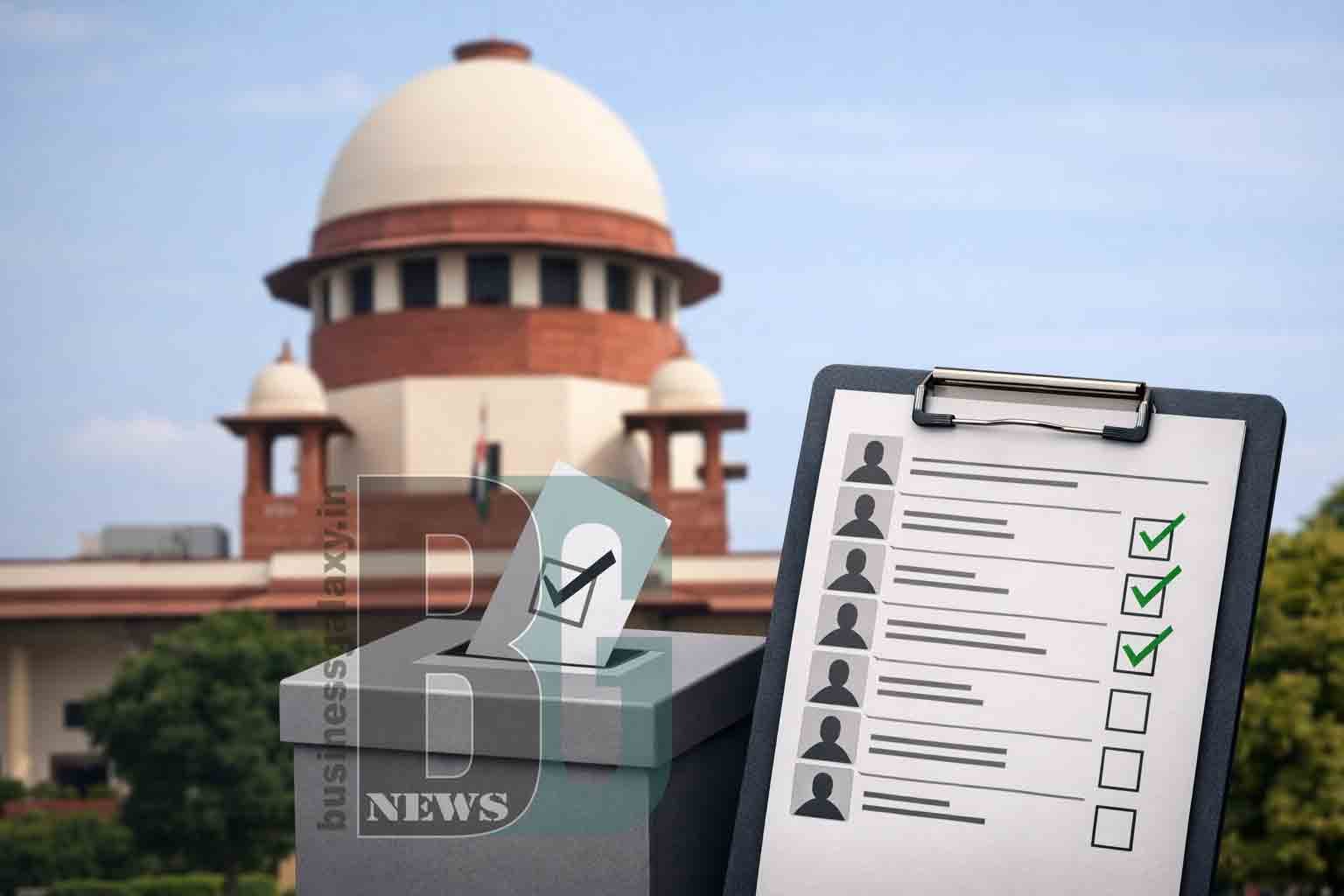
The Supreme Court of India heard multiple petitions challenging the Special Intensive Revision (SIR) of electoral rolls being conducted in West Bengal by the Election Commission of India (ECI). A bench led by Chief Justice Surya Kant, along with Justices Joymalya Bagchi and Vipul M. Pancholi, directed the ECI to be “more careful and sensitive” when issuing notices for minor name‑spelling mismatches and other small discrepancies during the SIR process.
The Court emphasized that genuine voters should not be wrongly flagged or excluded due to trivial spelling differences (like “Datta” vs. “Dutta”), especially when such mismatches arise from dialect or transliteration issues.
Why this direction was given
The issue arose from petitions including one filed by West Bengal CM Mamata Banerjee, who appeared before the Court to argue that the SIR process has led to “large‑scale disenfranchisement” of voters due to procedural flaws and insensitive implementation. Petitions highlighted how millions of voters were marked with “logical discrepancies” many due to minor spelling differences and received notices to prove identity or eligibility, causing public hardship. Lawyers noted that over 70 lakh discrepancy cases in West Bengal stemmed primarily from small spelling mismatches, and that sending notices for such issues without proper care was unfair.
What the Supreme Court said
The Court agreed that notices should be issued carefully, especially in cases where discrepancies are trivial or arise from linguistic/dialect variations. The bench pointed out that even public figures ended up in discrepancy lists due to such mismatches, underscoring the need for sensitivity.
The bench did not immediately order withdrawal of all notices already issued, noting that in many cases it may not be practical, but urged more cautious and judicious treatment going forward.
Other key points raised in the hearing
- Mamata Banerjee’s arguments: She alleged West Bengal and its voters were being “Targeted” and said the SIR was effectively being used for deletion, not inclusion, of voters.
- She also criticised the ECI’s process and language used in communications.
- The Court issued formal notices to the ECI and the Chief Electoral Officer of West Bengal and asked them to respond by Feb 9, 2026.
- The bench mentioned that if the state can provide a list of officers to relieve micro‑observers, these roles could be reassigned a comment tied to broader procedural concerns in SIR.
Why this matters
The SIR process was launched nationwide, including West Bengal, to verify and update electoral rolls ahead of upcoming elections. However, its execution has generated strong political and legal pushback in the state, especially over how discrepancies are identified and acted upon.