
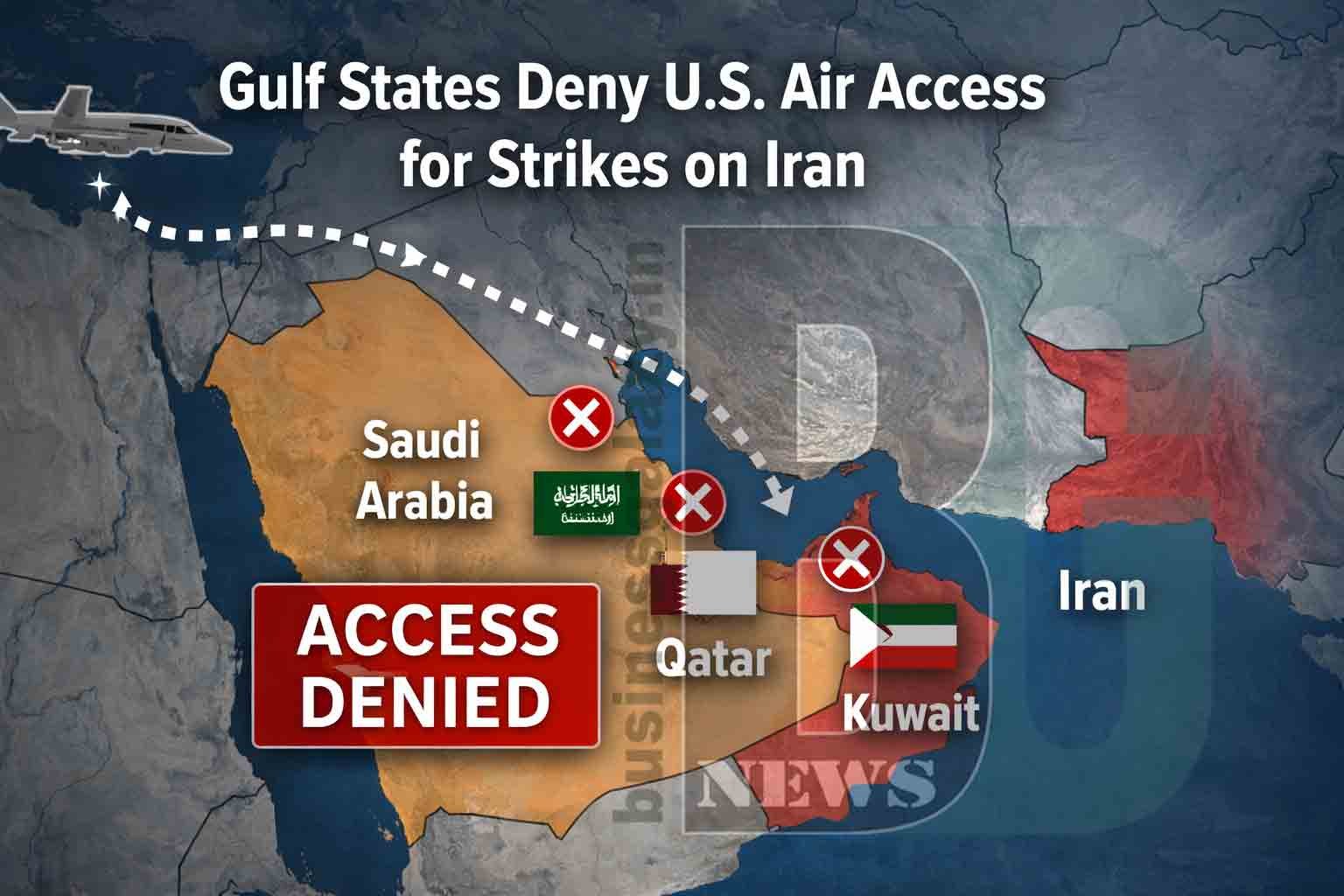
Amid rising tensions with Iran, several Gulf countries have reportedly refused to grant the United States access to their airspace and military bases for potential strikes. At the same time, the number of countries that have explicitly agreed remains uncertain, highlighting the complex geopolitical situation in the region.
Countries Denying Access
- Saudi Arabia has clearly stated it will not allow U.S. forces to use its territory or airspace for attacks on Iran, emphasizing neutrality and a desire to avoid escalation.
- Qatar and Kuwait have reportedly restricted or prohibited the use of their bases for offensive operations against Iran, despite hosting U.S. forces.
- Other Gulf states, including the UAE, have signaled caution, underscoring that while they cooperate with U.S. military logistics, they do not permit their territory to be used for offensive action.
Countries Hosting U.S. Bases
- The United States maintains military bases in Bahrain, Qatar, Kuwait, UAE, Iraq, Saudi Arabia, Jordan and Turkey, primarily for defense, logistics, and regional operations.
- These bases could support a range of missions, but there is no public confirmation that host countries have approved their use specifically for strikes on Iran.
Analysts’ View
Defense experts note that while the U.S. has a substantial military footprint in the Middle East, official permission to conduct offensive strikes against Iran is limited or ambiguous in several host countries. Saudi Arabia, Qatar and Kuwait’s refusals demonstrate regional caution and a desire to prevent escalation into a broader conflict.
Key Takeaways
- Exact numbers of countries agreeing to provide airbases for strikes are unknown.
- Multiple Gulf countries have formally refused or restricted access for attacks on Iran.
- The situation underscores the diplomatic complexities the U.S. faces in mobilizing regional air operations amid heightened tensions.
The evolving stance of Middle Eastern nations reflects delicate balancing between maintaining security partnerships with the United States and avoiding escalation with Iran.