
Nearly six years after the launch of the Atmanirbhar Bharat Abhiyan, India continues to struggle with reducing its dependence on imports, particularly in the merchandise sector. The campaign was announced on May 12, 2020, in response to the economic disruption caused by the COVID-19 pandemic. As part of the initiative, the Finance Minister unveiled a ₹20 lakh crore economic package, roughly equal to 10 per cent of India’s GDP at the time.
The programme aimed to strengthen domestic manufacturing, support Micro, Small and Medium Enterprises (MSMEs), and reduce import reliance through reforms in agriculture, industry and infrastructure. It was rolled out in five tranches, focusing on liquidity support, production incentives and structural changes in key sectors.
However, an examination of trade trends over the past six Union Budgets suggests that these goals have not been fully realised. India continues to record large merchandise trade deficits, indicating persistent structural dependence on imported goods.
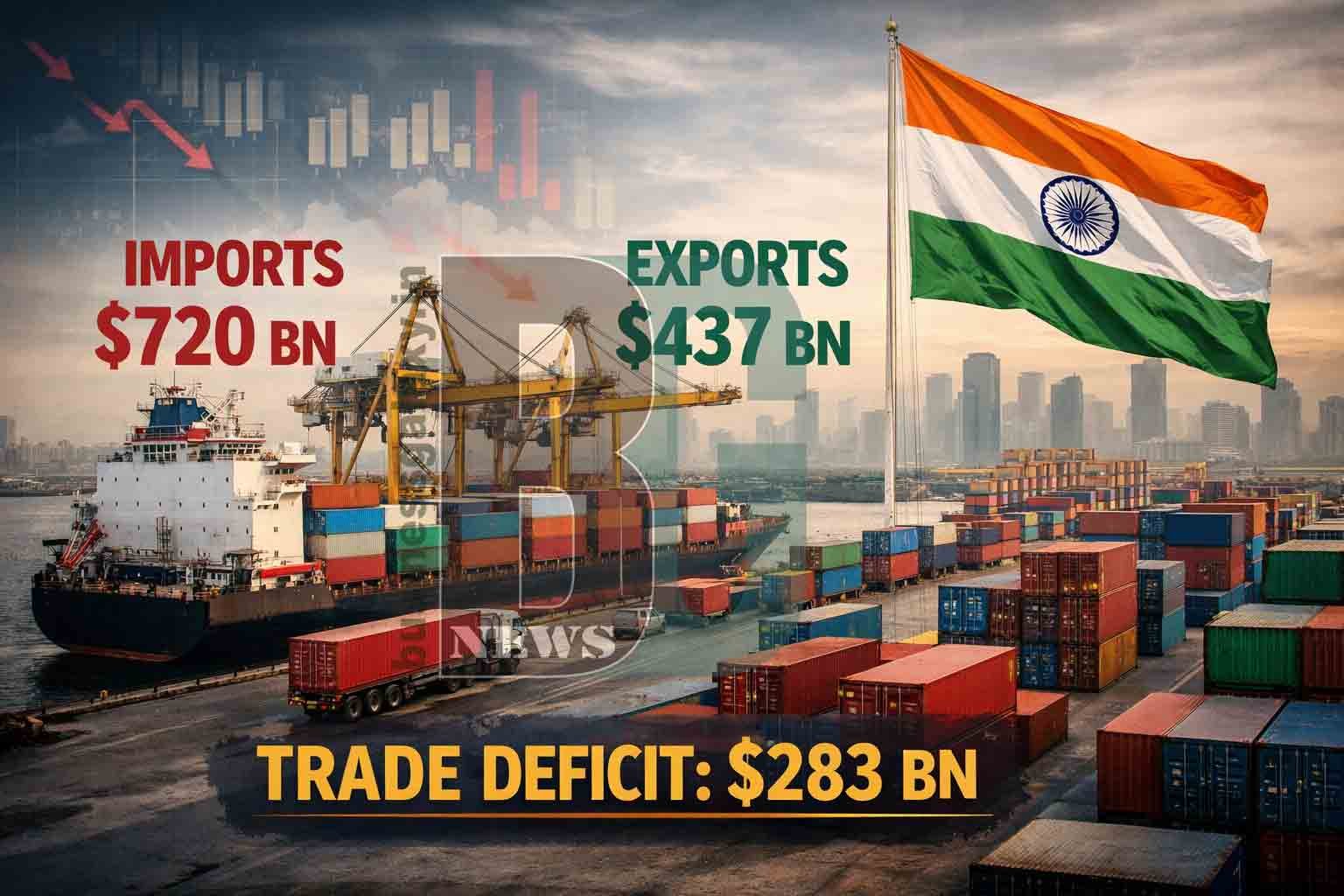
According to foreign trade data, in FY25, India’s merchandise imports were around USD 720 billion, while exports stood at approximately USD 437 billion. This resulted in a goods trade deficit of nearly USD 283 billion. When services are included, total imports reached USD 915 billion against total exports of USD 821 billion.
A similar pattern was seen in FY24, when merchandise imports were about USD 678 billion and exports remained around USD 437 billion, leading to a trade deficit of roughly USD 241 billion.
While India has performed strongly in services exports such as IT, business services and consultancy, its reliance on imported crude oil, electronics, machinery and chemical products continues to weigh heavily on the trade balance. Analysts point out that this reflects structural reliance rather than short term fluctuations.
Experts also note that frequent budget level policy adjustments have not addressed deeper issues such as domestic manufacturing capacity, technology gaps and supply chain resilience. Instead of reducing import dependence, India has become more integrated into global supply chains, particularly in intermediate goods and energy imports.
The Atmanirbhar Bharat vision remains a long term goal, but recent data suggests that fiscal measures alone are insufficient to achieve self reliance. Stronger industrial strategy, technology development and sector specific reforms may be required to significantly reduce India’s merchandise import dependence.