

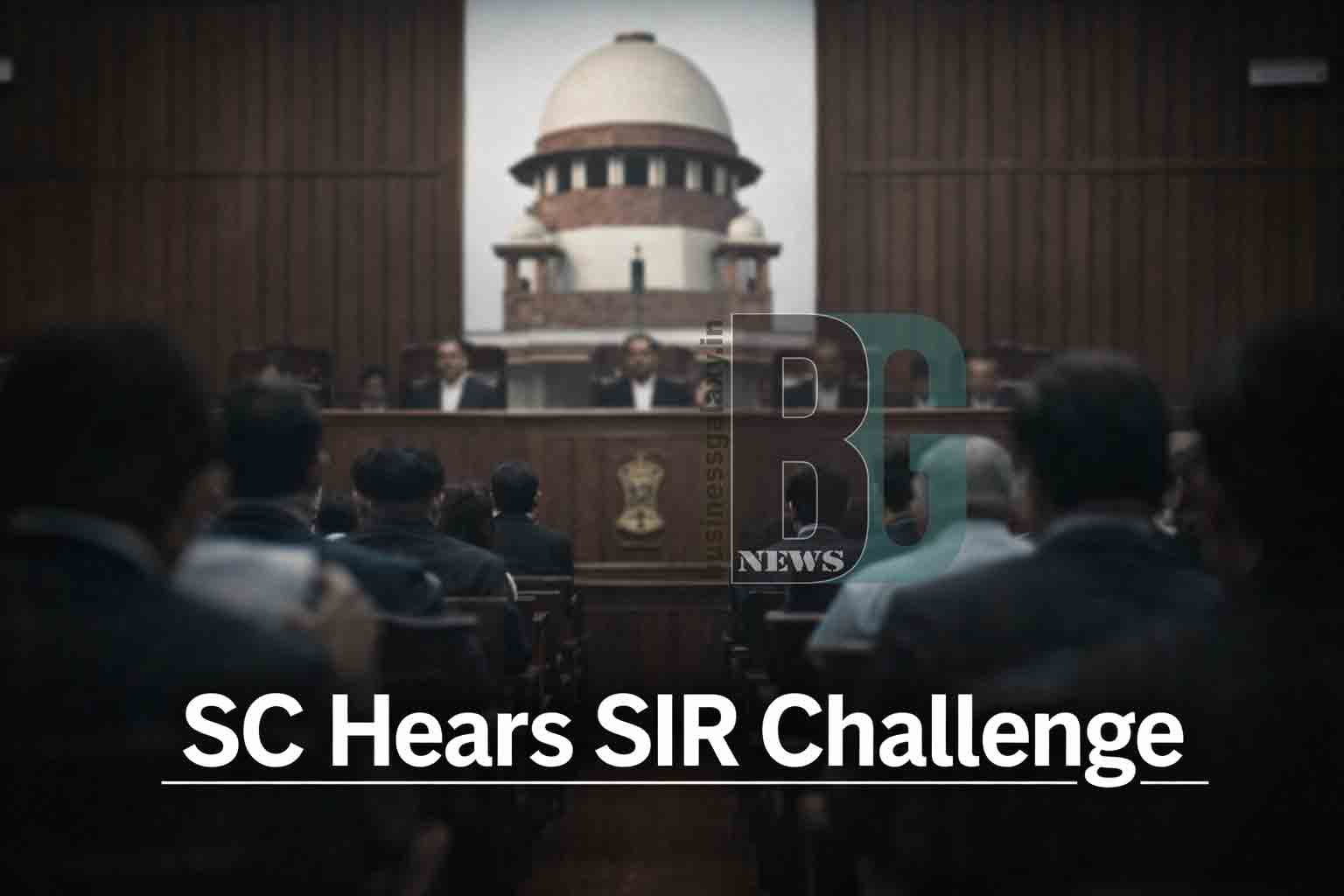
The Supreme Court on Tuesday heard a batch of petitions challenging the Election Commission’s Special Intensive Revision (SIR) of electoral rolls, amid sharp criticism from opposition parties who claim the exercise could lead to large-scale exclusion of eligible voters.
During the hearing, petitioners argued that the SIR process places an excessive burden on citizens to prove their eligibility and could disproportionately affect migrant workers, minorities, and economically weaker sections. They contended that the revision was being carried out close to upcoming elections, raising fears of arbitrary deletions and political misuse.
Opposition parties questioned the timing and intent of the exercise, alleging that it could be used to manipulate voter lists under the guise of verification. Leaders from the Congress and other parties said the process risks undermining universal adult franchise, a core principle of the Constitution.
“The right to vote cannot be made conditional on complex documentation requirements. Any revision must be transparent and inclusive,” an opposition representative told the court.
The Election Commission defended the SIR, stating that the exercise is meant to ensure accuracy in electoral rolls by removing duplicate and ineligible entries while adding genuine voters who may have been left out earlier. It argued that periodic revision is a statutory duty and is essential for maintaining the integrity of elections.
The bench sought detailed clarification from the poll body on the safeguards in place to prevent wrongful deletions and asked how grievances would be addressed. The court also questioned whether adequate public notice and time had been given for citizens to verify their names in the rolls.
Legal experts observing the proceedings said the case raises important questions about balancing electoral integrity with voter inclusion. While clean voter lists are necessary, they noted that any process that risks disenfranchisement must meet strict standards of fairness and transparency.
The Supreme Court is expected to continue hearing the matter and may issue directions on procedural safeguards, including timelines, appeals mechanisms, and the use of technology in the verification process.
The outcome of the case could have significant implications for future voter list revisions and for the conduct of elections across the country, especially in states heading into assembly or local body polls.