
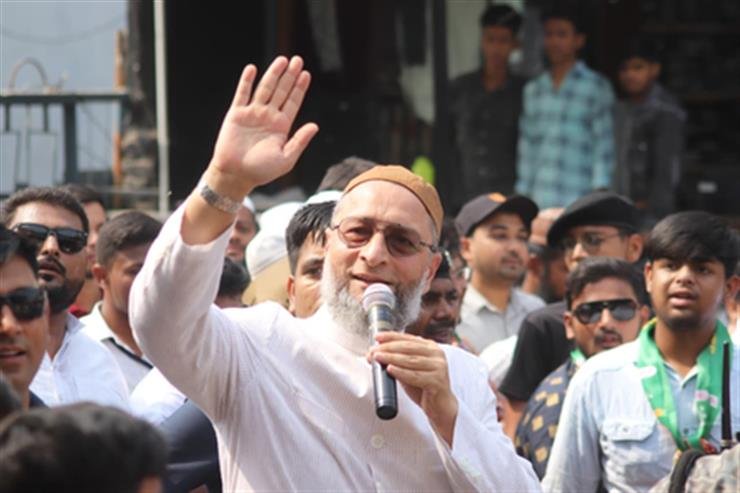
AIMIM’s Seemanchal Nyay Yatra, led by Asaduddin Owaisi from September 24-27, 2025, is shaping up to be a significant campaign in the Bihar Assembly elections. Aimed at highlighting the underdevelopment, socio-economic injustices, and political marginalization of the Seemanchal region, the Yatra is both a political strategy and a message of hope for many residents. Here’s what’s coming out on the ground, what AIMIM might gain, and where things stand now.
Ground Work: What’s Being Done
- The Yatra kicked off in Kishanganj and proceeded through constituencies like Thakurganj, Bahadurganj, Kochadaman, Jokihat, Araria, Purnia, Baisi, Amour, Katihar, Balrampur, Kadwa, and Pranpur. AIMIM organized roadshows, corner meetings, and public rallies to engage directly with local people.
- Owaisi repeatedly pointed out how Seemanchal lags behind on development indicators Poor roads, Electricity, Healthcare, Water Supply, and Schooling, along with decades of neglect by successive governments.
- A major plank of AIMIM’s demand is the creation of a Seemanchal Region Development Council under Article 371 of the Constitution, allowing focused governance, budgetary allocations, and policy attention specific to the region. Owaisi also introduced a Private Member’s Bill in Parliament toward this.
What AIMIM Stands to Gain
- Electoral Gains: In the 2020 elections, AIMIM contested about 19 – 25 seats in Seemanchal and won five. Through the Yatra, AIMIM hopes to expand its reach, contest more seats, and improve its vote share.
- Grassroots Connection: Direct interaction with voters is helping AIMIM build trust, address grievances, and be seen not just as a party that voices concerns but one that listens.
- Shifting Narrative & Identity Politics: By positioning itself as the champion of justice and equality for a minority and backward region, AIMIM hopes to shift the narrative from religious identity alone to development, rights, and dignity.
Current Updates
- There is growing concern among locals about the voter list revision process (Special Intensive Revision / SIR). Seemanchal has seen higher rates of voter deletions, which AIMIM and local activists say disproportionately affect minority and rural populations.
- Some villages report benefits from welfare schemes like housing and ration programs, but AIMIM argues the benefits remain uneven and inadequate.
- Politically, AIMIM’s request to join the INDIA bloc was rejected, pushing the party to chart its own independent path. This independence is now central to its campaign being the only party that directly stands for Seemanchal’s voice and justice.
Challenges & Limitations
- Deep rooted issues like poverty, migration, illiteracy, and poor connectivity require more than campaign speeches they need long-term policy and execution.
- Strong party alliances in Mahagathbandhan or NDA may overshadow AIMIM’s reach in certain constituencies.
- Voter list deletions could reduce voter turnout in AIMIM-supporting areas.
- Resource constraints and limited media coverage could challenge the party’s narrative.
What’s Next
- After the Yatra, AIMIM is expected to push harder for the Seemanchal Region Development Council.
- The party may intensify its efforts to help people affected by voter deletions and continue raising the issue as a core election plank.
- AIMIM is likely to field candidates in more constituencies across Seemanchal and bring in influential local leaders to strengthen its base.
- Development, justice, and representation for Seemanchal will likely become key election issues in Bihar this season.
Impact So Far
The Yatra has already stirred political awareness in areas that often feel ignored.
The message of justice and regional equality is resonating strongly among youth and marginalized groups.
The focus on Seemanchal’s backwardness and voter list issues has pushed these concerns into mainstream election debates.