
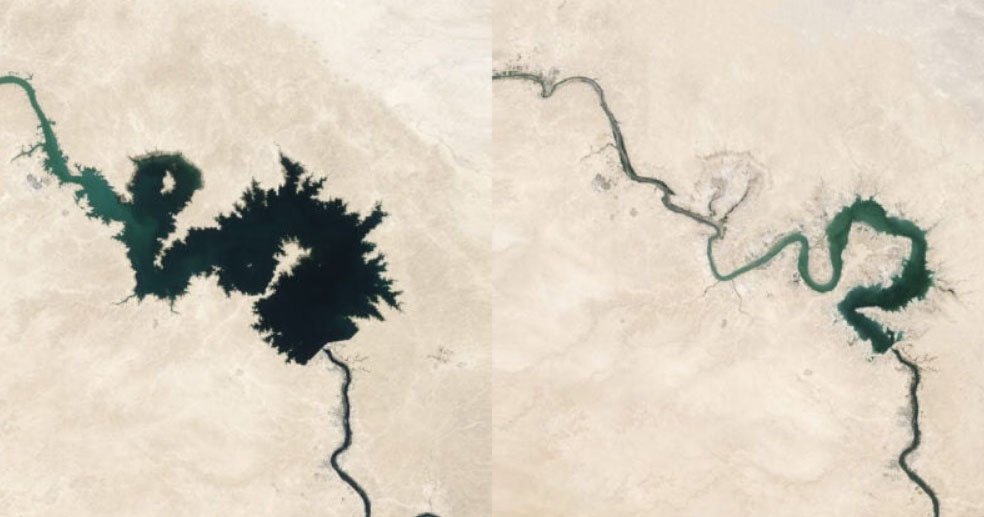
The historic Euphrates River, one of the most vital water sources in Syria and Iraq, is facing severe depletion. Satellite imagery and on-ground reports show that water levels have dropped drastically over the past few years due to climate change, prolonged drought, upstream dam construction and overuse of water resources. Experts warn that the river’s condition has reached a critical stage, threatening agriculture, power generation and the livelihoods of millions of people who depend on it.
The Euphrates, often called the lifeline of Mesopotamia, has sustained civilizations for thousands of years. Today, villages and farmlands that once thrived along its banks are facing severe water scarcity, with many families migrating due to lack of irrigation and drinking water.
Scientific and Environmental Causes
Environmental experts link the drying of the Euphrates to multiple factors:
- Reduced rainfall and rising temperatures due to global climate change.
- Dams built upstream in Turkey and Syria that restrict natural water flow.
- Uncontrolled irrigation and water misuse, further worsening the crisis.
According to environmental agencies, this could be one of the region’s worst water shortages in decades, potentially sparking economic and humanitarian crises if not addressed urgently.
Prophetic Reference in Islam
The drying of the Euphrates is not only an environmental issue it also carries religious and prophetic significance. According to authentic Hadiths of Prophet Muhammad ﷺ, the drying of this river was foretold as one of the signs of the approaching end times.
In Sahih al-Bukhari (Hadith 7119), the Prophet ﷺ said:
“The Hour will not come until the Euphrates uncovers a mountain of gold, over which people will fight, ninety nine out of every hundred will be killed and each man among them will say, ‘Perhaps I may be the one who will take it.’”
Islamic scholars interpret this narration as a symbolic or literal prophecy. Some believe it refers to the discovery of valuable resources (like oil or minerals) beneath the riverbed, while others see it as a warning against human greed and conflict over natural wealth.
Quranic Insight and Reflection
While the Quran does not directly mention the Euphrates drying up, it repeatedly warns mankind about corruption and imbalance caused by human actions on Earth.
Allah says in Surah Ar-Rum (30:41):
“Corruption has appeared throughout the land and sea by what the hands of people have earned, so He may let them taste part of the consequence of what they have done, that perhaps they will return [to righteousness].”
This verse reminds believers that environmental destruction and resource depletion are consequences of human negligence, and serve as a divine reminder to act responsibly.
What Scholars Say
Islamic scholars and environmentalists urge Muslims to treat such events as a reminder of accountability and moderation. The drying of the Euphrates, they explain, symbolizes both environmental crisis and moral decay and calls humanity to repent, reform and respect nature’s balance.
They emphasize that while signs of the Last Day are part of faith, Muslims should focus on positive action conserving resources, preventing exploitation and helping affected communities.
Public Awareness and Responsibility
Citizens are encouraged to:
- Conserve water in daily use.
- Support environmental protection campaigns.
- Spread awareness with verified information avoiding false or exaggerated claims shared on social media.
The Euphrates drying crisis is both a scientific warning and a spiritual reminder, urging global unity, compassion and preparation for the challenges ahead.