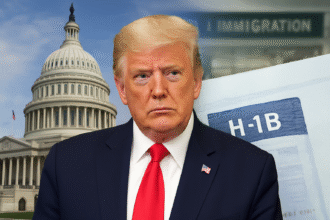

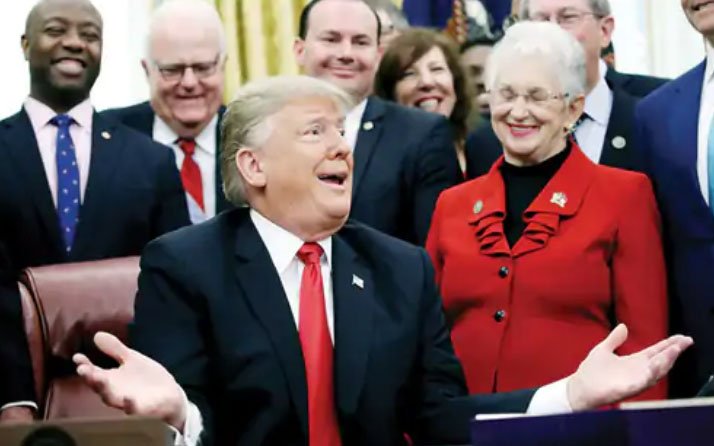
Washington, D.C.: As the U.S. federal government shutdown enters its sixth week, millions of Americans are feeling the ripple effects from unpaid federal workers to disrupted air travel and suspended aid programs. Yet President Donald Trump remains firm, refusing to negotiate with Democrats unless they first vote to reopen the government.
What’s Going On
Since funding expired on October 1, 2025, the federal government has been in a partial shutdown due to Congress’s failure to pass a spending bill and President Trump’s insistence that reopening must be tied to broader policy changes. Federal employees across agencies have either been furloughed or are working without pay, while several essential programs have slowed or halted operations.
President Trump has stated he will not be “Extorted” by Democratic leaders who are demanding extensions of health care tax credits under the Affordable Care Act (ACA). He argues that reopening the government without addressing what he calls “Bad healthcare policies” and “Wasteful subsidies” would only prolong existing problems.
The President’s Position
Trump has made clear that he will not compromise until Democrats agree to reopen the government first. He has also urged Republicans to consider removing the Senate filibuster rule, which requires 60 votes to end debate, to bypass Democratic opposition and move legislation forward.
The President has told aides and reporters that the shutdown could continue “As long as it takes” to achieve what he describes as “Real reform.”
What the Democrats Want
Democrats insist that any funding bill must include an extension of ACA tax credits, arguing that millions of Americans could face higher insurance premiums and reduced access to affordable care without them. They reject reopening the government without these guarantees, calling it “Political surrender.”
Senate Democrats have also demanded protections for workers affected by the shutdown and long term funding assurances to prevent future crises.
Impacts Beginning to Show
- Federal workers unpaid: Hundreds of thousands of government employees remain without pay, while agencies are operating with minimal staff.
- Food assistance strained: Programs like SNAP are under severe pressure, putting over 40 million Americans at risk of losing benefits.
- Travel disruptions: Staffing shortages in airports and air traffic control have led to flight cancellations and long delays.
- Longest shutdown in U.S. history: The standoff has already surpassed previous shutdown records, marking a new level of political and economic strain.
Why the Standoff Continues
The deadlock centers around leverage and sequencing:
- Trump and Republicans believe reopening first will give them leverage to negotiate reforms later.
- Democrats say policy changes must be settled first to protect vulnerable citizens.
- The Senate filibuster remains a roadblock, as Republicans do not have the 60 votes needed to pass funding without bipartisan support.
- Moderate lawmakers in both parties are exploring a compromise reopening the government immediately, then negotiating health care policies later but no breakthrough has been reached.
What Lies Ahead The Crises on the Horizon
- Federal workforce strain: Prolonged unpaid work is lowering morale and could lead to mass resignations, creating backlogs once the government reopens.
- Social programs in danger: Continued funding gaps threaten Food aid, Healthcare and Education grants, potentially forcing states to step in.
- Economic slowdown: Reduced spending by federal workers and halted contracts are already dampening economic growth and investor confidence.
- Political fallout: Voters are increasingly frustrated by the gridlock. Analysts warn that extended shutdowns could hurt Republicans in key swing states, though Trump’s core base remains loyal.
- Precedent risk: If Trump secures major concessions, future presidents may be encouraged to use shutdowns as a political weapon, increasing the risk of governance paralysis.
- International image: Allies and investors are expressing concern over U.S. reliability, as embassy operations and global programs remain limited.
What Might End the Stalemate
- A temporary funding bill (Continuing Resolution) that reopens the government while talks continue.
- A bipartisan deal among moderate lawmakers offering immediate reopening with a later policy vote.
- Pressure from Business leaders, Unions and State governments forcing Congressional leaders to act.
- A major external crisis such as an economic shock or natural disaster that compels immediate bipartisan cooperation.
The Bottom Line
What began as a budget dispute has escalated into a test of power and political will. President Trump appears willing to endure a prolonged shutdown to secure sweeping reforms, while Democrats are determined not to reopen the government without protecting key social programs.
Meanwhile, ordinary Americans from federal employees to families relying on aid continue to bear the cost of Washington’s standoff. With no clear compromise in sight, the question is no longer just when the government will reopen, but what the long term damage will be to the Economy, The public and The nation’s faith in its leaders.