

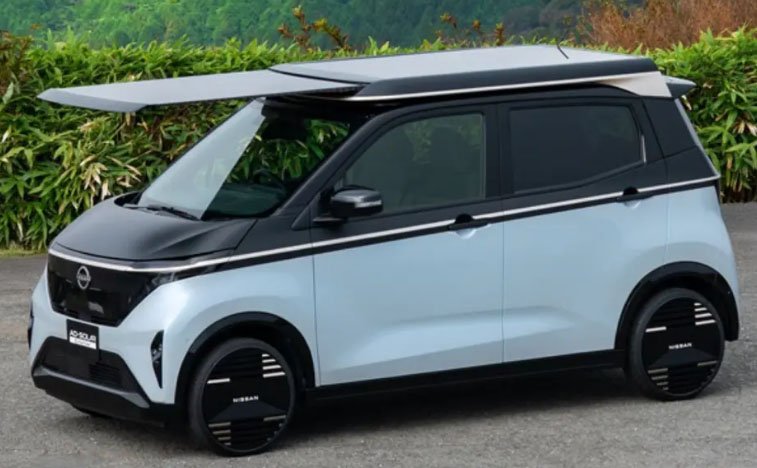
Nissan has unveiled a breakthrough solar charging system for electric vehicles (EVs) and is exploring plans for global rollout, including potential availability in India. The technology, showcased at the Japan Mobility Show, marks a new chapter in the automaker’s push for sustainable mobility.
What the Technology Does
Nissan’s system, named the “Ao-Solar Extender”, integrates roof mounted solar panels into the vehicle. These panels generate electricity both while the car is parked and in motion, supplying power to the vehicle’s battery system. Nissan engineers estimate that the system can add the equivalent of up to about 1,800 miles (≈2,900 km) of driving range per year under optimal sunlight conditions.
Additionally a deployable panel system extends when the vehicle is parked to maximise solar capture and the design maintains aerodynamic efficiency to minimise drag.
What This Means for India
- While the prototype is initially tailored to the Japanese market, Nissan India watchers say the technology could eventually be adapted for urban Indian conditions especially for short commute EV users.
- India’s abundant sunlight and growing EV infrastructure make the concept relevant: even adding a modest solar range boost could ease “range anxiety” for urban buyers.
- Nissan has already demonstrated its sustainability commitment in India through installations of solar power systems at dealerships. Although those initiatives are infrastructure based, they signal a trend within Nissan India toward renewables and clean mobility.
- Timing wise, if Nissan decides to bring such a vehicle (or solar upgrade kit) to India, pricing, local manufacturing and climate suitability will be key. Indian buyers expect value, ruggedness and affordability.
Why It Matters
- The integration of solar power into EVs could reduce dependence on grid charging, lower operating costs, and improve energy autonomy especially important in markets where charging infrastructure is still developing.
- For India’s EV transition, such technology adds a new dimension: solar assist could become a differentiator in the crowded EV market.
- From an environmental perspective, solar-EVs further reduce lifecycle emissions and strengthen automaker sustainability credentials in markets with strong green policy push.
What to Watch
- Commercial launch timeline & cost: Nissan has indicated the concept is being evaluated for future release, but no firm timeline or India specific launch date is confirmed.
- Adaptation to Indian conditions: Heat, dust, monsoon periods, parking in shade all will impact real world solar gains. Indian models may need modifications.
- Battery & warranty implications: Solar charging systems introduce additional complexity, buyers will watch for impact on battery lifespan and after sales service.
- Policy & Incentives: India’s central and state governments may need to include solar-EVs in EV-policy frameworks and incentives to make them viable and affordable.