
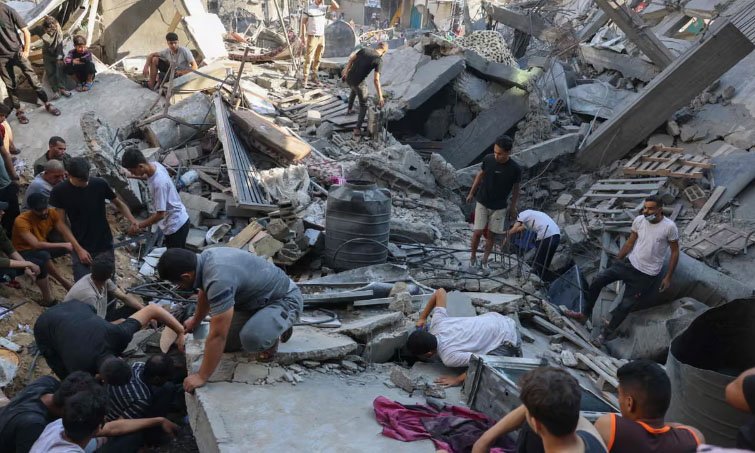
After the latest ceasefire agreement, thousands of displaced Palestinians are returning to their neighborhoods in northern Gaza, only to find a landscape almost unrecognizable. Homes have been reduced to rubble, whole blocks destroyed, infrastructure shattered but amid the grief are moments of hope, defiance and deep emotion as people try to rebuild what they can.
Devastation on Return
- Residents entering Gaza City, Khan Younis, Beit Lahia and other northern areas describe bombed buildings, collapsed walls and personal belongings buried under debris. In many cases, nothing remains no walls, no roof, no windows.
- Basic services are crippled: electricity rarely works, water pipelines are broken, sewage systems are non‑functional and roads that once connected communities are now impassable.
- Returnees often carry what little they possess furniture, bedding, family photos sometimes hauled by hand or in makeshift carts. Many must rebuild from scratch or erect tents over the rubble of their former homes.
Emotions, Sentiments and Trauma
- Joy & Relief: For many, simply crossing the boundary back into their neighborhoods brings relief, even if the structures are destroyed. There is gratitude for a moment of peace and comfort in smelling familiar air, seeing familiar streets, hearing neighbors.
- Shock & Disbelief: Many returning residents are in disbelief at how completely their homes have been erased or altered. “I expect to find a ghost city,” said one resident.
- Grief & Mourning: Families find themselves digging through debris for loved ones, recovering bodies from destroyed homes, confronting the reality of loss of lives, of memories, of everything familiar.
- Fear & Uncertainty: Even in the midst of returning, there is fear of unexploded ordnance still present, of lacking shelter, of no guarantee of normal services. Many worry about where they will live, how they will get food, how to rebuild.
Humanitarian & Reconstruction Challenges
- Shelters are urgently needed, many returning families are sleeping in tents or in the open, with inadequate protection from rain, heat or cold.
- Medical services are overwhelmed or destroyed. Clinics, hospitals, pharmacies have been damaged or destroyed, injuries, illnesses resulting from displacement, poor sanitation, contaminated water are rising.
- Debris removal, reconstruction, rebuilding infrastructure (electricity, water, roads) will take enormous time, resources and coordination. The scale of destruction means reconstruction will be slow and painful.
Resilience & Hope
- Many people express determination to stay, to rebuild and to reclaim what was lost even when the odds seem overwhelming. The return, however symbolic, is seen as an act of resistance and hope.
- Small acts bring meaning: salvaging family heirlooms, clearing debris, rejoining community with neighbors, sharing stories, helping one another.
Conclusion
The ceasefire has allowed many in Gaza to return home, but “home” today is often rubble, often memories. The process of return is laden with deep grief, overwhelming loss and scars seen and unseen. Yet, amidst the ruins, there is resilience, an inextinguishable love for the land, and a belief that rebuilding is not just possible but necessary.
The way forward will require massive aid, international cooperation and sensitivity to both physical and emotional wounds. For Gaza’s people, every brick salvaged, every wall rebuilt, is part of reclaiming dignity, community, and hope. May we all pray for their safety, strength, and recovery.