
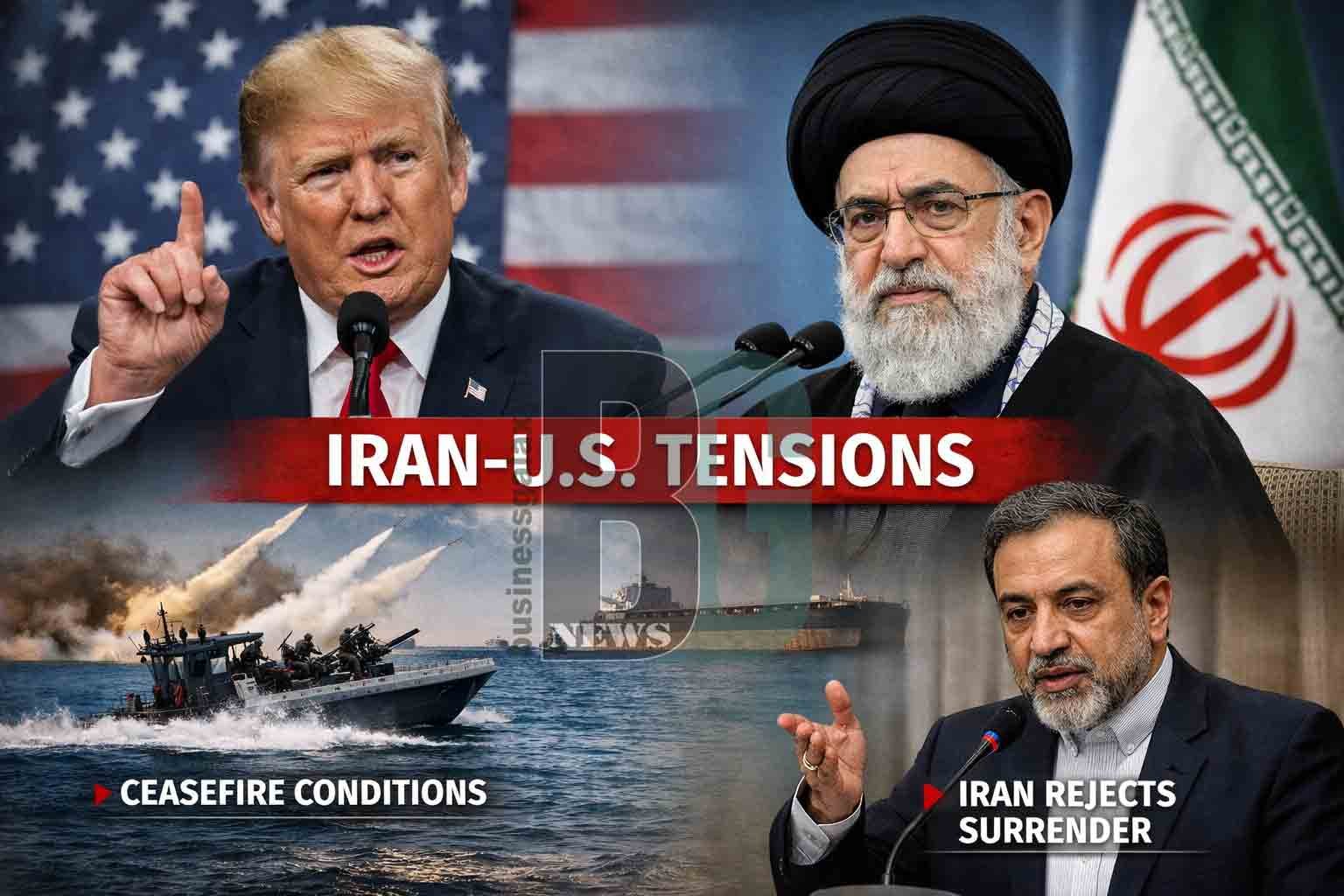
Tensions between the United States and Iran remain high as Tehran outlined conditions for a possible ceasefire while strongly rejecting calls from Washington for surrender. The developments come amid continued military exchanges and growing concerns over the security of the Strait of Hormuz, one of the world’s most important oil shipping routes.
Iran’s Conditions for Ceasefire
Iranian officials have indicated that a ceasefire could be considered only if military attacks against Iran completely stop and guarantees are provided that further aggression will not continue. Iranian diplomats say negotiations cannot begin while airstrikes and military operations by the United States and its allies are ongoing.
Tehran has also stressed that any ceasefire discussions must respect Iran’s sovereignty and address broader regional security concerns.
Iran Rejects Calls to Surrender
The stance comes after remarks from Donald Trump, the President of the United States, who suggested that Iran should surrender to end the conflict.
Iran’s foreign minister Abbas Araghchi rejected that demand, stating that Iran will not surrender under pressure and will continue defending its territory if attacks persist. He said diplomacy remains possible but cannot take place while military strikes continue.
First Message from Iran’s New Supreme Leader
Meanwhile, Iran’s new supreme leader Mojtaba Khamenei issued his first public remarks after assuming leadership following the death of Ali Khamenei.
In his statement, Mojtaba Khamenei adopted a defiant tone, saying Iran would continue resisting foreign aggression. He also warned that strategic pressure could involve actions affecting the Strait of Hormuz, through which a large share of global oil shipments passes.
Trump’s Reaction
President Donald Trump has maintained a strong stance, saying the United States has significantly weakened Iran’s military capability and suggesting the conflict could end soon if Iran changes its position. However, the United States has not publicly accepted Iran’s ceasefire conditions.
Is Iran Directly Commanding the U.S.?
Experts say Iran is not directly commanding the United States, but its statements are part of a negotiating strategy. By setting ceasefire conditions and warning about the Strait of Hormuz, Tehran is attempting to increase pressure on Washington and its allies to consider diplomatic talks.
What Happens Next
Diplomatic efforts by several countries are underway to encourage dialogue and reduce the risk of further escalation in the region. Analysts say the possibility of a ceasefire will depend on whether both sides are willing to reduce military operations and enter negotiations.