
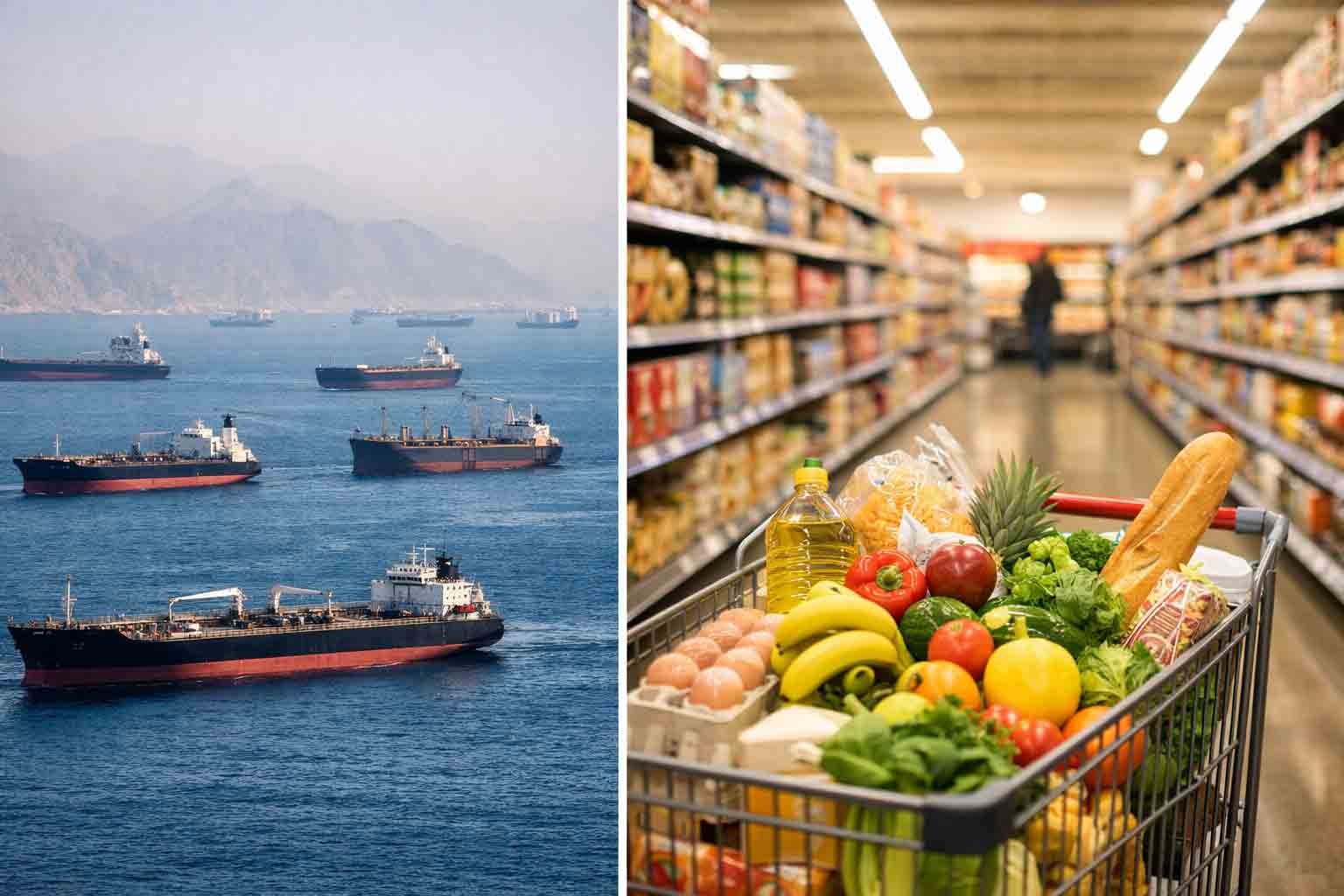
The Strait of Hormuz has begun reopening following a temporary ceasefire in the Middle East, but global food prices are still expected to rise as supply chains remain disrupted.
The key shipping route, which carries about 20% of the world’s oil and a large share of fertiliser supplies, is now operating under restricted and controlled movement, not full normal conditions.
Shipping resumes, but not fully
While some vessels have started moving through the strait, shipping companies remain cautious due to ongoing security risks and unclear conditions. Experts say it could take several weeks for operations to return to normal levels.
Many ships are still waiting or moving slowly, and confidence among global shippers remains low.
Why food prices are still at risk
Even though the route is reopening, the earlier disruption has already affected the global fertiliser supply. The Strait of Hormuz handles around one third of global fertiliser trade, which is critical for crop production.
Due to the crisis:
- Fertiliser prices have increased
- Supplies to farming regions have been delayed
- Farmers may reduce planting or face lower yields
Global agencies warn that rising energy and fertiliser costs are already pushing up food prices and increasing food insecurity.
Energy costs still impacting food
Although oil prices have eased after the ceasefire, fuel and transport costs remain unstable. This continues to affect:
- Food transportation
- Farm operations
- Storage and supply chains
The earlier surge in energy prices has already started reflecting in higher food costs.
What consumers can expect
Experts say grocery prices may still increase because supply chains take time to recover. Even if the situation stabilizes, delays in shipping and production could keep prices high in the short term.
Staples like grains, cooking oil, dairy, and meat may see gradual price increases, especially in import dependent countries.
Bottom line
The Strait of Hormuz is partially open, but not back to normal. The earlier disruption has already hit fertiliser and energy supplies, meaning the impact on global food prices is likely to continue even as tensions ease.