

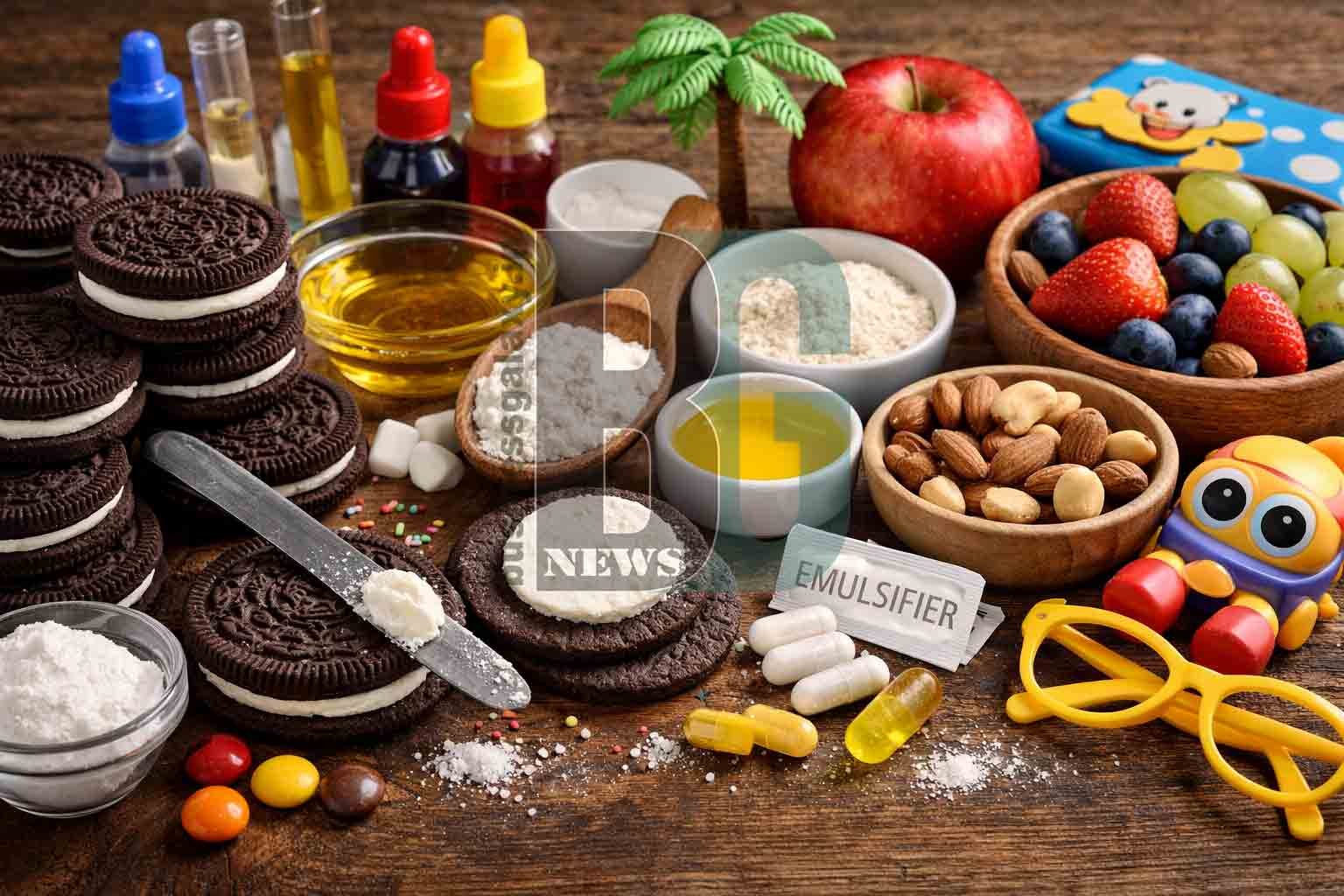
What often looks like a simple tea time biscuit or a child’s favorite snack may actually be an example of ultra processed food. Many packaged biscuits are designed for taste and long shelf life rather than real nutrition, raising concerns among health experts about their regular consumption especially among children.
The “Creme” That Isn’t Cream
A common feature in many sandwich biscuits is the sweet white filling often labeled as “Creme.” The spelling is not accidental. In many cases, it contains no real dairy cream. Instead, the filling is typically made from Sugar, Vegetable oils, Emulsifiers and Flavoring agents that are manufactured in food processing facilities rather than coming from natural ingredients.
What Makes Them Crunchy?
The crunchy texture that makes these biscuits appealing does not usually come from whole grains. Instead, it is commonly produced from refined flour and industrial baking processes that remove much of the natural fiber and nutrients found in whole grains.
The Role of Palm Oil
Many mass-produced biscuits rely on palm oil, a widely used vegetable oil in processed foods. Manufacturers often choose it because it is:
- Inexpensive
- Stable for long storage
- Resistant to spoilage
However, nutrition experts note that highly refined oils used in ultra processed snacks may contain unhealthy fats and provide little nutritional benefit when consumed frequently.
Impact on Children’s Eating Habits
When children regularly consume sugary processed snacks, researchers say it can influence their taste preferences and eating patterns. High levels of Sugar, Fat and Artificial flavors may encourage cravings for similar foods, making it harder for children to develop a preference for healthier options like fruits, nuts, and whole grains.
Marketing vs. Nutrition
Bright packaging and cartoon characters often make such snacks attractive to young consumers. While they may be convenient and enjoyable occasionally, experts warn that frequent consumption can replace healthier foods in a child’s diet, reducing overall nutritional intake.
What Parents Can Do
Health professionals recommend a few simple steps for families:
- Read ingredient labels carefully
- Look for products with whole grains and fewer additives
- Limit foods high in added sugar and refined oils
- Encourage fresh snacks such as fruits, nuts, yogurt and homemade options
A Balanced Approach
Packaged biscuits are not necessarily harmful if eaten occasionally, but relying on them as regular snacks may contribute to poor dietary habits. Being aware of ingredients and choosing more nutritious alternatives can help families make better decisions for long term health.
Healthy eating begins with informed choices one label and one bite, at a time.