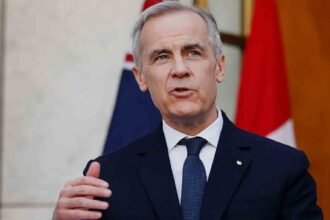

Congress Member of Parliament Manickam Tagore on Monday submitted an Adjournment Motion notice in the Lok Sabha, seeking an urgent discussion on what he described as serious international media reports allegedly linking Prime Minister Narendra Modi to communications attributed to late US financier Jeffrey Epstein.
An adjournment motion is a parliamentary procedure that allows the Lok Sabha to suspend its normal business to take up matters of urgent public importance. It can be moved only with the Speaker’s approval and is intended for issues requiring an immediate response from the government.
Tagore’s notice refers to recently released documents connected to a United States investigation into Epstein, who died in jail in 2019 while facing charges of sex trafficking and abuse. Some of these documents have been made public as part of legal proceedings in the US, leading to renewed scrutiny of Epstein’s past communications and associations.
According to Tagore, an email dated July 9, 2017, allegedly written by Epstein, refers to meetings involving the Indian Prime Minister, the then US President, and a subsequent official visit to Israel. He said the contents of the email, now circulating internationally, have raised questions and speculation that warrant a clear and authoritative explanation from the government.
“This House cannot remain silent when such issues are being debated internationally and the Government has not provided a clear, categorical, and authoritative explanation,” Tagore said in his notice, as quoted by media reports.
The controversy centres on a fragment of an email attributed to Epstein that reportedly mentions Prime Minister Modi’s 2017 visit to Israel. The language in the message suggests that the visit took place on “advice” and “for the benefit of the US President,” and ends with the phrase “IT WORKED!”
Government sources, however, have not confirmed the authenticity of the email or its contents. No official verification has been provided to establish that the message was written by Epstein or that it accurately reflects any diplomatic decision-making by India.
Prime Minister Modi’s 2017 visit to Israel was widely reported as a historic diplomatic milestone, marking the first visit by an Indian prime minister to the country. The trip focused on defence cooperation, agriculture, water technology, and innovation, and was part of India’s broader engagement with West Asia.
Political reactions to the alleged email have been divided. Opposition leaders have demanded transparency, while leaders from the ruling party have dismissed the claims as baseless and politically motivated, pointing out that diplomatic visits are conducted through established government channels and not through private individuals.
Legal experts have also cautioned that the released documents contain unverified material and personal communications that may not reflect official policy or real events. They note that such documents must be examined carefully before drawing conclusions.
The Lok Sabha Speaker will decide whether the adjournment motion is admitted for discussion. If allowed, the government will be required to respond formally in Parliament.
As of now, there is no official confirmation linking Prime Minister Modi to any communication with Epstein, and no evidence has been presented to show any direct or indirect involvement. The matter remains political in nature, with calls for clarification amid circulating reports.