

Introduction
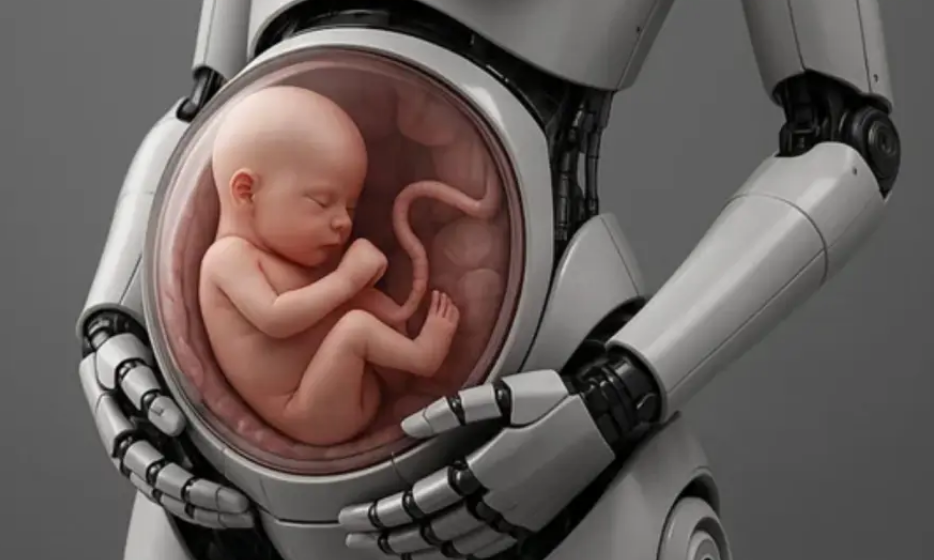
In August 2025, a Chinese company named Kaiwa Technology unveiled plans for a humanoid robot equipped with an artificial womb, designed to carry a fetus from conception to birth. This ambitious project, slated for prototype release in 2026, has sparked global discussions about the future of human reproduction, especially concerning infertility treatments and ethical implications.
What Is the “Pregnancy Robot”?
The proposed robot is a life sized humanoid featuring an embedded artificial womb in its abdomen. This artificial womb would simulate the conditions of a natural pregnancy, providing nutrients and oxygen to the developing fetus through a synthetic umbilical cord and amniotic fluid. The goal is to offer an alternative to traditional pregnancy, particularly for individuals facing infertility challenges.
The Reality: Is It Possible?
While the concept is groundbreaking, current scientific consensus indicates that such a technology is not yet feasible. Artificial wombs have been successfully used in animal studies, such as supporting extremely premature lambs, but replicating the complex environment of human gestation poses significant challenges.
Experts highlight issues like sustaining proper nutrient levels, managing oxygenation, preventing infections, and ensuring fetal development within an artificial system. Moreover, the ethical and legal considerations surrounding the use of artificial wombs for human reproduction remain unresolved.
Potential Future Impacts
1. Advancements in Fertility Treatments
If developed successfully, artificial womb technology could revolutionize fertility treatments by providing an alternative for those unable to carry a pregnancy. This could be particularly beneficial for individuals with medical conditions that prevent natural conception or gestation.
2. Ethical and Societal Considerations
The introduction of artificial wombs raises profound ethical questions. Concerns include the potential for commodification of childbirth, the nature of parental bonds, and the societal implications of redefining traditional reproductive roles. Public opinion remains divided, with some viewing the technology as a medical advancement and others as an overreach into natural processes.
3. Legal and Regulatory Challenges
The legal status of children born via artificial wombs is a complex issue that requires comprehensive legislation. Questions about parental rights, custody, and the definition of parenthood need to be addressed to ensure the protection of all parties involved.
Conclusion
While the concept of a “pregnancy robot” is intriguing and represents a significant leap in reproductive technology, it remains within the realm of science fiction for now. The future of such technology will depend on scientific advancements, ethical deliberations, and societal acceptance. As research continues, it is crucial to approach this topic with a balanced perspective, considering both the potential benefits and the profound implications it holds for humanity.