

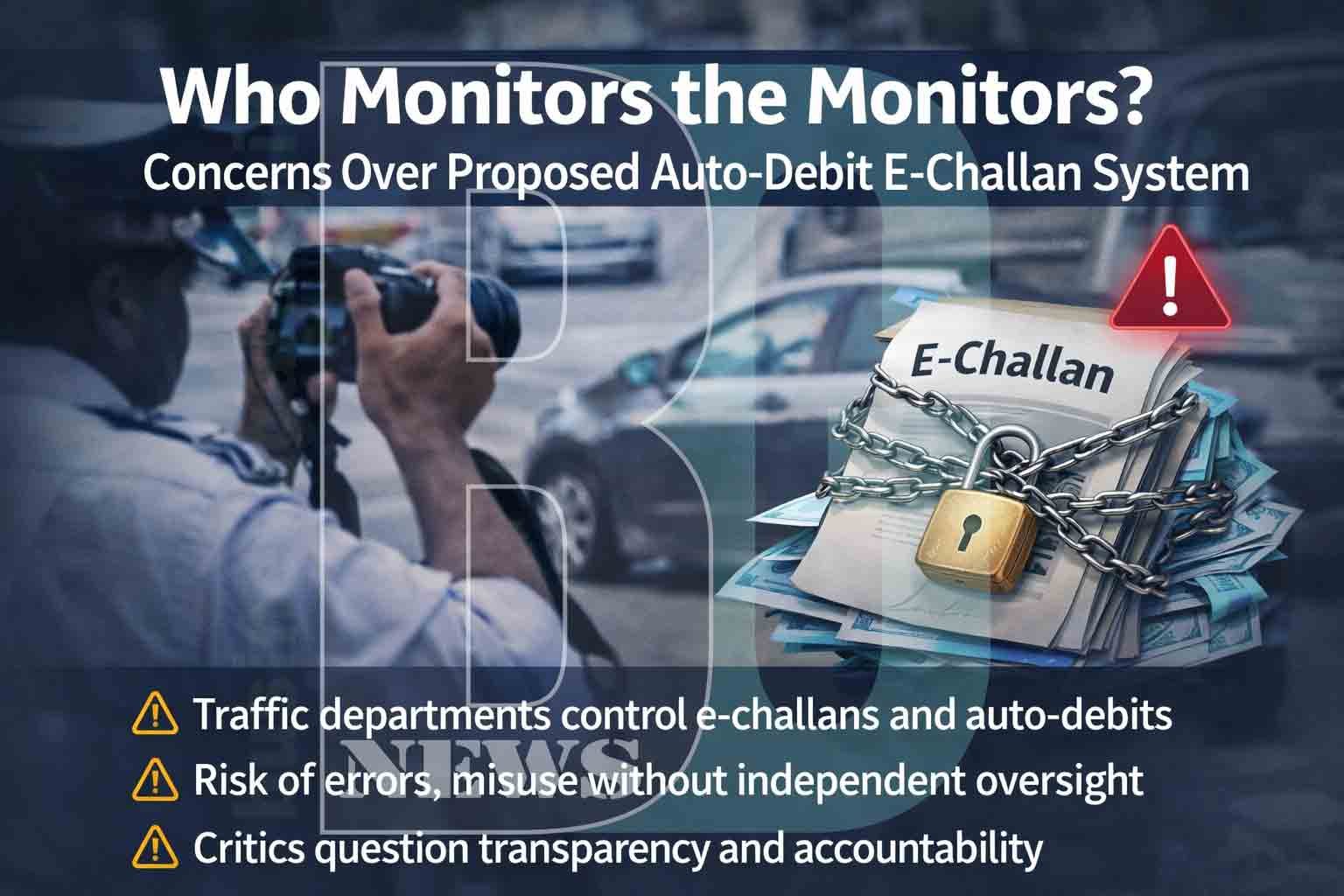
The proposal to introduce auto debit of traffic fines directly from citizens bank accounts, as suggested by Telangana Chief Minister A. Revanth Reddy, is being projected as a bold step towards road discipline and efficient enforcement. While the intention of improving compliance may be laudable, the method raises serious concerns about transparency, accountability and citizens rights.
At its core, the initiative appears to prioritise revenue collection over systemic reform. Traffic violations are not always black and white. Errors in camera readings, incorrect vehicle identification, outdated databases, and unclear photographic evidence are common issues already plaguing the existing e-challan system. In such a scenario, automatic deduction of fines removes the citizen’s basic right to question, appeal or seek clarification before punishment.
Who Monitors the System?
A critical question remains unanswered: who will monitor the monitors?
If the e-challan process from generation and verification to auto debit enforcement is handled entirely within the traffic enforcement departments, the system risks becoming Judge, Jury and Executioner rolled into one. Without independent oversight, transparent audit trails and real time grievance redressal, the potential for errors and misuse is significant.
Technology Without Accountability Is Dangerous
Ground realities often differ from policy assumptions. Traffic police personnel are under pressure to meet targets, cameras are installed without adequate calibration, and data entry errors are not uncommon. When enforcement becomes camera centric rather than justice centric, citizens risk being trapped by flawed systems with little recourse.
Technology should aid governance, not intimidate the governed. An auto debit mechanism, if implemented without safeguards, converts a corrective measure into a coercive tool.
Discipline Cannot Be Enforced by Fear Alone
Road discipline is achieved through education, consistent enforcement, clear rules, and trust, not merely by tightening financial screws. Penalising citizens instantly without hearing them risks alienating the very people the system seeks to discipline.
Moreover, removing discounts or settlement windows may sound tough, but it ignores economic realities. For many citizens, especially daily wage earners and middle class families, unexpected auto debits can cause genuine financial distress.
Reform the System Before Tightening the Grip
Before announcing sweeping measures like auto debit fines, the government must first:
- Ensure error free, verifiable challan generation
- Create a mandatory pre-debit alert and appeal window
- Establish independent oversight and audits
- Strengthen citizen grievance redressal mechanisms
- Train enforcement personnel for accuracy, not speed
Conclusion
Ease of governance should not come at the cost of citizen trust and due process. Collecting money may be easy, delivering justice is harder. True reform lies not in forcing compliance through automatic deductions, but in building systems that are fair, transparent, and accountable.
If the state seeks safer roads, it must first ensure clean systems, not just faster collections.