

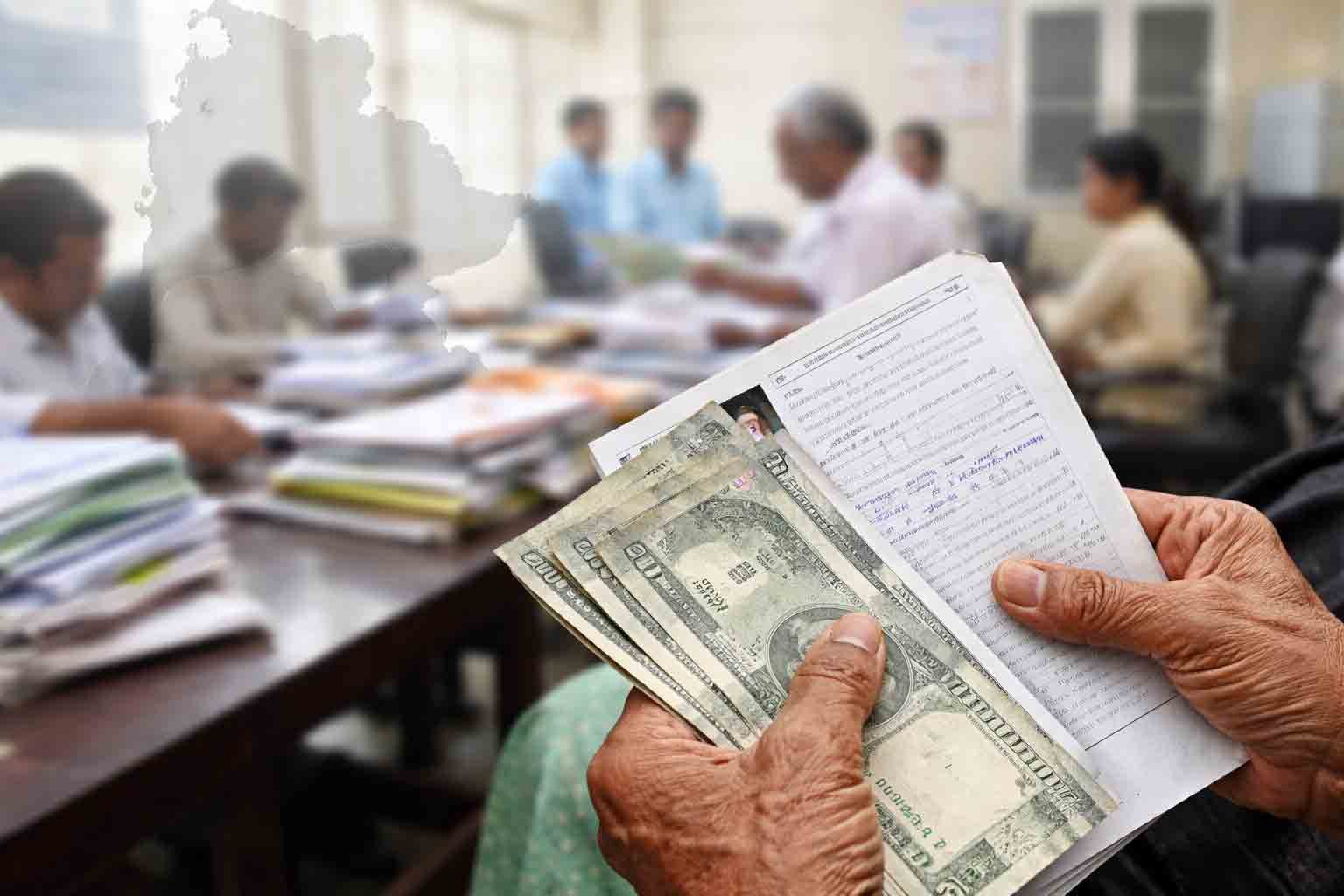
A recent government audit has revealed significant irregularities in the distribution of social pension benefits in Telangana, showing that nearly 1 in 10 pension recipients were ineligible beneficiaries drawing funds meant for the poor and needy.
The pilot audit, conducted in areas including Suryapet, Karimnagar, Wanaparthy and Adilabad, found that out of around 20,000 to 25,000 beneficiaries checked more than 2,000 individuals close to 10% were receiving pensions despite not meeting eligibility criteria.
Major Findings of the Audit
According to the audit report:
Several beneficiaries were found to be financially well off, including relatives of high earning Government employees, Owners of cars, Tractors, Large houses and Even petrol stations.
In some cases, people below the minimum age requirement were collecting old age pensions, while disability pensions were being claimed by individuals without verified disabilities.
The audit also flagged instances where pensions continued to be paid to deceased persons, due to difficulties in verifying life status when pensions are routed through bank accounts without routine checks.
Currently, around 42.67 lakh people receive pensions under 11 categories across the state. The annual cost of the pension programme is estimated at more than ₹14,600 crore, with monthly payouts exceeding ₹1,000 crore.
Government Response and Next Steps
In response to the findings, the Telangana government is preparing a statewide clean up of pension rolls. Officials estimate that if the audit’s findings are representative of the broader pension system, as many as 4 – 5 lakh bogus pensions could be in circulation across the state.
To address the problem, several measures are being planned:
-
A comprehensive survey of pension beneficiaries to verify eligibility
-
Removal of ineligible recipients from the pension list
-
Inclusion of genuinely eligible persons who were previously excluded
-
Recovery of misappropriated funds from those found to be ineligible
Departments including Panchayat Raj, Rural Development, Women and Child Welfare and the Society for Elimination of Rural Poverty have been directed to take appropriate action based on the audit findings.
Significance
The audit highlights systemic weaknesses in the verification process used for pension schemes in Telangana, particularly in bank linked disbursements, where routine KYC (Know Your Customer) and life certificate updates are not strictly enforced.
The government’s efforts to tighten control and ensure that pensions are paid only to eligible beneficiaries reflect a broader push to safeguard social welfare funds and eliminate misuse in public welfare programmes.