
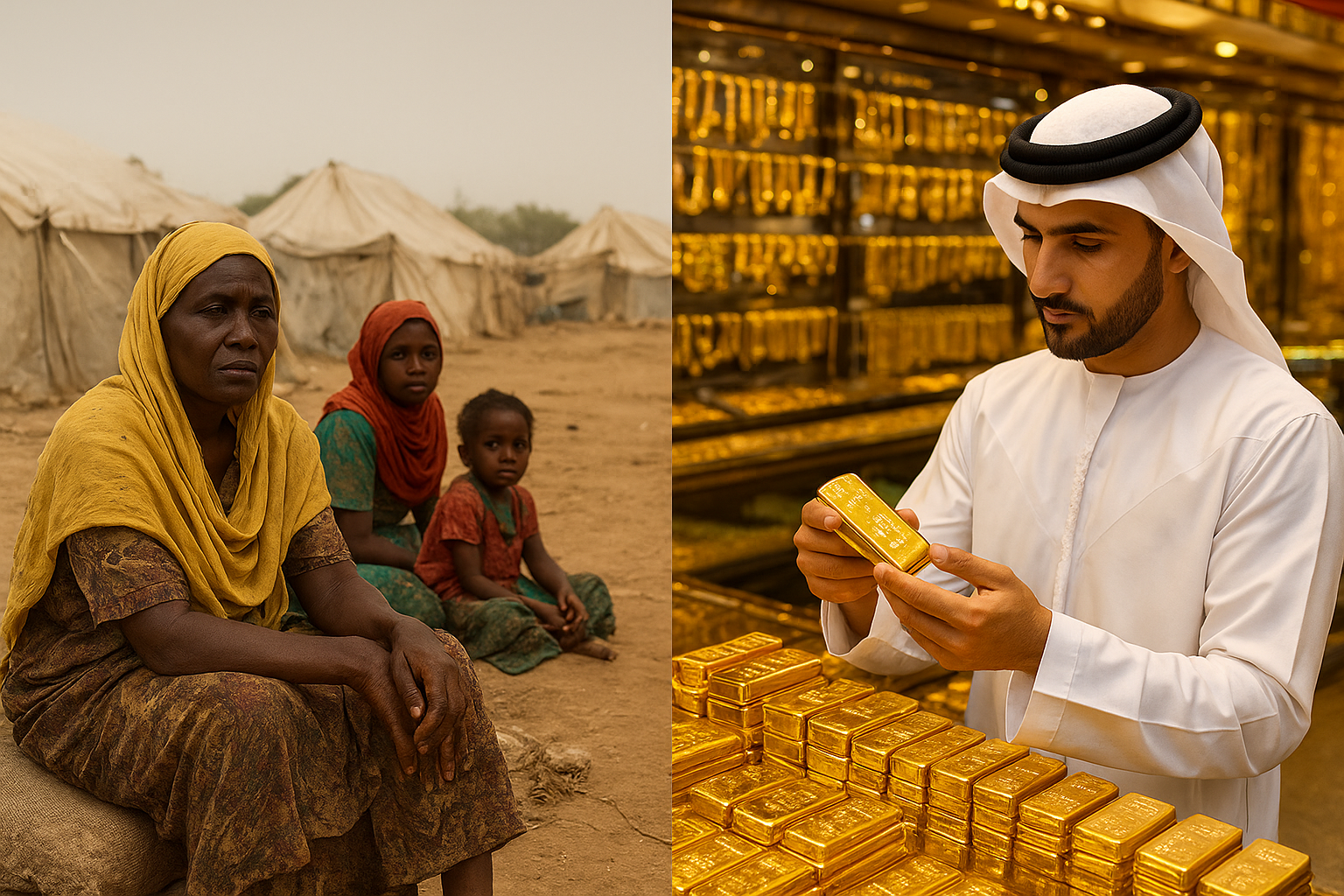
As war torn Sudan slips deeper into chaos, famine and displacement, glittering Dubai stands as a global hub of wealth built in part on one of Sudan’s most precious resources gold. The contrast between a nation in ruins and another gleaming with prosperity has become a striking symbol of inequality in the modern world.
Sudan’s War: A Nation in Collapse
Sudan’s civil war, raging since April 2023, pits the country’s army against the paramilitary Rapid Support Forces (RSF). What began as a power struggle has turned into one of the world’s worst humanitarian disasters.
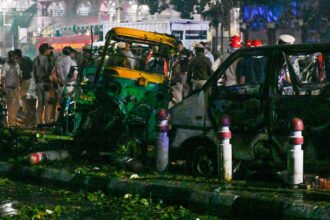
Entire cities have been reduced to rubble. Hospitals have been bombed. More than 14 million people are displaced, while food shortages have left millions on the edge of starvation.
In Darfur, particularly around the city of El-Fasher, the RSF’s siege and assault have caused thousands of civilian deaths and forced mass evacuations. Aid groups say famine is spreading faster than relief can reach.
The Hidden Currency of War: Gold
Behind Sudan’s agony lies a commodity both coveted and cursed gold.
Sudan is Africa’s third largest gold producer and its mines have become a financial lifeline for the warring factions. Control over mining areas, smuggling routes and export channels has given armed groups especially the RSF a steady source of income.
A recent investigation by Swissaid, a Geneva based NGO, revealed that up to 90 % of Sudan’s gold exports in 2025 went to the United Arab Emirates (UAE), mostly through Dubai’s bustling gold markets.
Once there, the gold enters the global system, often refined and sold onward to Europe and Asia its origins obscured.
Dubai’s Golden Glow
While Sudan bleeds, Dubai’s gold souks and trading towers glitter brighter than ever.
In just nine months of 2025, Switzerland imported over 316 tonnes of gold from the UAE, worth an estimated $30 billion, more than double its previous yearly average.
Economists say much of this gold likely originated from African countries including Sudan, where conflict and weak regulation make tracing difficult.
The UAE has denied any role in arming Sudan’s militias or facilitating smuggling. Yet, diplomats and watchdog groups allege that gold smuggling networks have used Dubai’s free zones to launder and re-export conflict gold.
Two Worlds, One Chain
The irony is cruel. In Sudan, families dig through ruins for food. In Dubai, traders haggle over ingots of the same metal that fuels their suffering.
“Every gram of gold leaving Sudan carries a drop of our people’s blood,” said a Sudanese aid worker in Port Sudan, requesting anonymity for safety reasons.
For many observers, the situation exposes a global moral dilemma: the luxury of one world financed by the misery of another.
Calls for Accountability
International human rights groups are now urging tighter controls on gold imports from conflict zones. They want mandatory origin tracing, sanctions on entities funding armed groups and transparency from the UAE’s gold industry.
The Financial Action Task Force (FATF) had earlier placed the UAE on its “Grey list” for lax oversight of gold and money flows, though the country was later removed after reforms. Critics say those reforms have not gone far enough.
“Without global accountability,” said Swissaid’s Africa director, “Sudan’s war will remain profitable for some and unbearable for others.”
A Tale of Two Futures
As Sudan’s skies echo with airstrikes and hunger spreads across its plains, Dubai’s skyline continues to glitter with opulence. The symbolism is inescapable a tale of two nations linked by gold, divided by humanity.
Until the world confronts how wealth and war intertwine, Sudan’s suffering may continue to fund Dubai’s glow.