

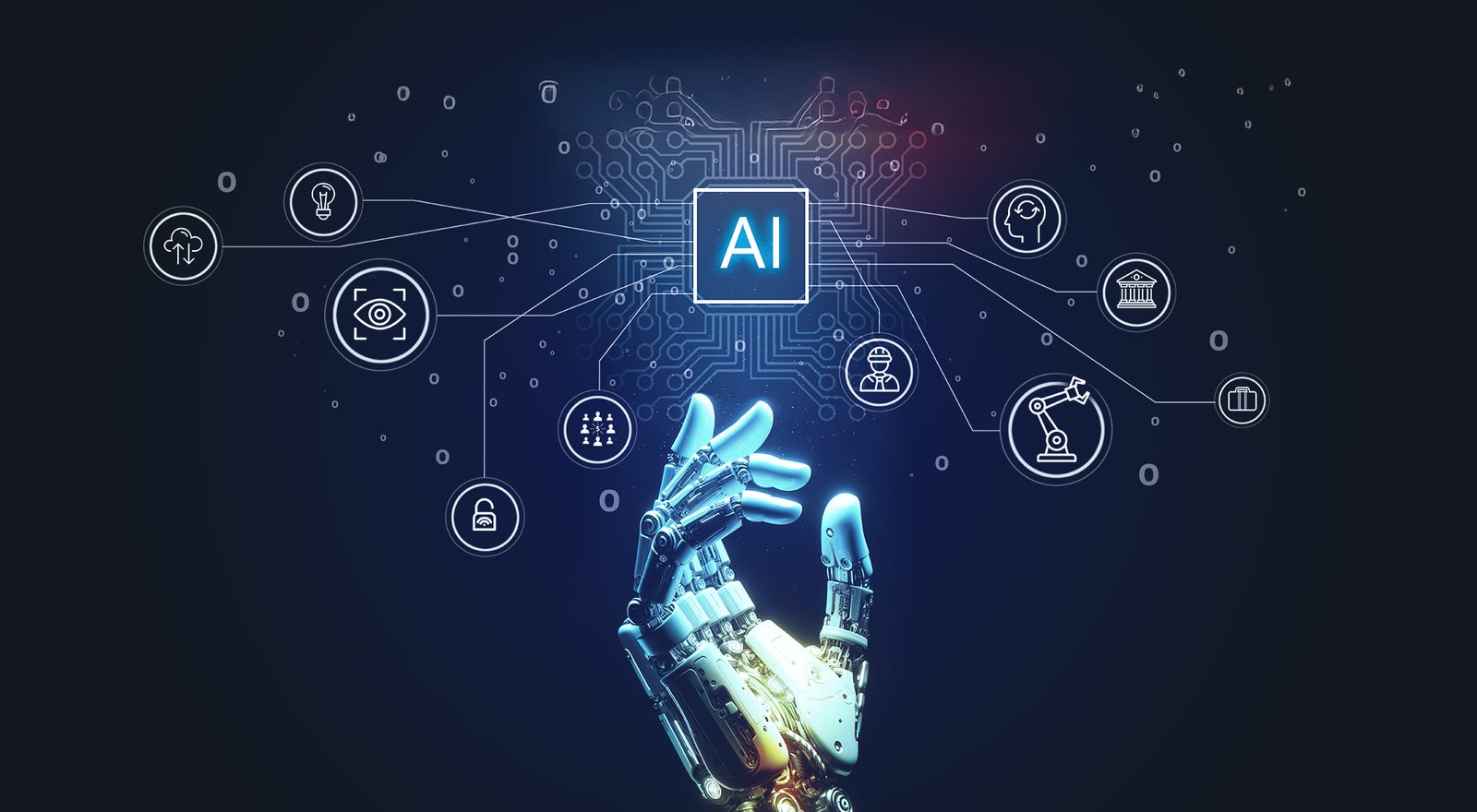
What is Artificial Intelligence (AI)?
Artificial Intelligence, commonly called AI, is the simulation of human intelligence in machines. It enables computers and systems to perform tasks that typically require human thinking, such as learning, reasoning, problem solving, understanding language, recognizing images, and making decisions. AI can be narrow (specialized for a specific task) or general (capable of handling diverse tasks like humans, though still largely theoretical).
A Brief History of AI
- 1940s – 1950s: The idea of AI began with scientists like Alan Turing, who proposed that machines could simulate human intelligence. Turing introduced the famous “Turing Test” to measure a machine’s ability to exhibit intelligent behavior.
- 1956: The term “Artificial Intelligence” was coined at the Dartmouth Conference by John McCarthy. Early AI focused on logic, problem solving, and symbolic reasoning.
- 1960s – 1970s: AI programs were developed for tasks like solving math problems and playing chess.
- 1980s: Expert systems became popular, helping in medicine, engineering, and finance by using rules to make decisions.
- 1990s – 2000s: AI began to combine with machine learning, using data to improve performance. IBM’s Deep Blue famously defeated chess champion Garry Kasparov in 1997.
- 2010s – resent: AI evolved rapidly with deep learning and neural networks, enabling speech recognition, autonomous vehicles, recommendation systems, and advanced language models like ChatGPT.
The Science and Secrets Behind AI
AI is powered by a combination of mathematics, statistics, and computer science. Key components include:
- Machine Learning (ML): Machines learn patterns from data without being explicitly programmed.
- Deep Learning: Uses neural networks inspired by the human brain to process large amounts of data and make complex decisions.
- Natural Language Processing (NLP): Allows machines to understand and respond to human language.
- Computer Vision: Enables machines to recognize and process images and videos.
- Data: AI needs massive amounts of data to learn accurately. The more data, the smarter the AI becomes.
Secrets of AI:
- AI success depends on data quality, algorithms, and computing power.
- Many AI systems are “black boxes,” meaning their internal reasoning is complex and not easily understood by humans.
- Ethical use and transparency are key challenges, especially in privacy, bias, and decision making.
How to Get Benefits from AI
AI can benefit individuals, businesses, and society:
- Education: Personalized learning, smart tutoring, and career guidance.
- Healthcare: Early diagnosis, drug discovery, and patient monitoring.
- Daily Life: Smart assistants, recommendation systems, and automation.
- Business & Industry: Efficient operations, predictive analytics, and customer service improvements.
- Environment: AI can help monitor climate change, manage resources, and optimize energy use.
How AI Will Be Useful in Our Future
- Work & Jobs: AI will automate repetitive tasks, but also create new jobs in AI development, maintenance, and oversight.
- Smart Cities: AI can manage traffic, waste, and energy efficiently.
- Healthcare & Longevity: Early detection of diseases and personalized medicine will become routine.
- Safety & Security: AI can predict disasters, improve cybersecurity, and enhance defense systems.
- Innovation: AI will accelerate research in science, space, and technology in ways never possible before.
Awareness for This Generation
For the current generation, understanding AI is essential because it will shape careers, social life, and decision making. Key takeaways:
- Learn AI basics: Coding, data science, and machine learning are valuable skills.
- Use AI responsibly: Avoid overreliance, protect privacy, and be aware of bias.
- Stay updated: AI is evolving quickly, so continuous learning is essential.
- Leverage AI for creativity: From writing to art to problem solving, AI can amplify human potential.
In short, AI is no longer science fiction it is a powerful tool shaping our world. Learning how it works, how to use it, and how to apply it ethically is vital for today’s youth and future generations.