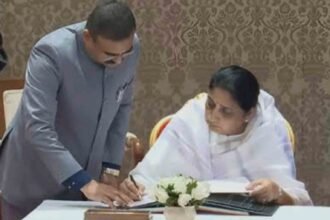


Former MP and All India United Democratic Front (AIUDF) chief Maulana Badruddin Ajmal on Sunday said that Muslims in India are “safer than ever before,” asserting that many Hindus are standing in support of them.
Ajmal’s comments came in response to Assam Chief Minister Himanta Biswa Sarma’s recent statement in which he said his government would continue to “disturb” the ‘Miyas’ a term commonly used to refer to Muslims of Bengali origin living in lower Assam to “tame them down.” The remark sparked political controversy and drew sharp reactions from opposition leaders.
Addressing reporters, Ajmal dismissed the chief minister’s rhetoric and urged people not to feel intimidated. “Muslims are safer than ever before across India. They have nothing to fear because Hindus are standing by them. If one Himanta shouts, a jungle doesn’t get emptied. Let him shout ‘Miya, Miya’” he said.
Criticising what he described as the chief minister’s “Miya politics,” Ajmal appealed to Muslim voters to reject the Bharatiya Janata Party (BJP) in the upcoming Assam Assembly elections. He accused the ruling party of using divisive language for political gain and warned against efforts to create fear among minority communities.
Ajmal also turned his criticism toward the Congress party, alleging that it has effectively handed an advantage to the BJP by neglecting its traditional support bases, particularly in tea garden areas. He claimed that Congress had failed to actively engage with these constituencies, weakening the opposition’s position in the state.
“If the Congress wins only 23 seats, can it form the government?” Ajmal asked, referring to Muslim-dominated constituencies where the Congress has traditionally had influence. He suggested that lack of coordination among opposition parties could benefit the BJP in the forthcoming polls.
The statements come amid heightened political tensions in Assam, where identity politics and migration-related issues have remained sensitive subjects. With elections approaching, political leaders are intensifying their campaigns, and remarks related to community identity continue to shape public debate.