

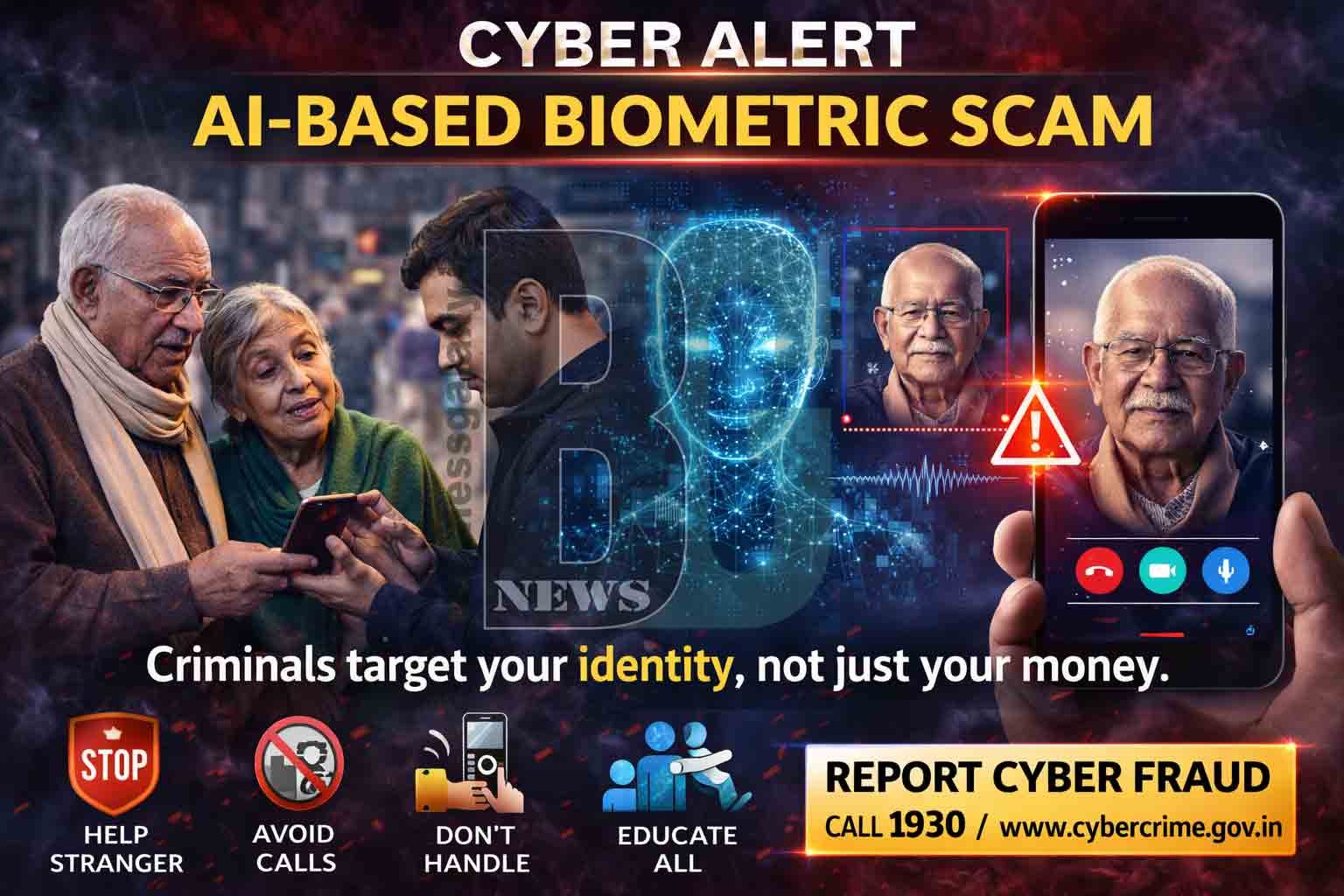
Cybersecurity agencies have warned citizens about a new and dangerous form of fraud known as AI-based biometric scams, where criminals target a person’s identity rather than just their money.
According to officials, fraudsters are increasingly using artificial intelligence to capture facial images and voice samples of unsuspecting individuals. These scammers often approach people in public places pretending to be elderly, disabled or helpless and request small assistance, such as checking a pension status, fixing a mobile application, or operating their phone.
Investigations reveal that the scammer’s device may already be on video call or screen recording mode, secretly capturing the helper’s face and voice. This biometric data can later be misused to create AI-generated impersonations capable of deceiving relatives, banks, or even bypassing verification systems.
How the Scam Works
Criminals rely on human sympathy and urgency. Once the victim interacts with the phone or looks into the screen, their biometric details are recorded without their knowledge. These recordings can be used for:
- Digital impersonation
- Social engineering attacks
- Identity theft
- Account takeover fraud
Experts warn that such methods are difficult to detect because the interaction appears harmless and brief.
Safety Advisory
Authorities have issued the following precautions:
- Do not operate or handle mobile phones belonging to unknown persons
- Avoid looking into unfamiliar video calls or following instructions from strangers
- Be cautious when approached for “Quick Help” in public places
- Educate elderly people and children about these scam tactics
Reporting Cyber Fraud
Citizens who suspect any cybercrime or biometric misuse are advised to report immediately by calling 1930 or filing a complaint on the National Cyber Crime Reporting Portal.
Growing Concern
Cyber experts say AI-powered fraud is rising due to easy access to face cloning and voice synthesis tools. They stress that protecting biometric data is now as important as protecting bank details or passwords.
Officials have urged the public to remain alert and avoid sharing personal data, images, or voice recordings with unknown individuals under any circumstances.
“Stay alert. Protect your digital identity.”