

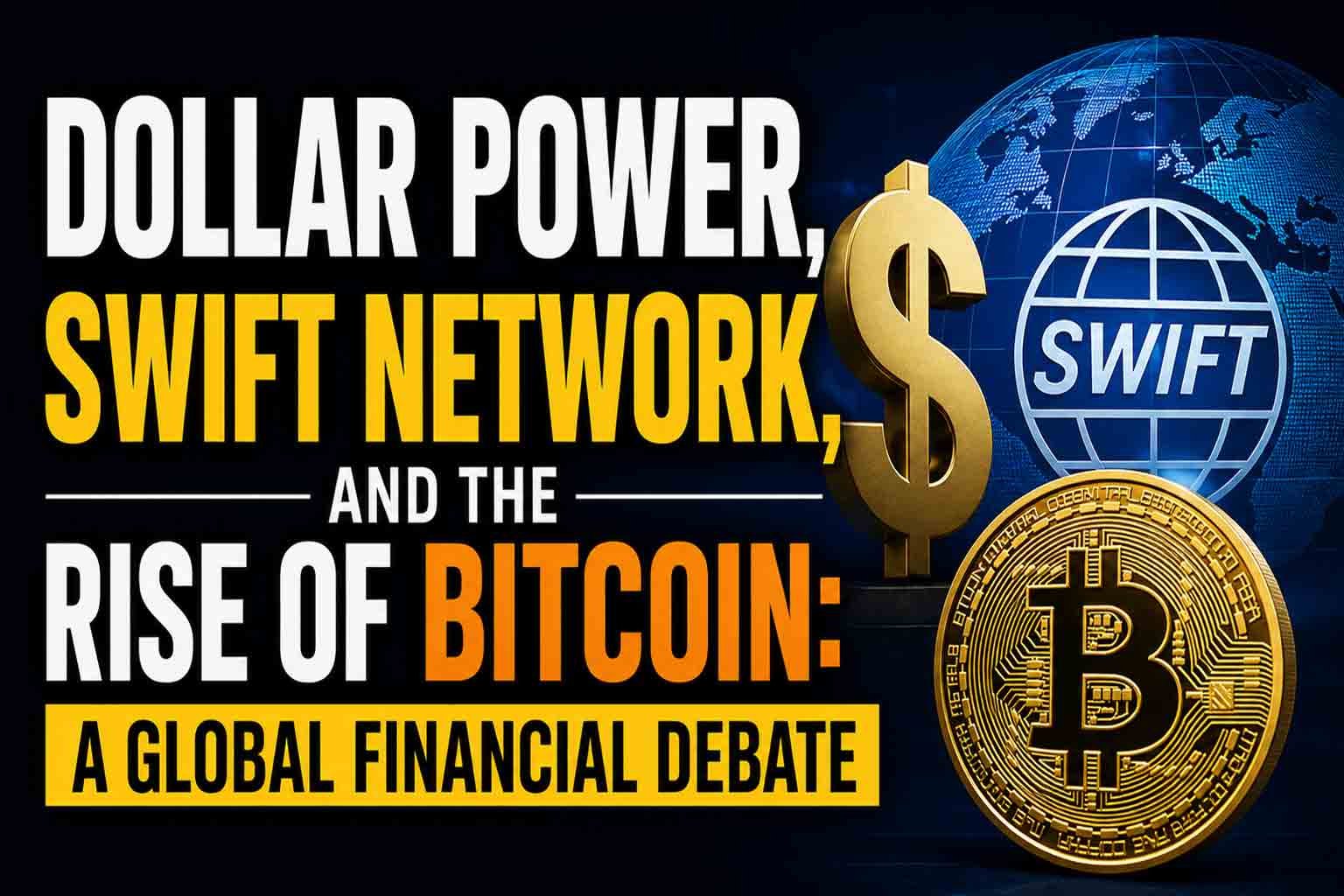
Global finance continues to be shaped by the dominance of the US dollar and the international banking network known as SWIFT, sparking ongoing debate about economic Power, Sanctions and Alternative systems such as cryptocurrencies.
The US dollar remains the world’s primary reserve and trade currency, widely used in international transactions for commodities, trade settlements, and financial contracts. A significant portion of global trade is still denominated in dollars, reinforcing its central role in the global economy.
Most cross border financial transactions are processed through banking networks that are ultimately linked to the SWIFT system, a messaging infrastructure that connects more than 11,000 financial institutions worldwide.
Role of SWIFT and US Financial Influence
SWIFT does not directly move money but enables secure communication between banks for international transfers. Because many major banks rely on US financial institutions for clearing dollar transactions, the United States holds significant influence over global financial flows.
This influence allows the US government to impose economic sanctions by restricting access to the dollar system or limiting participation in global banking networks.
Sanctions and Economic Policy
US-led sanctions have been used as a foreign policy tool against countries and entities by limiting their access to:
- US dollar based transactions
- International banking systems
- Global trade financing
Supporters argue this helps enforce international security measures, while critics say it creates asymmetric economic pressure.
Rise of Alternatives: Bitcoin and Digital Assets
In response to concerns about centralized financial control, cryptocurrencies such as Bitcoin have emerged as alternative digital assets.
Bitcoin operates on a decentralized blockchain network, meaning:
- It is not controlled by any government or central bank
- Transactions occur without traditional intermediaries
- It is resistant to direct sanctions or banking restrictions
Supporters of Bitcoin argue it was designed to function in a financial system dominated by centralized control and cross border restrictions.
Global Debate
The current financial structure has sparked debate among economists and policymakers:
- Some view dollar dominance and SWIFT as essential for global stability
- Others argue it concentrates too much power in one country’s financial system
- Digital currencies are increasingly discussed as part of a decentralized financial future
Conclusion
The global financial system remains heavily influenced by the US dollar and international banking networks like SWIFT. While this system provides stability and liquidity, it also raises questions about economic control and financial sovereignty. Emerging technologies like Bitcoin continue to challenge traditional structures, adding a new dimension to the global economic debate.