

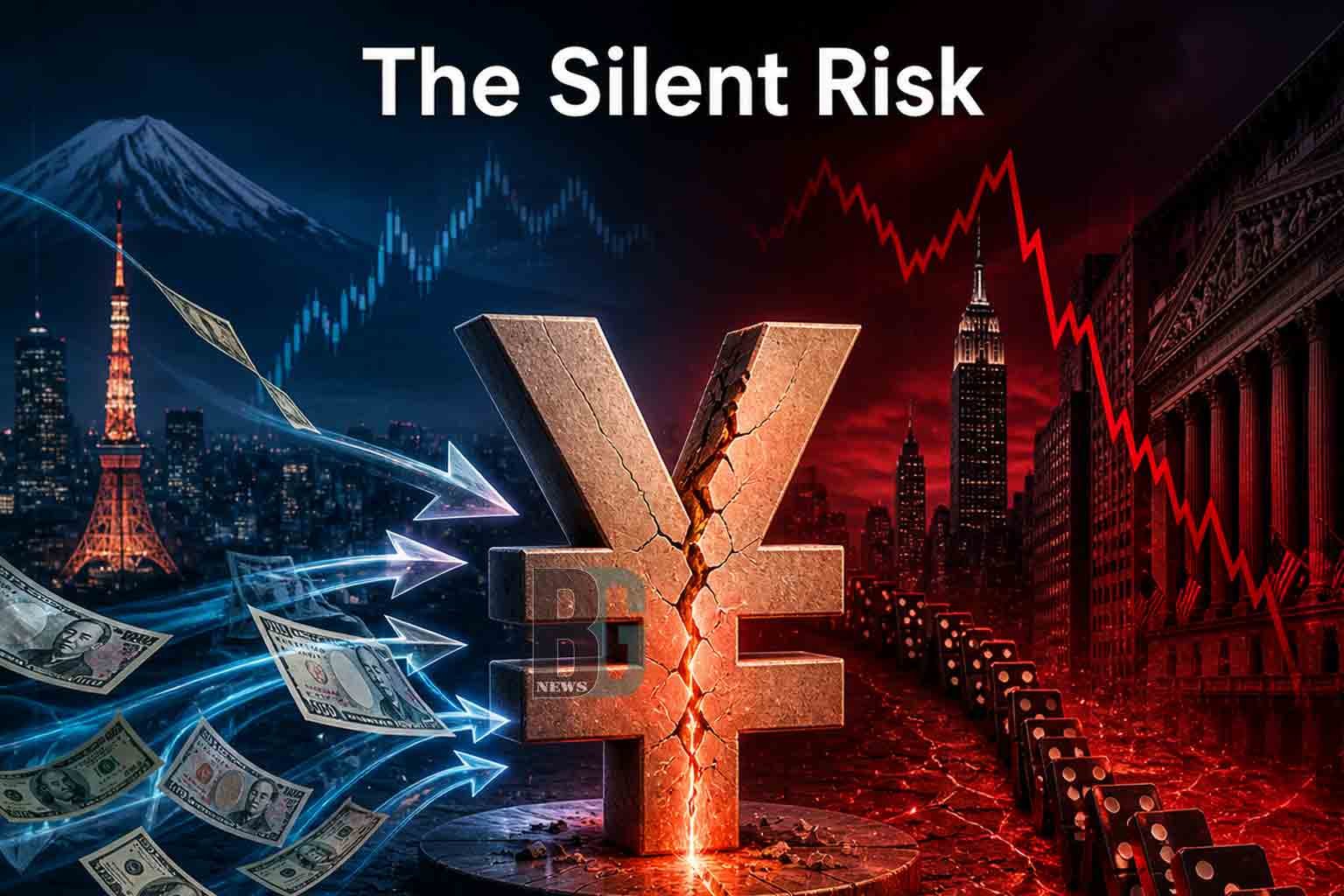
A potential shift in Japan’s monetary policy is drawing attention from global investors, as analysts warn that changes could impact one of the most influential financial strategies in global markets the Yen carry trade.
What Is the Yen Carry Trade?
For decades, investors have taken advantage of Japan’s ultra low interest rates by borrowing money in yen at minimal cost and investing it in higher yielding assets abroad, particularly in the United States.
This strategy has helped fuel global investments in stocks, bonds and other financial instruments.
What Is Changing in Japan?
Recently, Japan has begun gradually shifting away from its long standing ultra loose monetary policy. Any move toward higher interest rates or a stronger yen could significantly alter the economics of the carry trade.
Why Markets Are Watching Closely
If the yen strengthens:
- Borrowing costs for investors increase
- Profits from overseas investments shrink
- Investors may be forced to sell foreign assets and repay loans
Such unwinding of leveraged positions can lead to rapid market movements and increased volatility.
Past Market Signals
Markets have already shown sensitivity to changes in Japan’s policy direction. Periods of yen strengthening have historically triggered sell offs in global assets, highlighting the interconnected nature of financial markets.
Global Impact
A large scale unwinding of the carry trade could affect:
- Stock markets in major economies
- Bond yields and capital flows
- Currency markets worldwide
Analysts note that this risk often remains under the radar compared to more visible issues like geopolitical tensions or central bank decisions.
Big Picture
While there is no immediate sign of a crisis, the evolving situation in Japan underscores how shifts in one country’s monetary policy can ripple across global markets.
Conclusion
The yen carry trade has quietly supported global liquidity for years. As Japan adjusts its economic policy, investors are closely monitoring whether this “Silent trade” could become a source of market instability in the future.