
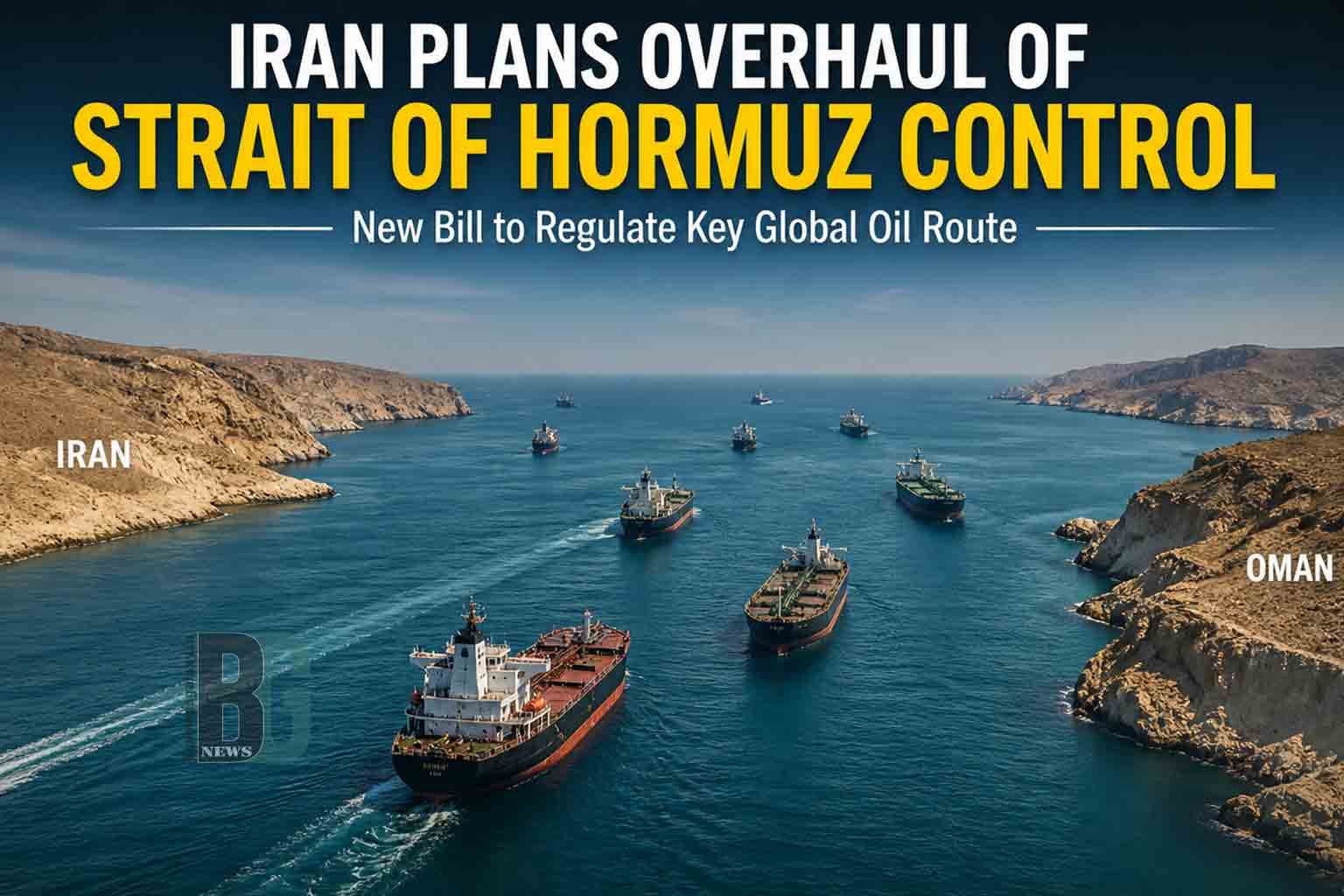
Iran is preparing a major policy shift in one of the world’s most strategic waterways, as Deputy Parliament Speaker Ali Nikzad announced that a new bill is being finalized to overhaul the management of the Strait of Hormuz.
What the New Bill Proposes
According to officials, the draft legislation aims to regulate and control maritime traffic through the strait more strictly. Key provisions under discussion include:
- Possible restrictions on certain vessels, especially those linked to “Hostile countries”
- Reports suggest Israeli linked ships could be banned entirely
- Other vessels may require prior authorization from Iran before passage
- Some proposals include fees or compensation requirements for transit
Iranian lawmakers have indicated that shipping through the strait “will not return to pre-war conditions” signaling a long term shift in policy .
Why This Matters
The Strait of Hormuz is one of the most critical energy routes in the world:
- Around 20% of global oil and gas flows pass through it
- Any disruption directly impacts global oil prices and supply chains
Recent tensions linked to the Iran conflict have already reduced shipping traffic sharply and increased global energy volatility .
Context: Rising Regional Tensions
The move comes amid:
- Ongoing conflict involving Iran, the United States, and Israel
- A partial or near blockade of the strait during the crisis
- Iran’s growing push to assert greater control over regional trade routes
Iranian leaders have described the strait as a “strategic asset” and key source of national power, reinforcing their stance on tighter control .
Global Reaction and Concerns
- Western nations and allies have raised concerns over freedom of navigation
- Gulf countries and global markets fear higher oil prices and supply disruptions
- International bodies may challenge the legality of unilateral restrictions
Big Picture
This proposed law signals a major geopolitical shift:
- Iran is moving from temporary wartime control → permanent regulatory control
- The Strait of Hormuz is becoming a central tool in global power politics
Conclusion
As Iran pushes forward with its new legislation, the future of the Strait of Hormuz remains uncertain. If implemented, the changes could reshape global energy trade, intensify geopolitical tensions, and redefine control over one of the world’s most vital maritime routes.