
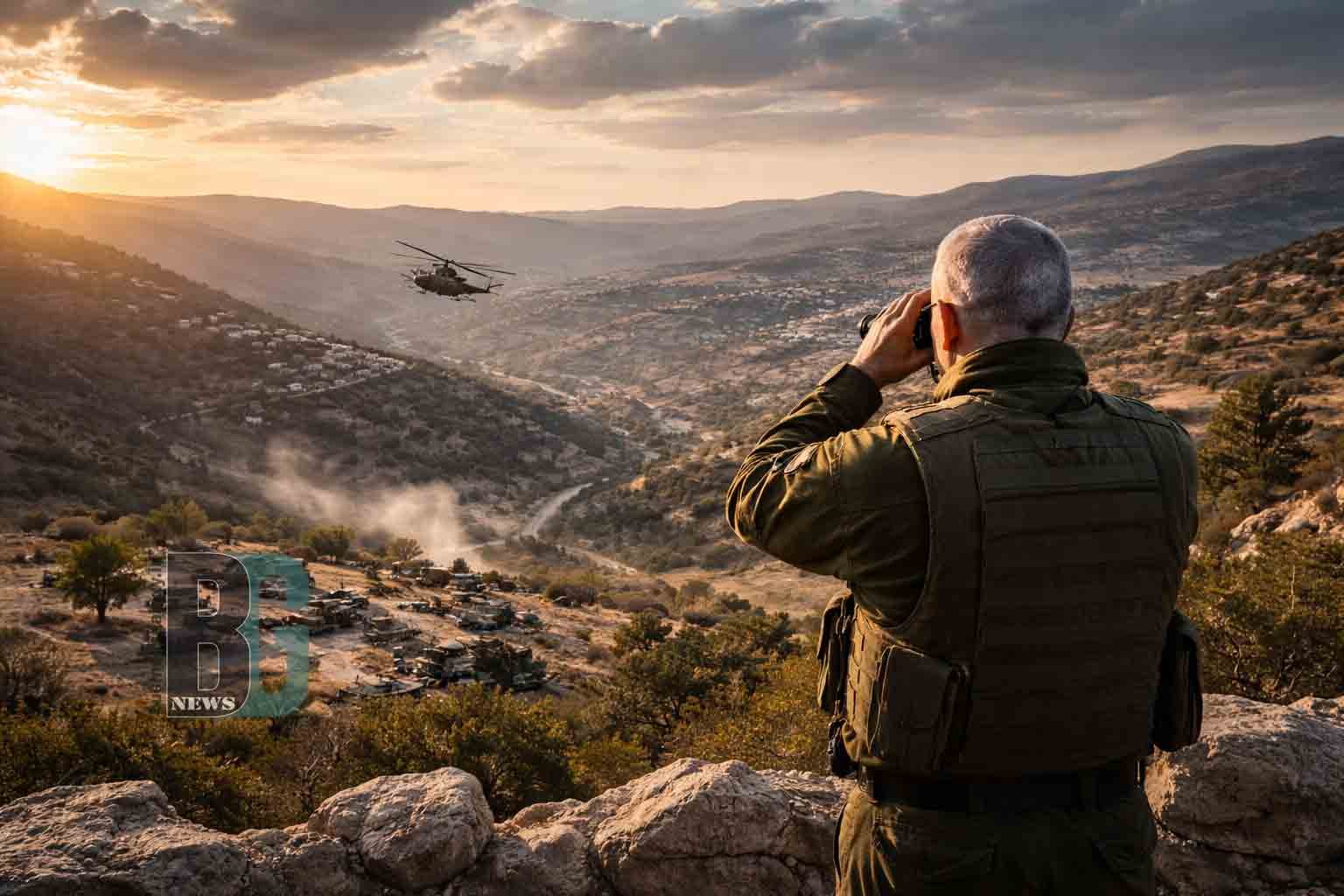
Israeli Prime Minister Benjamin Netanyahu visited military positions in southern Lebanon on Sunday, wearing a military uniform and protective vest during a field tour of areas controlled by Israeli forces.
The visit took place in a sensitive border region where Israeli troops have increased their presence amid ongoing clashes with Hezbollah. Israeli media described the trip as part of efforts to reinforce Israel’s operational control in the area.
Netanyahu stated that Israeli forces are continuing operations to counter security threats and prevent further cross-border attacks.
“Security buffer zone” and strategic claims
During the visit, Netanyahu referred to parts of southern Lebanon as a “security buffer zone” a term used by Israeli officials to describe areas where military forces aim to limit hostile activity.
Reports indicate that Israel has expanded its military presence in areas south of the Litani River, including:
- Increased ground operations in border regions
- Military control over certain strategic villages
- Continued strikes against Hezbollah positions
These developments are part of the ongoing escalation along the Israel-Lebanon border.
Ongoing conflict situation
The situation remains tense between Israeli forces and Hezbollah, with:
- Continued cross border attacks
- Airstrikes and rocket fire reported on both sides
- Rising displacement of civilians in southern Lebanon
- International concern over further escalation
The conflict has intensified over recent months, making the border one of the most active conflict zones in the region.
Regional impact
The visit highlights Israel’s continued military focus on southern Lebanon and its strategy to secure border areas. At the same time, the situation is raising fears of prolonged instability in the region if diplomatic efforts do not reduce tensions.
Conclusion
Netanyahu’s visit to southern Lebanon reflects ongoing military operations and Israel’s attempt to strengthen control in border areas. The situation remains highly volatile, with continued fighting and no clear sign of de-escalation.