
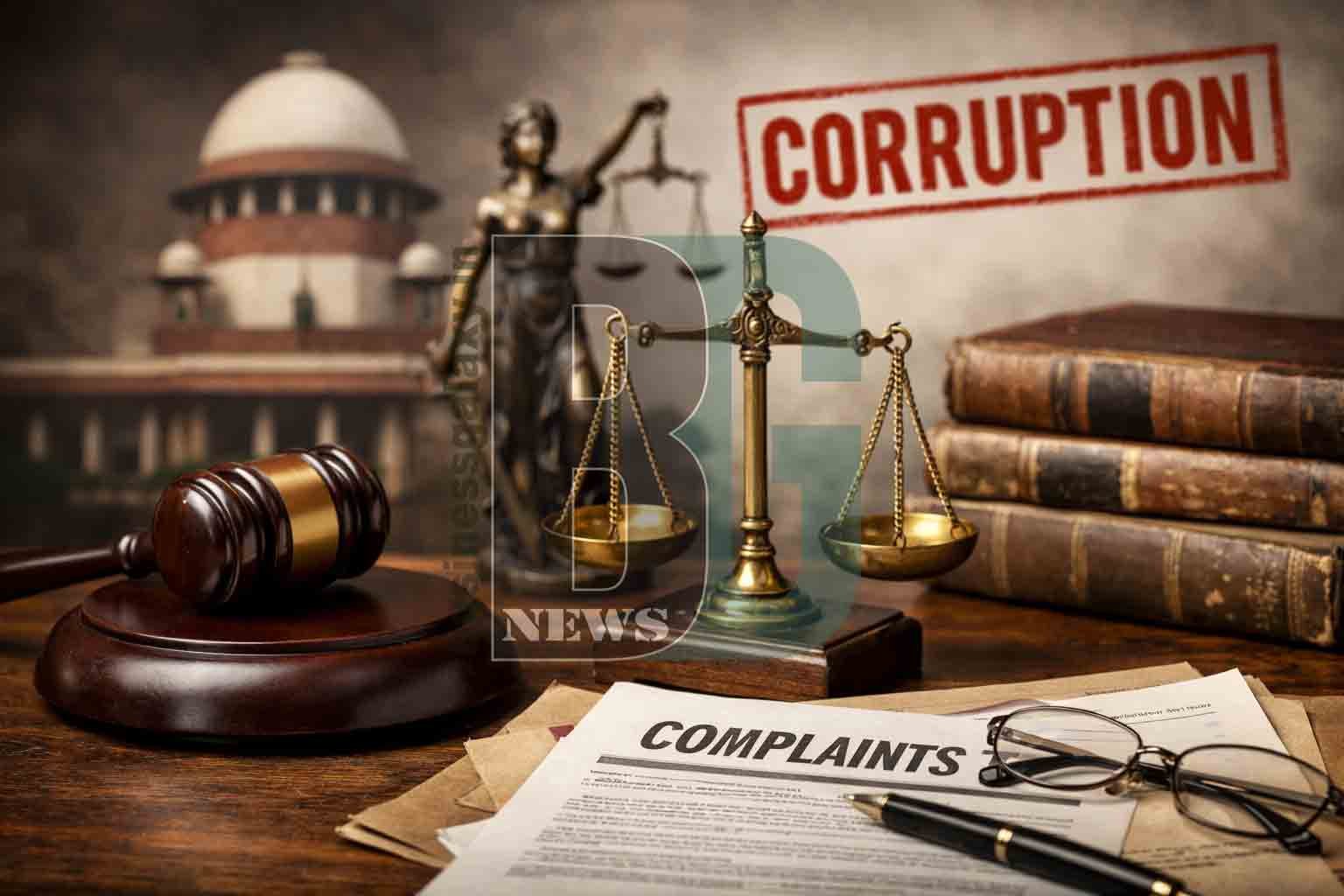
Fresh controversy over alleged corruption in the judiciary has drawn attention to official data showing that more than 8,600 complaints were received against judges across India over the last decade.
The figures, sourced from the government in Parliament, indicate that complaints were filed against judges of the higher and lower judiciary between 2014 and 2024. These complaints include allegations of corruption, misconduct, abuse of office and lack of integrity.
According to the data, most complaints were submitted by litigants and members of the public. However, only a small fraction of these resulted in formal inquiries or disciplinary action, largely due to constitutional safeguards meant to protect judicial independence.
Judges of the Supreme Court of India and various High Courts fall under an internal mechanism where complaints are examined by in house committees. The process does not make findings public unless the matter leads to impeachment proceedings in Parliament.
The Union Law Ministry stated that complaints against lower court judges are handled by the respective High Courts, while allegations against High Court and Supreme Court judges are examined at the top judicial level. The government also clarified that it does not have the authority to directly investigate sitting judges, as this would violate the principle of separation of powers.
Legal experts say the rising number of complaints reflects both increased public awareness and growing distrust due to high profile allegations in recent years. They argue that while judicial independence must be protected, greater transparency in handling complaints is necessary to maintain public confidence.
The government reiterated that the Judges (Inquiry) Act provides a mechanism for removal of judges through impeachment, but acknowledged that the process is lengthy and rarely used. Since Independence, only a handful of impeachment motions have been initiated, and none have resulted in removal.
The issue has resurfaced amid renewed political debate, with opposition leaders demanding an independent oversight body to probe allegations of judicial corruption. Meanwhile, senior jurists have cautioned against politicising the judiciary, warning that unverified accusations can damage the credibility of courts.
Data from the Department of Justice shows that most complaints are dismissed at a preliminary stage due to lack of evidence or jurisdictional limits.
Observers say the controversy highlights a long standing tension between accountability and judicial autonomy. While the judiciary insists that internal checks are sufficient, critics argue that the absence of an external watchdog weakens public trust.
As debates continue, the data has intensified calls for reform in the system for addressing complaints against judges, with demands for time-bound inquiries and greater disclosure of outcomes.