
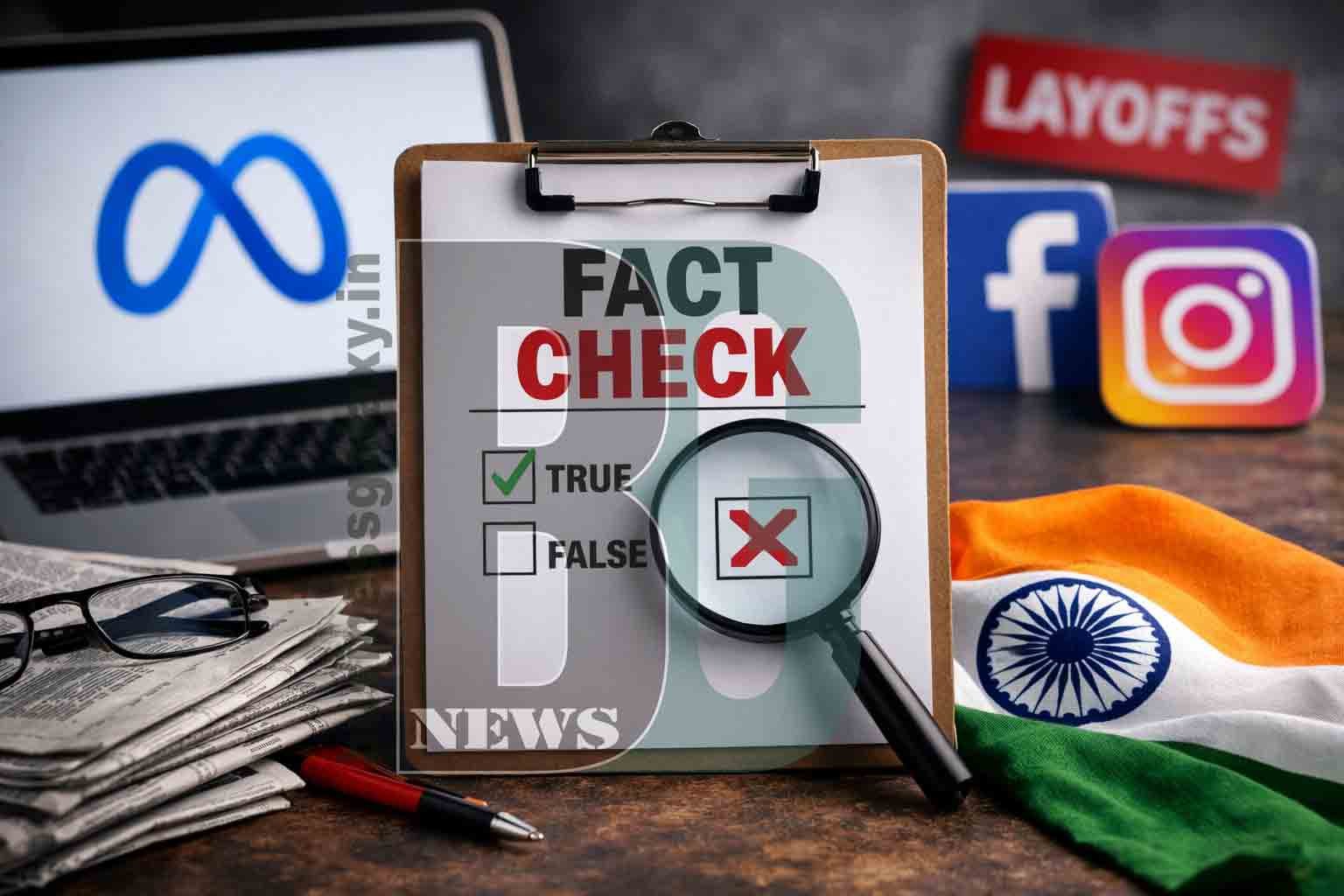
Meta, the parent company of Facebook and Instagram, has sharply reduced the fees it pays to professional fact checking organisations in India, according to a report by The Hindu.
The reductions are expected to last for at least six months, with payments reportedly being cut by around one third to as much as 50% for approved fact checking partners. These organisations were contracted by Meta to verify viral and misleading content on its platforms.
The move comes amid broader changes to Meta’s global fact checking strategy following the election of U.S. President Donald Trump. Meta’s chief executive officer Mark Zuckerberg recently announced that Facebook and Instagram would shift away from professional fact checkers and move toward a user driven system called “Community Notes.”
Under this model, posts will be annotated by a diverse group of users who agree that a post needs additional context, replacing what Zuckerberg described as “politically biased” professional checkers.
Meta first partnered with professional fact checkers in December 2016 after facing criticism over the spread of misinformation on its platforms. Over time, these partnerships became a major source of revenue for many fact-checking organisations, particularly smaller groups that focus exclusively on verification work.
With the new cuts, the financial stability of these organisations is now under threat. Sources familiar with the discussions told The Hindu that smaller fact checking groups may be forced to reduce staff or lay off employees in order to continue operating.
Meta has stated that its Community Notes feature will be expanded to more countries in the future. The system is inspired by a similar feature used by X, the social media platform formerly known as Twitter. X claims its model uses a “bridging algorithm” to reduce political bias by requiring agreement across ideological lines before adding notes to posts.
However, multiple independent reviews of X’s system have found that Community Notes often fails in highly polarised environments, allowing misleading or false content to circulate without being flagged or corrected.
In India, where misinformation can have serious social and political consequences, media experts have raised concerns that reducing support for professional fact checkers could weaken the fight against false and harmful content online.
While Meta says its new approach will improve transparency and reduce perceived bias, the sharp reduction in funding for Indian fact-checkers has created uncertainty about how effectively misinformation will be addressed on Facebook and Instagram in the coming months.