

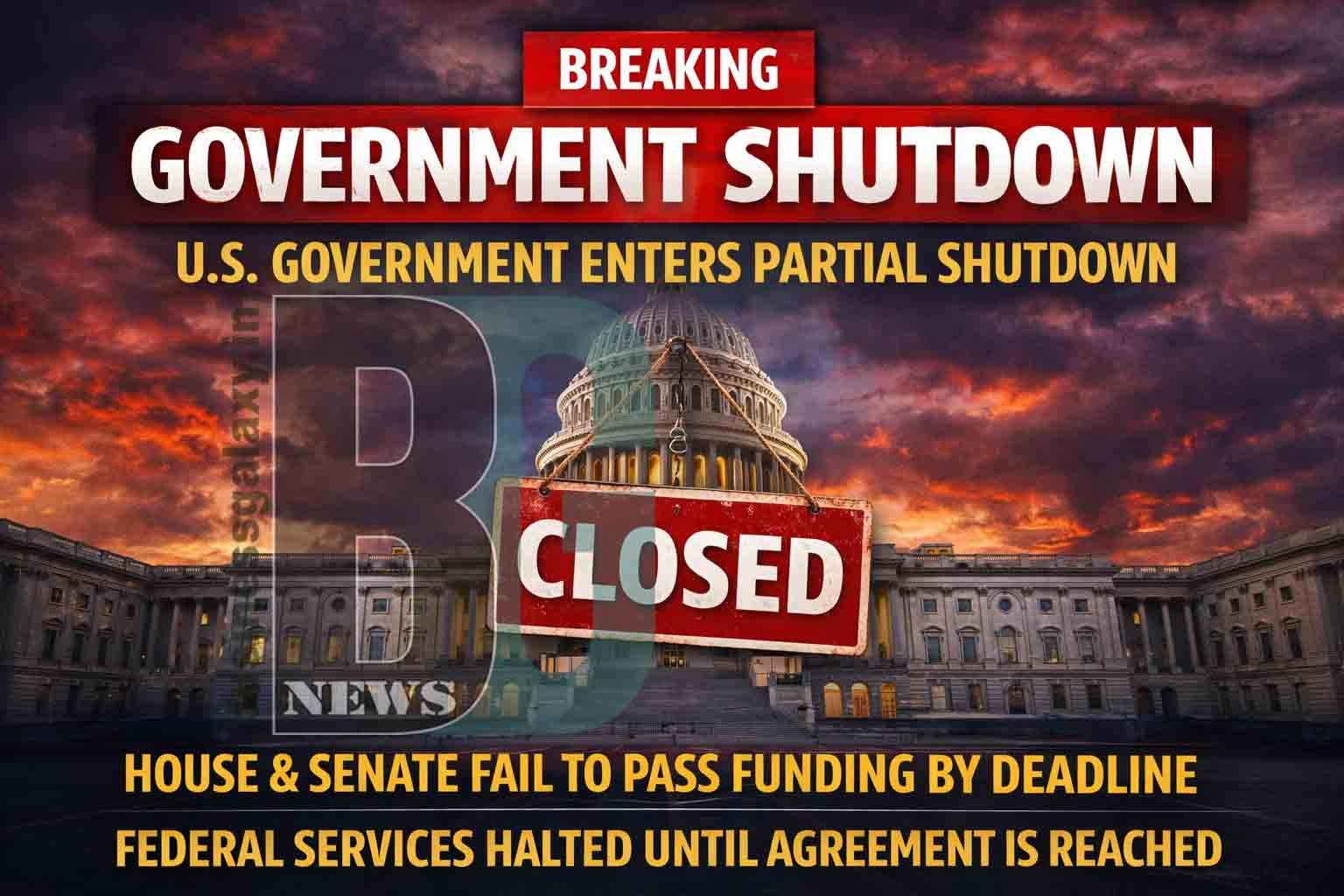
Washington: The United States government has entered a partial shutdown after Congress failed to reach a full funding agreement before the budget deadline. Several federal agencies were left without approved spending authority, forcing a halt to some government operations.
The shutdown began after lawmakers in the House and Senate could not finalize a deal to fund all departments. While the Senate passed a temporary spending proposal to keep most agencies open, disagreement in the House delayed its approval, resulting in a lapse in funding for certain government functions.
As a result, non-essential federal workers in affected departments have been placed on furlough, while essential services such as national security, air traffic control, and emergency operations continue. Some public services, including visa processing, housing assistance programs, and regulatory activities, may face delays.
Political divisions over budget priorities, particularly related to immigration and domestic spending, have complicated negotiations. Leaders from both major parties have expressed confidence that a short-term solution could be reached, but no final agreement has yet been approved.
Financial markets and investors are closely watching developments, as prolonged shutdowns can disrupt economic data releases and weaken consumer and business confidence. Analysts warn that extended uncertainty could affect market stability and slow government-related economic activity.
House leaders have indicated that lawmakers will reconvene soon to vote on funding measures aimed at ending the shutdown. Until then, parts of the federal government will remain closed, adding pressure on Congress to resolve the standoff quickly.
This marks the latest in a series of budget disputes in Washington, highlighting ongoing challenges in passing timely spending legislation and maintaining uninterrupted government operations.