
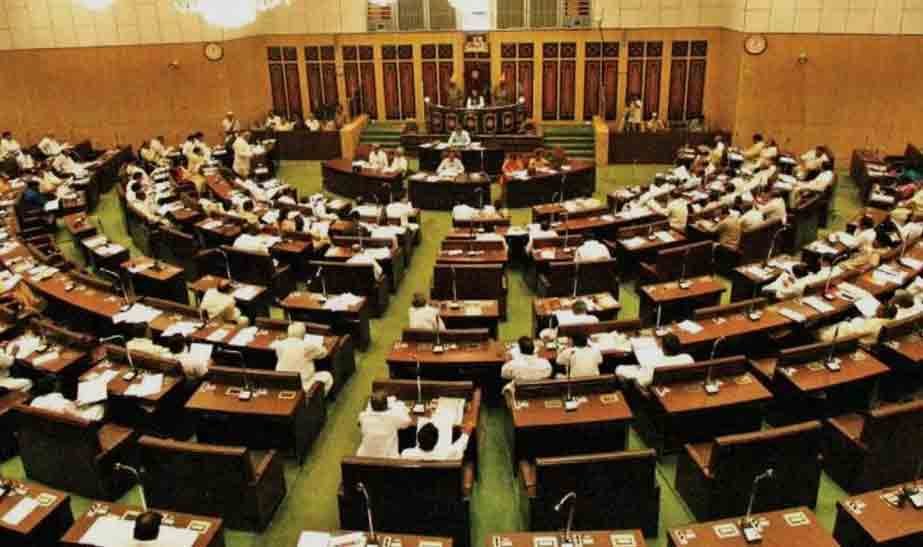
The Telangana Legislative Assembly session turned tense and controversial as senior Bharat Rashtra Samithi (BRS) leader T. Harish Rao launched a sharp attack on Chief Minister A. Revanth Reddy, alleging that the latter used false statements and abusive language on the Assembly floor.
Harish Rao criticised Revanth Reddy for spending much of the session making what he described as “false claims” and resorting to objectionable language, including the use of the term “bhadive”, which he called vulgar and inappropriate for a parliamentary setting. He demanded that the Chief Minister issue an unconditional apology for such remarks, saying that threatening language such as statements implying “I will cut off your tongue” was unbecoming of the head of the state government and reflected poorly on the Assembly’s dignity.
Harish Rao also took issue with Revanth Reddy’s comments on irrigation projects and water disputes. He refuted the Chief Minister’s assertions that the Palamuru Rangareddy Lift Irrigation Project had been conceived by the Congress, explaining that the project’s initial planning stages dated back to earlier years and that the government paperwork only advanced later. Harish Rao argued that by distorting facts and selectively reading agenda items, the Chief Minister was misleading the House.
Further, the BRS leader objected to Revanth’s questioning of the integrity of BRS supremo K. Chandrasekhar Rao (KCR), pointing out that the Chief Minister had no moral authority to judge the leader who played a central role in Telangana’s statehood movement. He also highlighted that water allocation issues including reductions in the capacity of the Palamuru Rangareddy project had been admitted by government ministers, reinforcing BRS’s stance on the matter.
The heated exchange contributed to an already fraught atmosphere in the Assembly, with the BRS leadership accusing the Speaker of failing to restrain unparliamentary language and allowing proceedings to descend into verbal hostility rather than constructive debate. In protest, the BRS later announced a boycott of the ongoing Assembly session, criticizing what it described as the biased conduct of the Speaker and the suppression of opposition voices.