
Iran is grappling with its most severe water crisis in decades, with officials warning that the capital city of over ten million people may soon become uninhabitable if the drought gripping the country continues.
President Masoud Pezeshkian has cautioned that unless rainfall arrives by December, the government may have to begin rationing water and, ultimately, could be forced to evacuate parts of Tehran.
Reservoirs and Pressure Drops
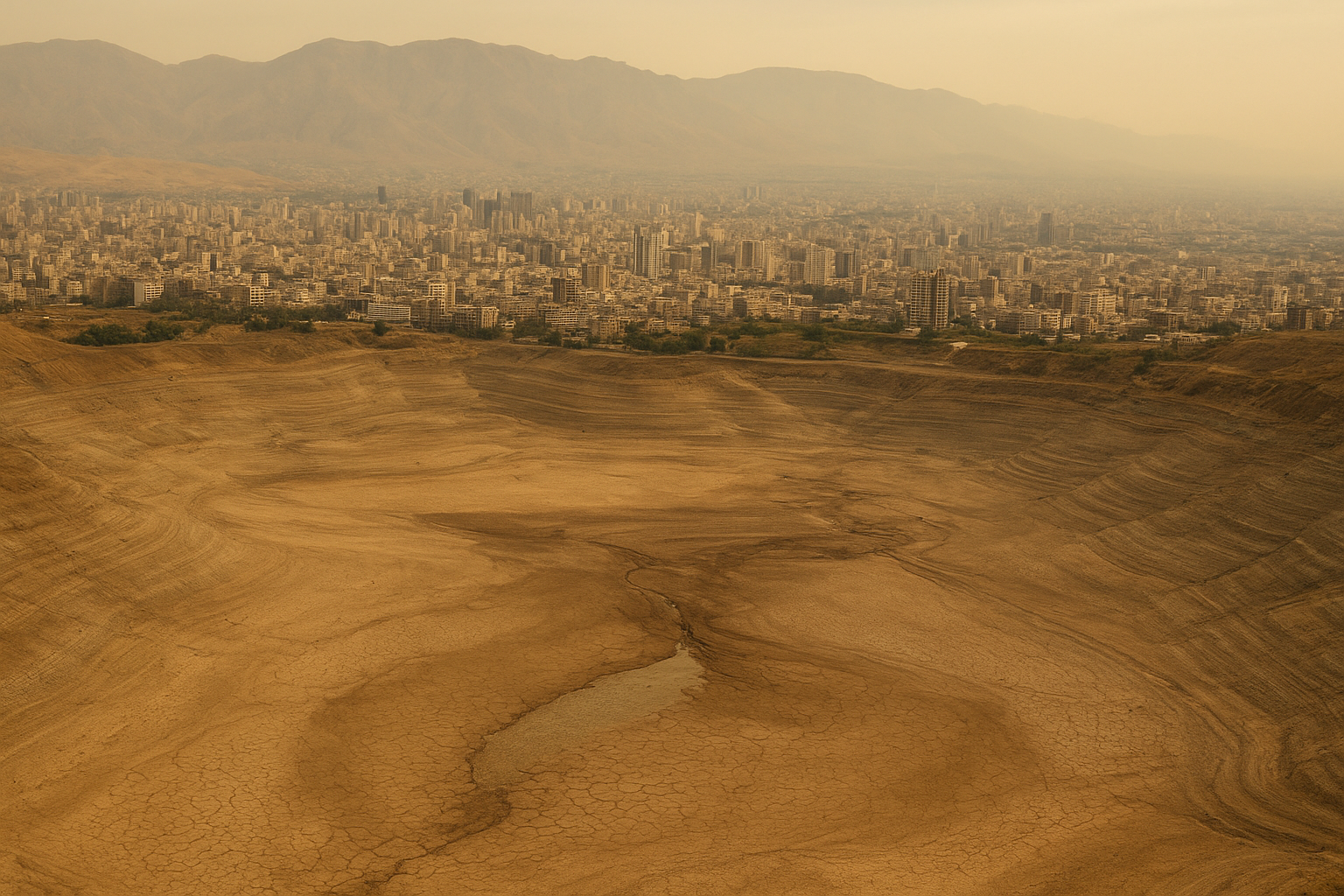
Surface water reservoirs supplying Tehran are critically low. The five main dams feeding the capital are reportedly at half capacity overall, with one such dam the Amir Kabir Dam holding just about 8 percent of its designed storage.
Across Iran, about nineteen major dams roughly 10 percent of the country’s large reservoir network are effectively dry. In many parts of Tehran, nightly water pressure cuts have already begun, and some neighbourhoods are facing hours long disruptions with no water supply at all.
Root Causes
While a prolonged drought is a major factor, analysts say the crisis is also driven by decades of Water mismanagement over building of dams, illegal well drilling, inefficient irrigation, high consumption rates and lack of investment in modern infrastructure.
Climate change has worsened the situation. Higher temperatures are increasing evaporation rates, rainfall has fallen far below normal levels, and groundwater tables continue to drop across Iran’s arid regions.
Social and Political Risks
With Iran’s economy already weakened by sanctions, the water crisis threatens to fuel social unrest. Past protests over water shortages have shown how environmental stress can rapidly turn into political discontent.
Residents in Tehran report that taps often go dry at night. One woman told local media, “It was around 10 p.m., and the water didn’t come back until morning.”
Government Response and What’s Next
Authorities are urging citizens to cut their water use by at least 20 percent. Temporary measures include transferring limited reserves from nearby provinces and encouraging households to install storage tanks or backup pumps.
However, experts warn that these steps are temporary solutions. If the rains fail to arrive soon, authorities may have to enforce rationing and, in worst case scenarios, evacuate severely affected districts.
The growing concern that parts of Tehran could become uninhabitable marks a turning point in Iran’s decades long struggle with water scarcity.
All facts cross verified through official statements and multiple credible news outlets.
Please #Like #Share & #Follow to support verified, Responsible Journalism.