

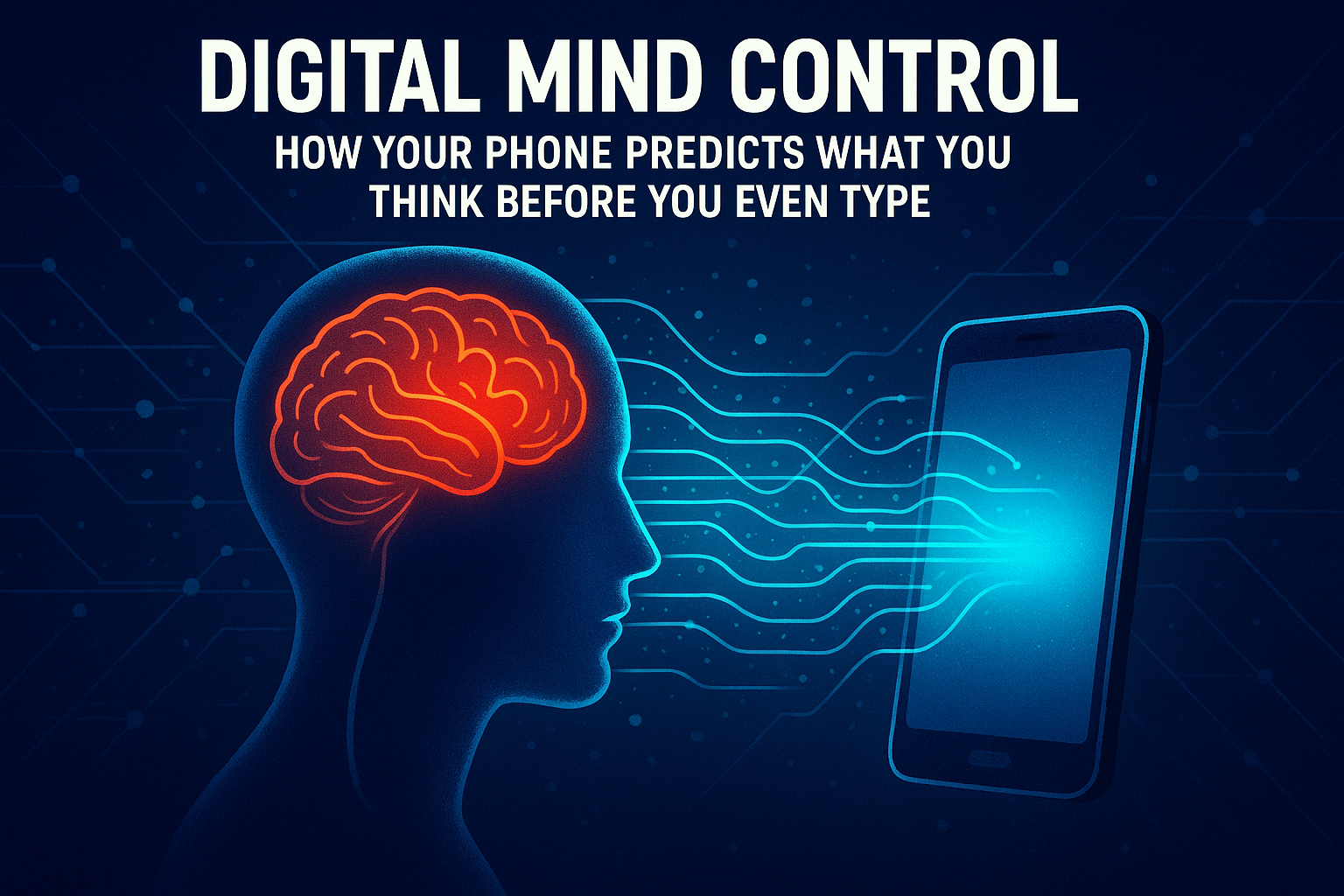
By Staff Writer | Awareness Feature
Have you ever thought about something a product, a trip, or even a random idea and within minutes your Phone shows you Reels, Ads or Videos about it? Many people across the world are reporting this strange experience and asking the same question:
“How does my phone know what I’m thinking?”
While it may feel like mind reading, experts say the real explanation lies in the combination of Data surveillance, Artificial Intelligence and Predictive algorithms that analyze your every digital move.
How It Works: The Algorithm Doesn’t Read Minds It Predicts Them
Every time you use your phone Scroll, Pause on a video, open an app, speak near a microphone, or even move through a location thousands of tiny data points are recorded.
Social media platforms like Instagram, TikTok, Facebook and YouTube run powerful AI-driven recommendation engines that learn your behavior patterns faster than you realize.
They don’t need to literally read your thoughts.
Instead, they predict what you’re about to want based on your recent:
- Searches and app activity
- Conversations (if voice permissions are on)
- GPS location and movements
- Social connections
- Screen time and dwell time (how long you look at something)
For example, if you discussed “buying a new car” with a friend and you later typed “car price” or lingered on a vehicle related post, the system already connects those clues and feeds you matching content. It feels like coincidence but it’s data driven targeting.
Microphones, Permissions and “Accidental Listening”
Smartphones and apps often request access to your Microphone, Camera and Location, even when they don’t need it for their main function.
While tech companies deny active “listening,” background permissions and “voice activated” features (like Siri, Alexa or Google Assistant) can collect snippets of ambient speech to improve advertising models.
This is why people sometimes see ads or reels about something they only talked about not searched for. It’s not “Telepathy,” but behavioral tracking at the edge of privacy boundaries.
The Real Goal: Attention = Profit
The more precisely companies can predict your interests, the better they can sell ads to businesses targeting you.
Every like, pause, or scroll helps the system calculate what keeps you engaged and ultimately, what can make you spend money or stay online longer.
The result?
You become the product your attention is what they sell.
Psychological Impact: From Influence to Control
Continuous exposure to algorithmically curated content subtly shapes thoughts, moods and beliefs.
Over time, platforms learn what triggers emotions anger, excitement, curiosity and use those emotions to keep users scrolling. This process, sometimes called “Algorithmic conditioning,” can influence:
- Purchasing decisions
- Political opinions
- Social beliefs
- Emotional behavior
In essence, the system doesn’t directly “Control Minds” it nudges them, one scroll at a time.
How to Protect Yourself
You can’t fully escape algorithms, but you can limit their reach:
- Review app permissions: Disable Microphone, Camera and Location access unless necessary.
- Avoid linking all accounts under one Email or Phone Number.
- Clear search and watch history regularly.
- Use private browsers or VPNs to reduce ad tracking.
- Be conscious of what you say near smart devices.
Most importantly, understand that “Free” apps are rarely free they earn from your data.
Why Awareness Matters
Digital surveillance has blurred the line between personal privacy and predictive marketing. What began as advertising efficiency now borders on behavioral manipulation.
Awareness is the first step to reclaiming digital freedom because if technology can predict our desires before we consciously know them, our thoughts are no longer entirely private.
“Mind control” isn’t science fiction anymore it’s algorithmic persuasion in real life.
Stay alert, Stay informed and Take back control of your digital self.