
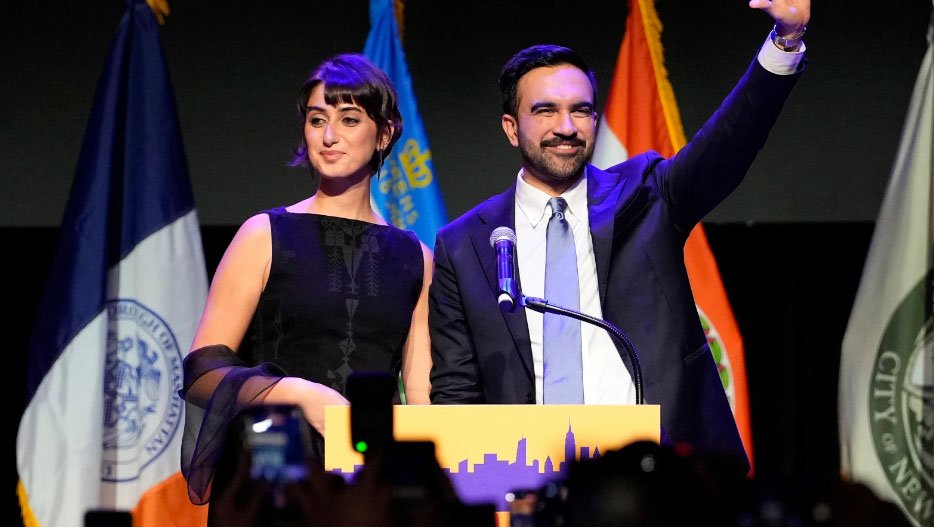
New York: In a historic and widely watched race, Zohran Mamdani, a 34 year old Democratic state assemblyman and self described democratic socialist, has been elected mayor of New York City. He defeated former New York governor Andrew Cuomo, who ran as an independent and Republican nominee Curtis Sliwa in the general election.
With this victory, Mamdani becomes the youngest mayor in more than a century, as well as the first Muslim and first person of South Asian descent to lead the city.
The Race and Results
Mamdani secured about 50.4% of the vote, compared to Cuomo’s 41.6% and Sliwa’s 7 – 8%.
He had earlier gained national attention by defeating Cuomo in the Democratic primary earlier this year and maintained that momentum through the general election.
Campaign and Platform
Mamdani’s campaign was driven by progressive policies and grassroots organizing. His platform focused on:
- Free public transportation on city run buses
- Universal childcare for working families
- Rent freezes and stronger tenant protections
- City owned grocery stores to combat food insecurity
- Raising the minimum wage to $30 by 2030
Higher taxes on corporations and wealthy residents to fund social programs
He relied heavily on small-donor funding and volunteer organizing, presenting a sharp contrast to his more traditional, establishment backed opponents.
Significance
Mamdani’s win marks a major victory for the progressive wing of the Democratic Party and could shape the future direction of national politics.
He broke multiple barriers becoming the city’s first Muslim, first South Asian and youngest mayor in decades.
The election also reflected a broader wave of Democratic successes across the country, suggesting strong voter support for left leaning reform agendas in urban areas.
Challenges Ahead
While his election represents a landmark moment, Mamdani faces enormous challenges as he prepares to govern one of the world’s most complex cities:
- New York City’s budget exceeds $100 billion, with pressing fiscal and infrastructure issues.
- Many of his ambitious plans such as free transit, rent controls, and public grocery stores will require legislative cooperation from the state government and city council.
- He must balance progressive reform with the realities of governance, managing public expectations and navigating institutional resistance.
Given his youth, ideology and visibility, his every move will likely be under close scrutiny both locally and nationally.
What’s Next
Zohran Mamdani will be sworn in as mayor on January 1, 2026.
Over the coming months, he is expected to form his transition team, finalize key administrative appointments and outline policy priorities for his first 100 days in office.
Observers will closely watch how his administration tackles New York’s biggest issues including Housing affordability, Public safety, Transportation and Economic inequality as Mamdani begins what many see as a new chapter in the city’s political history.