
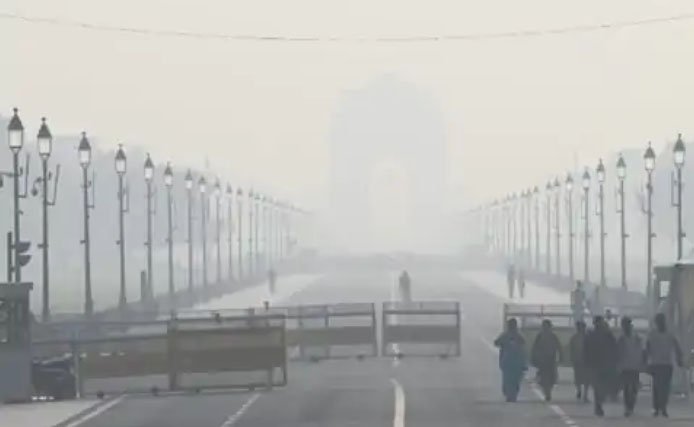
The national capital and surrounding NCR region awakened to a thick blanket of smog and unprecedented air quality levels today, as the Air Quality Index (AQI) crossed the 400 mark in several monitoring stations placing the city firmly in the “severe” category.
What the Data Shows
According to the Central Pollution Control Board (CPCB):
- At Anand Vihar, the AQI hit 408, while at Vivek Vihar it soared to 415.
- A total of 32 out of 38 monitoring stations reported air quality readings in the “very poor” to “severe” range.
- The marked worsening comes despite anti pollution measures such as cloud seeding trials and dust suppression operations.
Why This Has Happened
Several interacting factors have driven this spike in pollution:
- Stubble burning in neighbouring states of Punjab and Haryana is contributing to trans boundary smoke entering the NCR region.
- A drop in wind speed and humidity, with cooler night temperatures, has caused pollutants to remain trapped close to the ground due to temperature inversion.
- The post festival season (with liberal fireworks use) and ongoing construction activity have added to local emissions.
Health Impacts for Citizens
- AQI > 400 indicates serious air quality conditions dangerous even for healthy individuals and especially hazardous for children, the elderly, and those with respiratory or heart conditions.
- Reports from residents: burning eyes, throat irritation, difficulty breathing and significantly reduced visibility across the city.
- Extended exposure to such pollution levels is linked to long term effects including chronic bronchitis, cardiovascular disease and reduced lung function.
What Citizens Should Do Right Now
- Limit outdoor exposure, especially during early morning and late evening hours when pollution peaks.
- Use N95 or equivalent masks if you must step out.
- Avoid strenuous outdoor activities or exercise until air quality improves.
- Keep indoor air cleaner close windows early morning, use air purifiers if available, or use fans to circulate air indoors.
- Stay hydrated and avoid irritants like smoke, dust or open burnings.
- Children, the elderly and those with health issues should remain indoors as much as possible.
What Authorities Are Doing
- Implementation of the Graded Response Action Plan (GRAP): sprinklers on roads, restrictions on non-BS-VI vehicles, and suspension of major construction in certain zones.
- Cloud seeding trials were attempted, but meteorologists reported low moisture levels made them ineffective this time.
- Delhi NCR governments are coordinating with neighbouring states to control crop residue burning and strengthen air quality monitoring and public advisories.
Why This Matters
Delhi’s winter pollution season remains one of the most persistent urban health emergencies in India. With its economy, population density, and weather conditions, the capital’s ability to control pollution directly impacts public health, school attendance, workforce productivity, and overall urban liveability. Today’s spike highlights how policy, weather and citizen action must align timely to avert avoidable crises.