
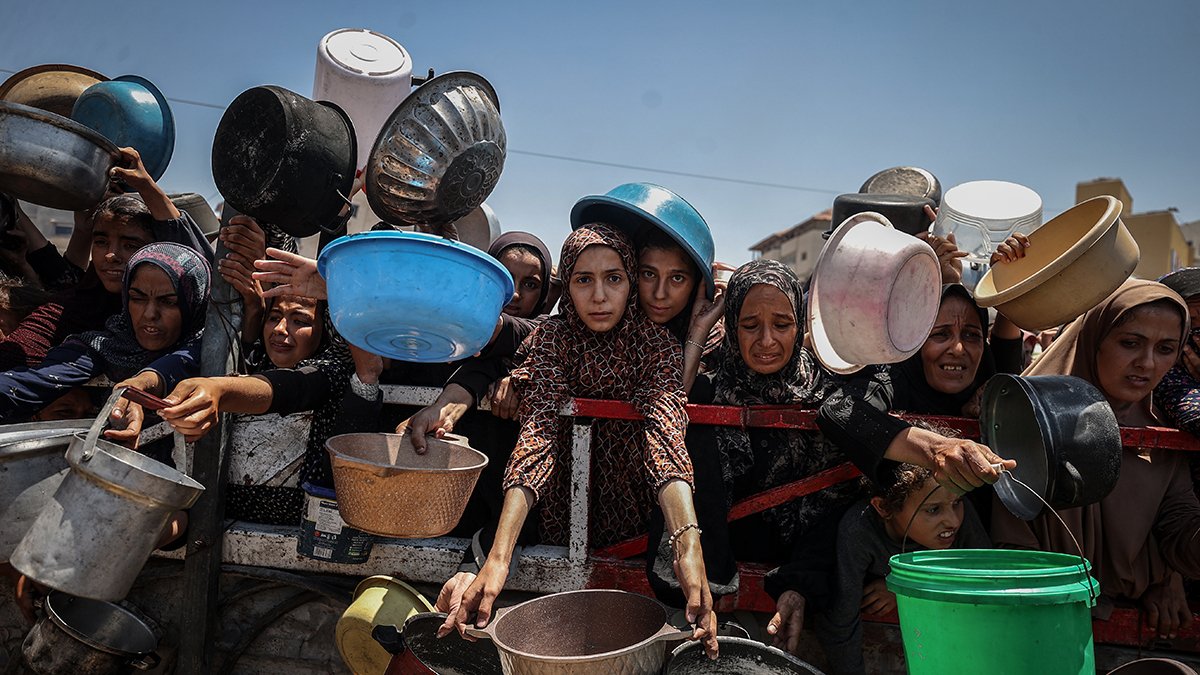
Although a ceasefire between Israel and Hamas has paused large scale fighting, the humanitarian situation across Gaza remains catastrophic. Aid delivery has improved compared to the height of the war, but it is still far below what is needed, leaving millions of Palestinians at risk of hunger, disease and collapse of essential services.
What’s the Situation on the Ground
- According to the World Health Organization, supplies of food and clean water are still insufficient. “The situation remains catastrophic because what’s entering is not enough,” said Director General Tedros Adhanom Ghebreyesus.
- Aid trucks are entering Gaza, but the number remains far short of the promised levels. One aid worker estimated around 200 – 250 trucks daily, still well below the 600 per day target set under the ceasefire.
- Market prices have soared. Basic food items are now luxuries for many families. One local described the price of frozen chicken skyrocketing to the equivalent of “80 chickens for one kilogram.”
- The civil administration is largely non functioning. With many governmental bodies destroyed or unable to operate, there is no effective regulation of markets, no coherent system to monitor aid distribution, and widespread chaos.
Why the Ceasefire Hasn’t Ended the Crisis
- A ceasefire halts bombs, but it doesn’t rebuild infrastructure overnight. Hospitals remain damaged, water and sanitation networks collapsed, power supplies erratic. Patients continue to die of preventable diseases.
- Aid delivery is controlled through very few entry points; blockades, bureaucratic delays, and security conditions hinder full access.
- With so many displaced people and no proper shelters, winter looms as another threat. Exposed tents, damaged homes, and insufficient heating will compound the problem.
What to Watch Next
- Whether the aid flow can be scaled to meet full needs including food, medicine, shelter and sanitation and whether crossings will stay open without interruption.
- Whether the ceasefire holds without escalation, which is essential to maintain humanitarian access and avoid slipping back into open warfare.
- How the international community responds: funding, logistics, and diplomatic pressure will be critical in the coming months.
- Whether efforts to rebuild governance and civil society in Gaza can begin in earnest to restore systems of regulation, distribution, and public service.