

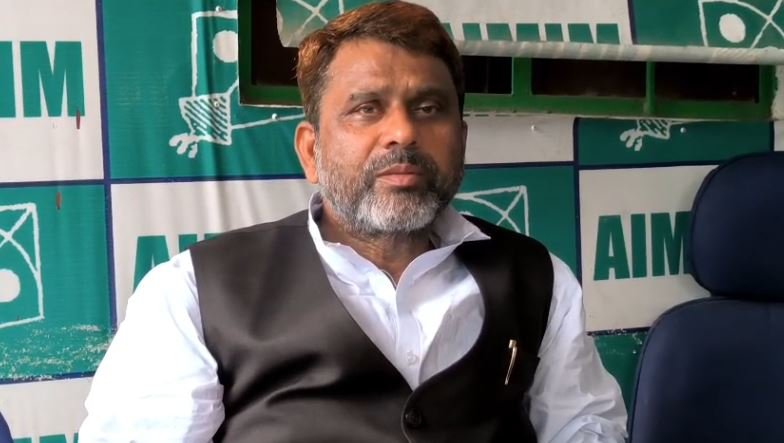
The All India Majlis-e-Ittehadul Muslimeen (AIMIM), led by Asaduddin Owaisi, has released its first list of 32 candidates for the upcoming Bihar Assembly elections. The party plans to contest these seats across 16 districts, focusing on Muslim majority and underdeveloped regions. The announcement signals AIMIM’s intention to expand its influence beyond its traditional strongholds.
Key Details of the Candidate List
The list includes 32 assembly constituencies spread across 16 districts. Several of these are in the Seemanchal region historically the party’s strong base including Bahadurganj, Thakurganj, Kochadhaman and Kishanganj in Kishanganj district, Amour, Baisi and Kasba in Purnia and multiple seats in Katihar district.
Unlike previous elections, AIMIM is expanding its reach beyond Seemanchal, indicating a strategic move to test its popularity across other parts of Bihar.
The party’s Bihar state president, Akhtarul Iman, announced that more candidate lists will follow in the coming weeks. He also mentioned that AIMIM remains open to talks with like minded parties to explore a possible “third front” ahead of the elections.
Party Strategy and Political Context
AIMIM is reportedly preparing to contest around 100 seats in total, which amounts to nearly 41% of Bihar’s 243 assembly constituencies. This marks a major escalation compared to its previous participation, where the party contested fewer seats.
Earlier discussions between AIMIM and the Mahagathbandhan (RJD led alliance) did not result in a seat sharing agreement. As a result, AIMIM decided to go solo in several constituencies, positioning itself as an independent alternative to both the NDA and the Mahagathbandhan.
Party leaders said AIMIM’s campaign will focus on issues such as Education, Employment, Minority Welfare and rural development areas that have long been neglected in eastern Bihar.
Reactions and Political Impact
The decision to field candidates across a wide range of constituencies has triggered mixed reactions. Some political analysts suggest that AIMIM’s move could divide secular votes, indirectly helping the NDA.
However, AIMIM leaders strongly refute this claim, arguing that the party’s growing popularity reflects genuine support from the people, especially those dissatisfied with traditional parties.
Supporters believe this election could mark AIMIM’s transformation from a regional force to a major state level player if it performs well in districts outside Seemanchal.
What’s Next
The remaining candidate list is expected to be announced soon.
Observers are watching closely to see whether AIMIM succeeds in forming a third front with smaller regional groups.
Voter sentiment in Seemanchal, Purnia, and Gaya will likely determine AIMIM’s momentum in the final weeks of campaigning.